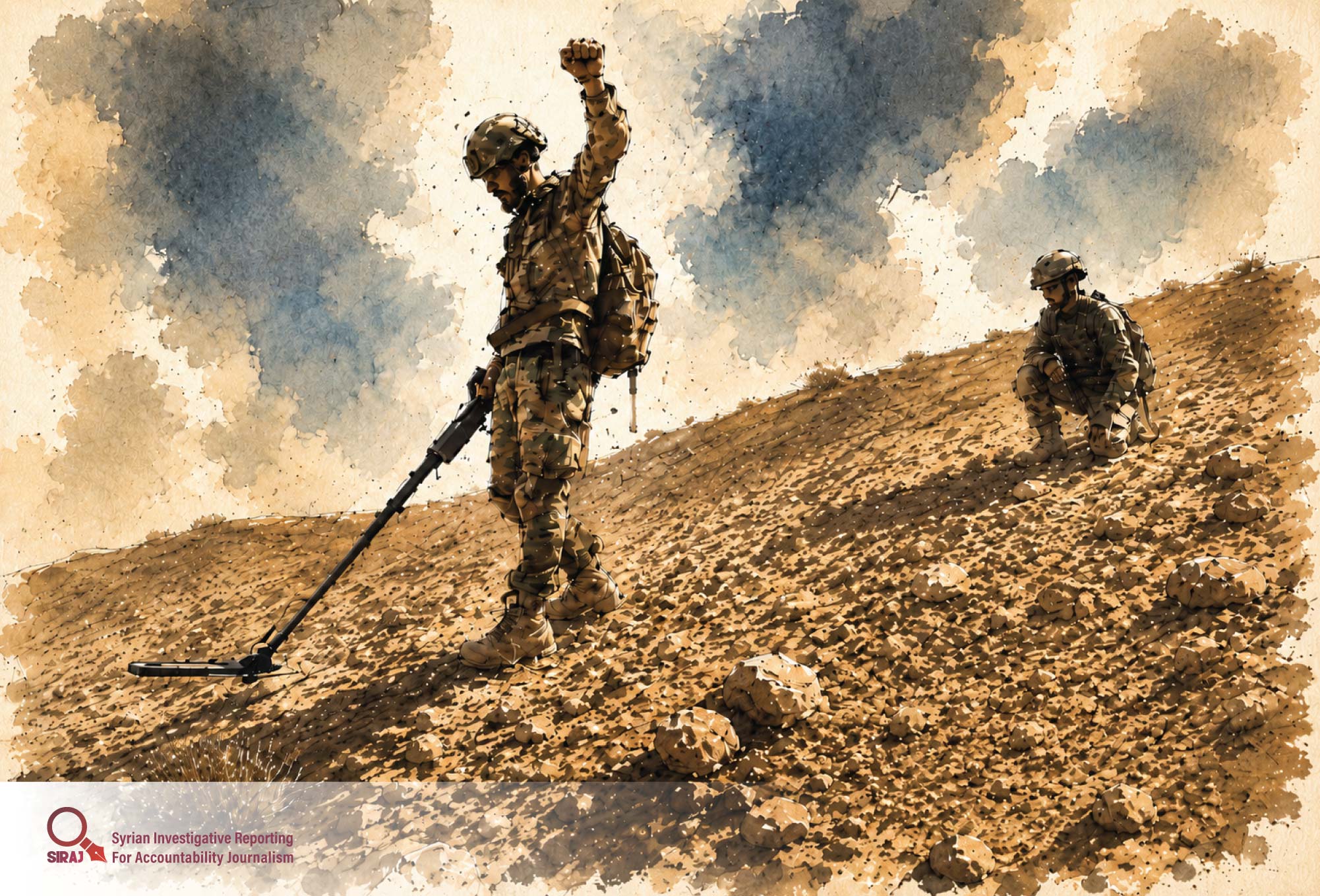


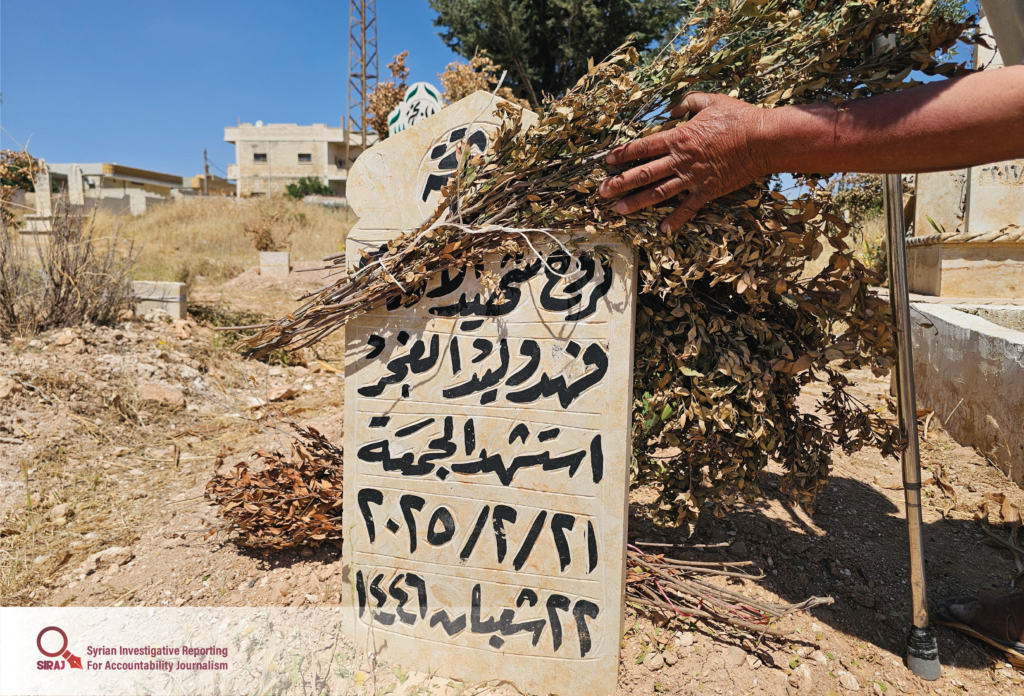
On the morning of 11 February 2025, engineer Fahd al-Ghajr was preparing to travel to the village of al-Fatira in Jabal al-Zawiya, south of Idlib Governorate. Just one day earlier, his brother had returned to Syria from Lebanon after an absence of fourteen years, but Fahd had been unable to travel to meet him, as a new work assignment awaited him: clearing mines around a house to which the owners had returned after years of displacement.
Fahd successfully completed his work inside the house, removing the unexploded ordnance he found. However, one of the villagers asked him to inspect the land surrounding the property as well. Unbeknownst to him, the adjacent area concealed a large minefield. Minutes later, an explosion rang out.
According to the account of a witness who was at the scene, as relayed by Walid al-Ghajr’s father, Fahd entered the area believing it to be safe after completing his inspection of the house, before a landmine exploded and killed him. He adds: “There was a minefield that nobody knew existed. The mine exploded in front of him and he was killed instantly. No one was able to reach him directly, and Civil Defence personnel had to retrieve his body using ropes because of the density of mines surrounding him.”
Fahd was no ordinary civilian. After obtaining his secondary school certificate in 2009, he enlisted in the army as a “non-commissioned officer” specialising in engineering. During his military service, he was seriously injured whilst on a mission to defuse an explosive device, leaving him with a permanent injury to his shoulder.
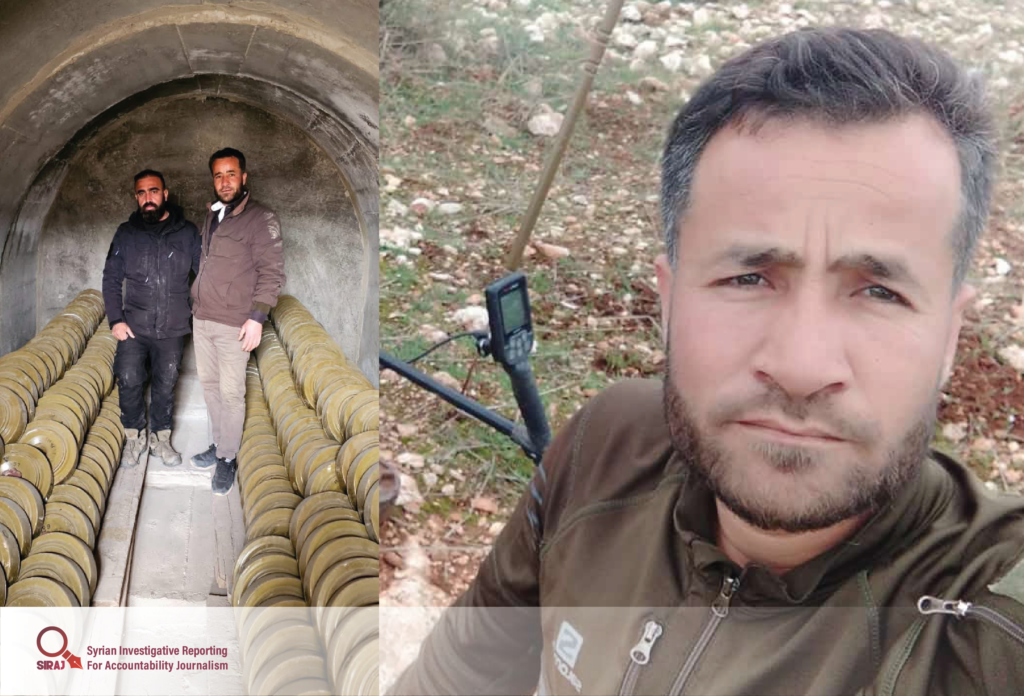
Following the start of the Syrian revolution in March 2011, al-Ghajr defected from the regime’s forces in 2012, completed his university studies, and then worked as a teacher in schools in his hometown of al-Tah and in displacement camps. In 2017, he was wounded again by an airstrike, which left him with a permanent disability in his left leg.
Despite his multiple injuries, Fahd returned after the fall of the Assad regime to take part in clearing mines and other remnants of war, travelling between Damascus, Afrin and Idlib to help secure areas to which residents had begun returning. Yet his end came from the very danger he had dedicated years of his life to tackling.
The man who survived war injuries and aerial bombardment, and who worked to clear mines across different parts of Syria, was killed in a landmine explosion while carrying out his work.
His father says: “My son survived the regime, he survived the bombardment, and he survived many injuries during the war, but a single landmine after liberation took him from us forever.”
While his children and their mother rely on aid and borrowing from local shops, his father, who is over seventy-five years old, says he was forced to sell his 25 dunums (approximately 2.5 hectares, or 6.2 acres) of olive groves in order to support his children and grandchildren after years of war.
“Fahd left behind four children without a breadwinner,” says the father. “He used to go out every day to save families from the danger of landmines, but today his children are waiting for someone to save them from poverty and hardship.”
The most dangerous job in Syria!
The clearance of landmines and other remnants of war has become one of the most dangerous tasks in Syria. At the same time, the country is experiencing one of the largest waves of return among displaced people since the outbreak of the revolution, which the Assad regime turned into a war against the Syrian people.
According to data from the United Nations High Commissioner for Refugees (UNHCR), around 1.6 million people returned to their home areas between the fall of the Assad regime in December 2024 and the spring of 2026. This figure includes hundreds of thousands of refugees who had fled to Turkey, Lebanon and Jordan, as well as large numbers of internally displaced people.
Like Fahd al-Ghajr, volunteers and mine clearance workers are paying with their lives for inadequate training, a lack of equipment, insufficient funding and the absence of relevant maps, whilst Syrians are returning in increasing numbers to areas still contaminated with war ordnance.
To document the working conditions of mine clearance and explosive-remnants-of-war teams in Syria, and how a lack of equipment is costing the lives of volunteers engaged in demining operations, the investigative team adopted a multi-source methodology. Over three months of monitoring and reporting, the journalists compiled a database of 27 documented mine explosion incidents that resulted in the death or injury of demining personnel in Syria during 2025 and 2026. The incidents were identified through official and human rights sources, with each case linked to open-source material, video footage and visual content published online, particularly on social media.
To strengthen the reliability of the available evidence, the team collected first-hand testimonies from local residents and cross-checked them against the digital data it had gathered. Interviews were conducted with 12 experts and demining personnel, including members of the Syrian Ministry of Defence and the Syrian Civil Defence, as well as demining volunteers and relatives of victims.
The methodology subsequently included analysing dozens of published photographs and videos documenting mine clearance operations and the destruction of munitions, comparing them with the International Mine Action Standards (IMAS), whilst verifying the visual material by cross-referencing the locations, dates and information contained therein with independent sources.
The team also reviewed reports and documents issued by the United Nations Mine Action Service (UNMAS), as well as specialist human rights and international organisations.
The aim was to assess the impact of the absence of minefield maps and the shortage of equipment and supplies on the safety of those working to clear mines and other remnants of war across the country.
Whilst the lack of maps is one of the most significant risks to mine clearance workers, analysis of the visual material and interviews with workers reveals that the problem extends beyond a lack of information to the absence of a significant proportion of protective equipment and supplies, which are considered essential under international standards for mine action (IMAS).
After reviewing 104 photos and video footage collected by researchers documenting mine clearance and munitions disposal operations in various parts of Syria, the investigation team observed that the majority of workers were using “standard military clothing or partial protective gear instead of internationally approved specialist protective equipment, which costs thousands of US dollars”.
The analysis found that 71 visual items (68% of the material reviewed) showed personnel operating without full face protection. In addition, 53% of personnel appeared without protective vests specifically designed for mine clearance operations.
In many cases, specialised vehicles for transporting and destroying explosives were absent, whilst some footage showed munitions being transported or detonated using limited field resources compared to the equipment stipulated in the International Mine Action Standards (IMAS), reflecting a clear gap between the scale of the risks faced by workers and the resources available to them on the ground.
The findings revealed that between 2025 and 2026, 57 workers and volunteers were killed whilst carrying out clearance operations or handling unexploded ordnance; the majority of the victims were members of engineering units affiliated with the Syrian Ministry of Defence, whilst 26 out of 27 incidents were linked to direct field clearance operations, reflecting the scale of the risks faced by personnel in this field.
International standards for mine clearance require the use of a comprehensive system of personal protective equipment, including protective armour designed to withstand the effects of explosions and shrapnel, face and eye protection, as well as specialised detection equipment and safe mechanisms for excavation, transport and detonation. However, these requirements appear far removed from the reality on the ground in which several Syrian teams are currently operating.
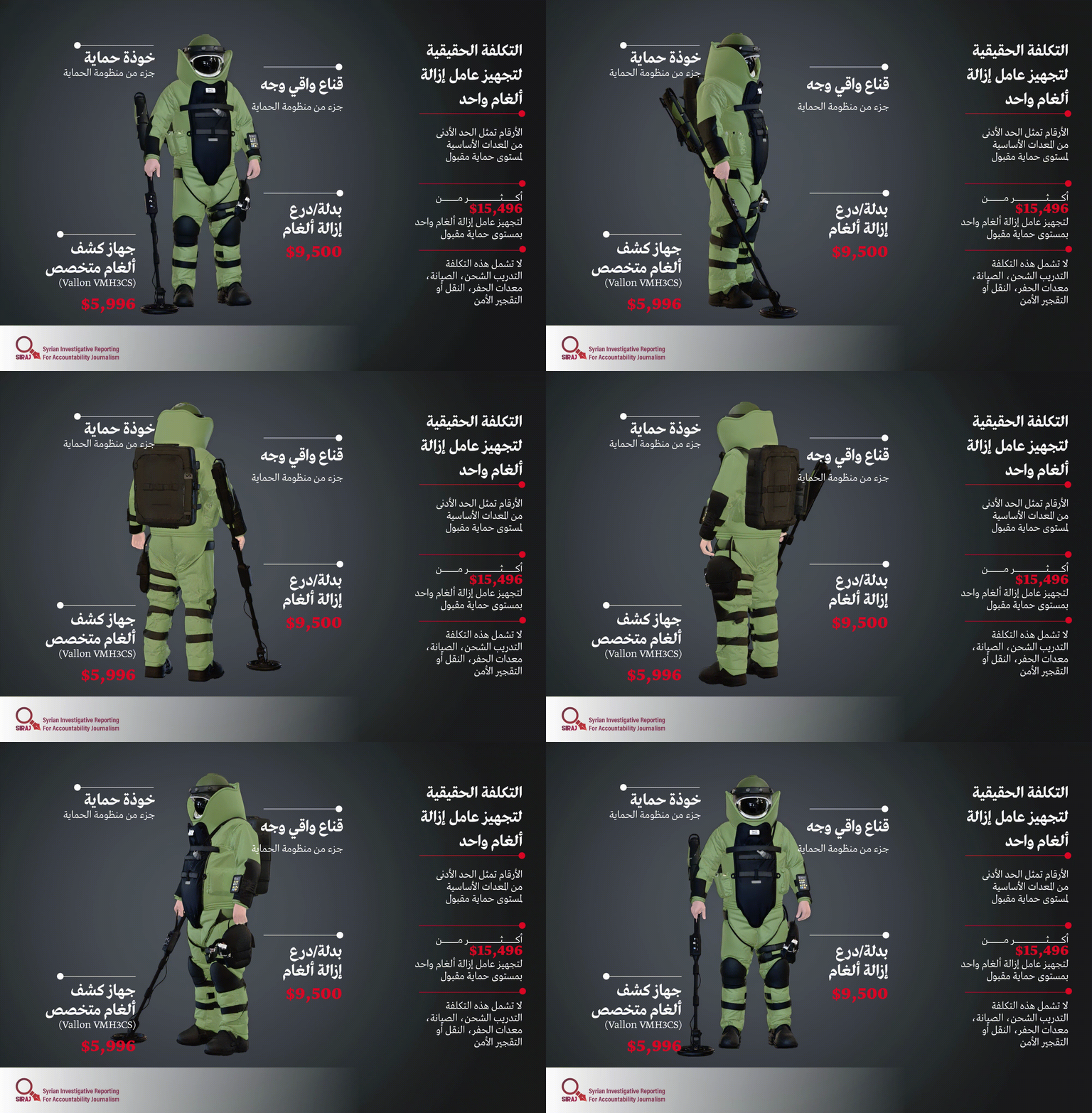
According to estimations made by the investigation team, based on the prices of specialised mine clearance equipment, the minimum cost of equipping a single worker with an acceptable level of protection is approximately US$15,496. This sum includes a light protective suit priced at approximately US$9,500 and a specialised Vallon VMH3CS mine detector costing around US$5,996. These estimates do not include the costs of shipping, training and maintenance, nor equipment for safe excavation, transport and detonation. The International Mine Action Standards (IMAS) stipulate that personal protective equipment must provide protection against the effects of an explosion equivalent to 240 grams of TNT, depending on the nature of the work and the distance from the source of danger.
Demining expert Mohammed Adnan al-Farhoud believes that the lack of equipment not only increases the risk of injury to personnel, but also slows clearance operations, delays the return of residents to their areas, and raises the human and economic cost of the landmine problem, one of the most complex challenges facing post-war Syria.
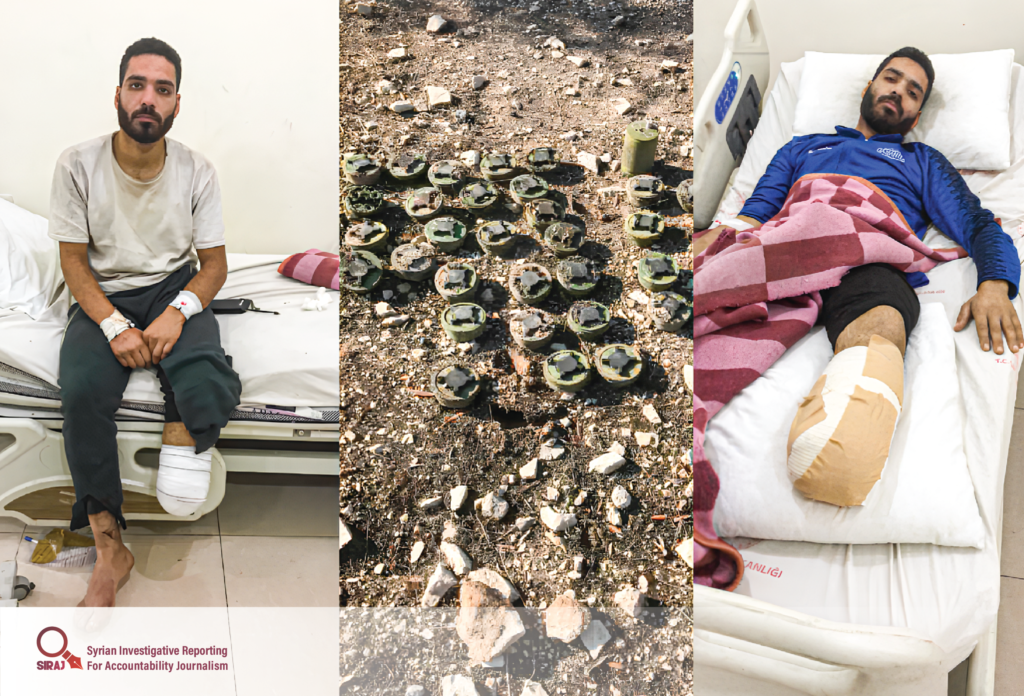
Suhaib Mohammed Zarour, who was injured while taking part in mine clearance operations with the Military Operations Directorate following the liberation of Aleppo, says that the shortage of equipment was one of the factors that increased the dangers of the work.
“When I was injured, we did not have sufficient equipment, and I did not have an advanced detection device that I could fully rely on,” he says. “Even today, the equipment available still falls short of actual needs.”
The issue is not limited to detection operations alone, but extends to the transport and destruction of munitions.
Casualties on a rescue mission
Neither Suhaib’s injury nor the death of Fahd al-Ghajr were the first incidents in which someone was injured or lost their life whilst attempting to clear mines in Syria following the fall of the Assad regime.
In the town of Ain Issa, in the north of Raqqa governorate, two soldiers, Ibrahim Khalil al-Hassan and Musa Khalaf al-Salim, were killed whilst taking part in the clearance of mines laid by the Syrian Democratic Forces (SDF).
Khalil Hamoud al-Ali, who runs a local demining team and whose team included the two young men, said: “The mine was a strip connected to two mines. The team defused the first mine and thought the area was safe, but the second mine exploded as soon as they moved forward, and they were killed instantly.”
Over more than 14 years of war, vast swathes of Syria have become contaminated with landmines and other remnants of war. Whilst attention is usually focused on civilian casualties, demining workers also pay a heavy price as they attempt to secure these areas.
Maysara al-Hassan, commander of engineering operations for the 80th Division, says that the former front-line areas in the southern Idlib countryside, northern Hama countryside and western Latakia countryside alone saw an estimated 15,000 mine-related deaths and injuries between 2020 and 2024. The figure highlights the scale of the danger that continues to threaten both civilians and mine clearance teams.
According to Human Rights Watch, landmines have killed and injured more than 600 people, including children, since December 2024, whilst they continue to pose one of the most significant obstacles to safe return, reconstruction and the resumption of agricultural activity in many parts of Syria.
A large proportion of these returns are concentrated in the governorates of Rural Damascus, Homs, Aleppo and Idlib, which are among the areas most heavily affected by landmines, unexploded ordnance and the remnants of military operations. As the pace of return accelerates, the risks facing returnees are increasing, with many finding themselves facing homes, fields and roads that have not yet undergone full clearance or demining operations.
According to data from the Directorate of Social Affairs and Labour in Idlib, some 719,000 people are still living in more than 750 camps in north-western Syria, whilst the government aims to return some 35,000 families to their home regions by 2026. However, the return is not only linked to the rehabilitation of homes and infrastructure; it also faces another, less visible yet more deadly threat: landmines and unexploded ordnance that remain scattered across the vast areas of the cities, towns and fields.
Fadl Abdul Ghani, Executive Director of the Syrian Network for Human Rights (SNHR), believes that the documented figures represent only the minimum extent of the actual losses, explaining that many incidents occur in remote areas or are not fully documented.
He says: “The demining operations themselves have become a source of fatalities, with dozens of casualties occurring during clearance work. This highlights the gap between on-the-ground needs and available resources, and necessitates the establishment of a national coordination structure and the provision of systematic training and appropriate equipment for the teams carrying out the work.”
Data from local and international organisations indicate that landmines and unexploded ordnance continue to pose one of the greatest threats to civilians and humanitarian workers, particularly in areas that have witnessed rapid military withdrawals or frequent changes in control during years of conflict.
The Civil Defence describes the remnants of war resulting from the former regime’s bombardment as a long-term, ongoing threat affecting civilians’ lives, as they remain explosive for years and impact residential and agricultural areas as well as children’s play areas.
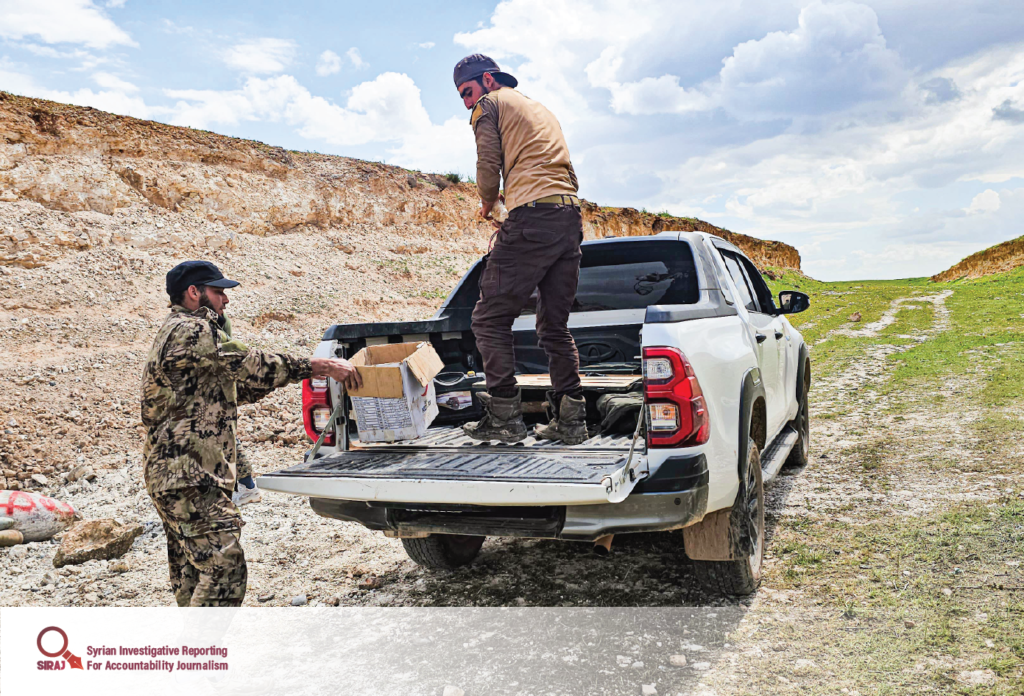
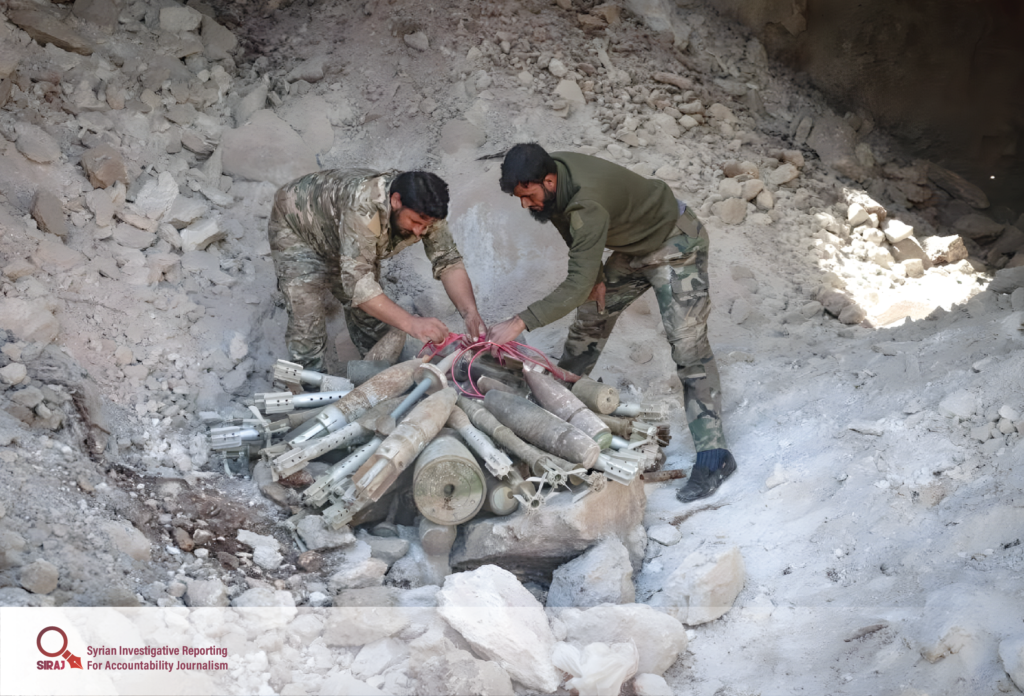
A field visit to one of the mine clearance and war debris removal sites in the Khan Sheikhoun area of the Idlib countryside, documenting the transport, processing and detonation of unexploded ordnance. May 2026 – SIRAJ
Mines Without Maps
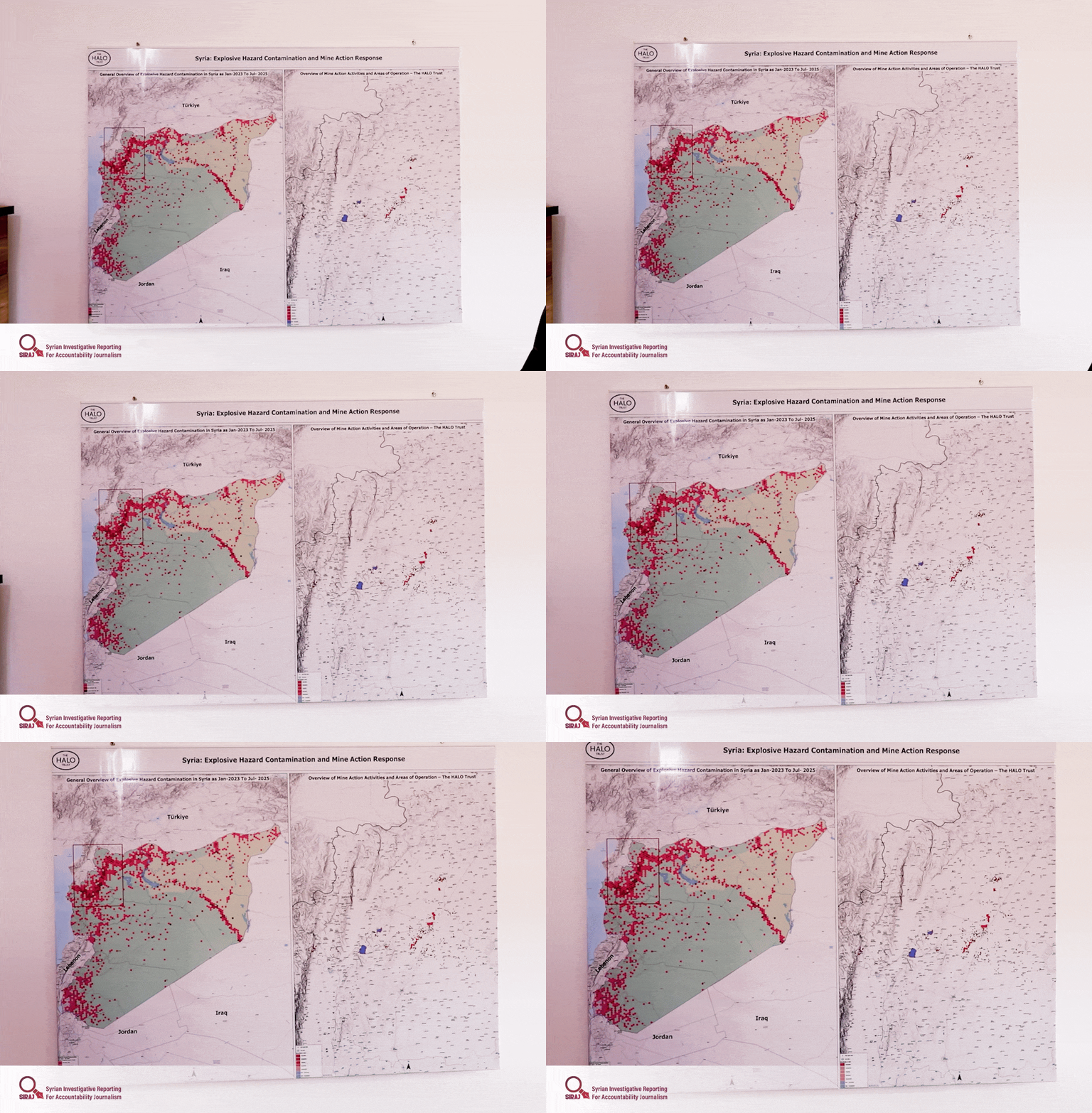
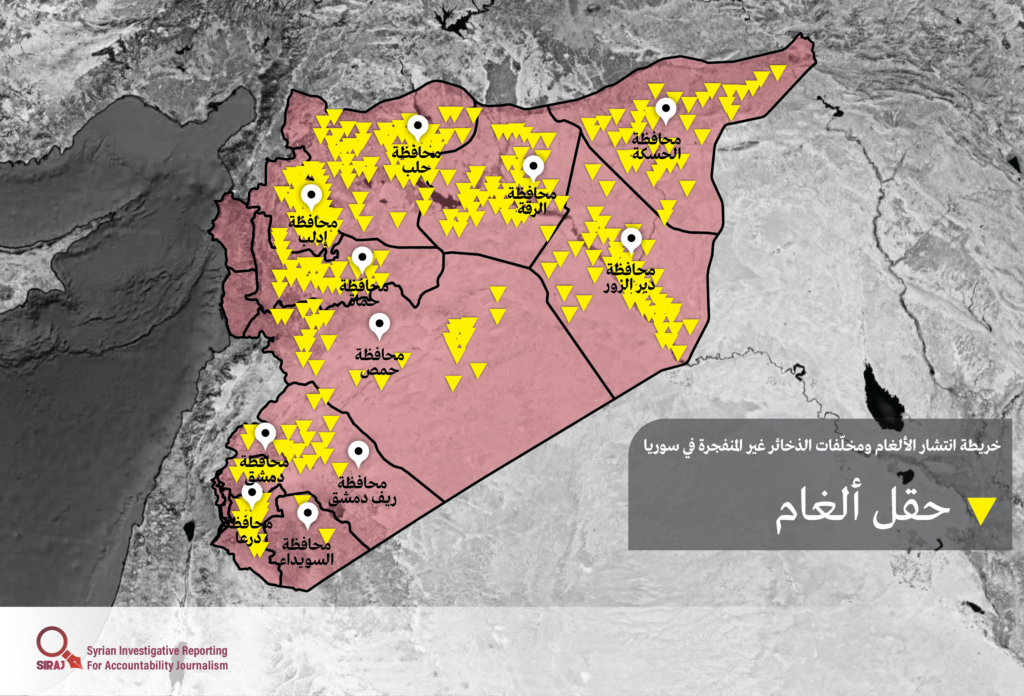
Maps of mine contamination in Syria reveal the extent of the danger across a vast area of the country, where minefields and unexploded ordnance are scattered across dozens of sites in the governorates of Idlib, Aleppo, Raqqa, Deir ez-Zor, Hama, Rural Damascus and Daraa. This widespread distribution reflects the scale of the explosive legacy left behind by years of war, and makes mine clearance an essential prerequisite for the return of residents, reconstruction and the restoration of normal life in the affected areas.
Three workers in this field say that the nature of the work has changed significantly since the fall of the regime. Instead of dealing with known minefields or specific military zones, teams are now faced with vast swathes of undocumented contaminated areas, ranging from homes and agricultural fields to schools, public facilities and roads.
The risks are not limited to conventional mines, but also include improvised explosive devices, unexploded ordnance and the remnants of combat left behind by years of war. All too often, workers find themselves confronted with various types of explosives laid by multiple parties – ranging from forces of the former regime to ISIS, the Syrian Democratic Forces and other factions – without any maps or records specifying their locations or nature.
According to the report by Mine Action Review for 2025, there is still no comprehensive national database or accurate map of mine contamination in Syria, as mines were laid by multiple parties during the years of conflict, including forces of the former Syrian regime, ISIS, the SDF and other armed factions. Furthermore, cluster munitions dropped by warplanes continue to pose an additional threat, the exact distribution of which is difficult to determine.
A report published by the Syrian Network for Human Rights (SNHR) on 4 April 2026 indicates that the true extent of mine contamination remains unknown, as no comprehensive national survey has been carried out to date, meaning that those working on mine clearance often operate without prior knowledge of where the dangers lie.
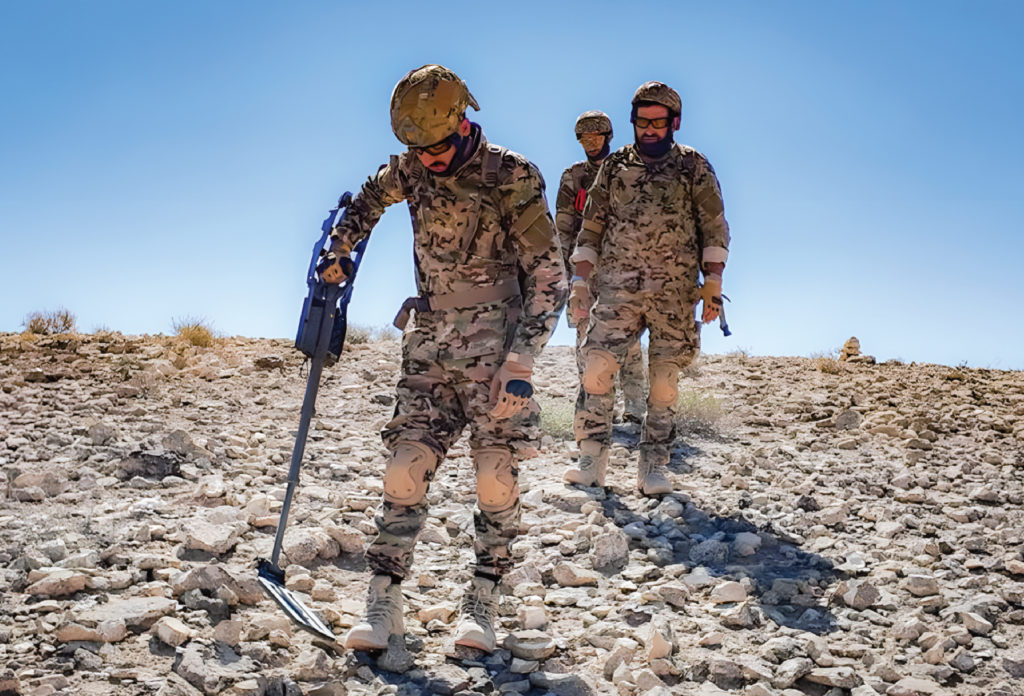
In one of the videos reviewed by the investigation team, which was shared by Syrians on social media, an explosives expert appeared explaining how the team operates. Although he lost one of his legs in a previous explosion, he emphasised during the recording that locating these sites often relies on accounts from local residents and reports from the community, given the absence of official field maps.
Malik Salama, a former officer and volunteer in mine clearance, says: “One of the biggest challenges facing demining efforts in Syria today is the lack of official maps of minefields. After years of conflict, no accurate records have been provided specifying the locations or types of mines, which makes surveying and clearance operations more dangerous and exposes civilians and engineering teams to constant risk.”
“When we receive a report of an area where a mine has exploded, we treat the entire area as contaminated and dangerous, because in most cases we do not have reliable maps. And even when we do find maps, they cannot be fully relied upon, as many areas have been under the control of several successive parties, each of which laid mines without documenting them,” says demining expert Mohammed al-Farhoud.
Al-Farhoud defected from the Syrian regime’s forces at the start of the revolution; he had been carrying out his compulsory military service in Aleppo, specialising in the protection of embassies and diplomatic missions. Over the course of the revolution, he became one of the leading specialists in mine laying and clearance. He was injured whilst defusing a mine before later continuing his work with the Syrian Ministry of Defence’s mine clearance teams.
He adds: “If you have a clear map, you can move quickly and work along a specific route; but when you have no map at all, every step becomes a calculated one. You might be able to cover a hundred metres in an hour if the information is available, but without maps, you might need the same amount of time just to cover a few metres.”
Mine detection operations rely on two main methods. The first is technical surveying using metal detectors, which are capable of detecting metallic objects in general, but are not always specialised or advanced equipment designed specifically for mine detection. The second method is non-technical surveying, which relies on interviews with local residents and reports they provide regarding the presence of suspicious objects or remnants of war.
The investigation team contacted the Syrian Ministry of Defence to request a comment on the absence of maps and the number of casualties among engineering teams, but had not received a reply by the time of publication. The team also sought to verify the existence of military maps or records documenting the locations of mines laid by forces of the former Syrian regime or other parties during the years of conflict; however, officials and mine clearance workers confirmed that there is no centralised database or unified national register that can be consulted to identify areas contaminated by mines and remnants of war.
Given this reality, every mine clearance operation is akin to entering unknown territory, where workers do not know in advance what awaits them beneath the ground.
Whilst vast areas of the country remain contaminated with landmines and explosive remnants of war, experts and international organisations warn that the slow pace of clearance operations will lead to further civilian casualties among those returning to their home areas. Richard Weir, senior researcher in the Crisis, Conflict and Arms Division at Human Rights Watch, says in a report published by the organisation on 8 April 2025: “For the first time in more than a decade, there is an opportunity to systematically address the proliferation of explosive ordnance in Syria through the clearance of landmines and explosive remnants of war. Without urgent nationwide demining efforts, more civilians returning home to reclaim their basic rights, lives, livelihoods and land will be injured or killed.”
How are landmines cleared?
In the absence of accurate maps and given the vast extent of contamination by landmines and unexploded ordnance, mine clearance teams in Syria rely on a combination of field experience and strict safety procedures to identify and deal with hazardous sites. Whilst some missions begin with a report from a local resident or the results of field surveys, every clearance operation unfolds as a series of meticulous steps aimed at preventing further casualties among both civilians and personnel.
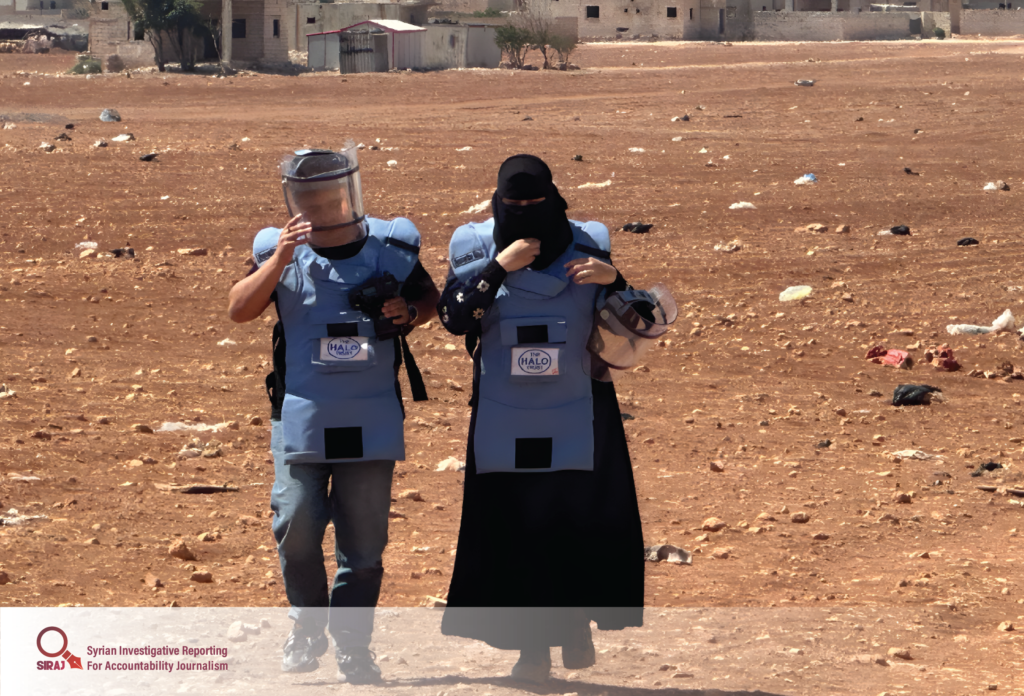
In the town of Killi, in the north of Idlib Governorate, near the Syrian-Turkish border, the organisation “HALO Trust” has been working for more than five years with a group of experts, volunteers and local residents to clear unexploded ordnance from homes, farmlands and residential neighbourhoods to which residents are gradually returning.
The organisation relies on two main teams for its work. The first is the non-technical survey team, which is responsible for surveying and documenting sites containing explosive remnants of war and identifying their types. Its members take photographs, carry out field measurements and record data relating to the munitions discovered. Members of this team are strictly prohibited from handling explosives directly or detonating them; their role is limited to documentation and risk assessment.
The second team is the Explosive Ordnance Disposal (EOD) team, which responds to confirmed reports of the presence of landmines or unexploded ordnance and is tasked with removing or destroying them in accordance with strict standard operating procedures that must be followed prior to any field intervention.
Lama Haj Qaddour (age 32) works as part of this team; she has been leading operations to clear munitions, landmines and improvised explosive devices for around five years in the area stretching from Idlib and south of Saraqib to the M4 international highway.
Last September, a team from SIRAJ accompanied the organisation “Halo Trust” on a field mission to locate unexploded ordnance reported by a local resident near the town of Saraqib. During the journey, the scars of war were evident in the area, which had previously been a frontline between opposition forces and the ousted Assad regime, reflecting the scale of the burden placed on the survey and clearance teams working there.
Al-Haj Qaddour explains that disposing of any unexploded ordnance requires meticulous procedures and specialised training, which the team members have undergone over many years, giving them practical experience in dealing with these hazards. She adds that before commencing any operation to clear mines, bombs or other munitions, the team follows a series of strict safety protocols to ensure the task is carried out with the least possible risk.
This includes preparing the work environment and establishing what is known as a ‘safety perimeter’ – an area marked out around the target to be destroyed – whilst ensuring the area is completely evacuated of residents before the operation begins.
After the detonation, the team carries out a field inspection to ensure the munition has been completely destroyed and that no dangerous fragments remain at the site.
According to Al-Haj Qaddour: “This is of the utmost importance because large fragments may only be partially destroyed,” explaining that dealing with the shrapnel resulting from the detonation is no less important than disposing of the munitions themselves, given that some small fragments “are capable of killing a person”.
Although Lama works according to a structured methodology for the disposal of explosive devices, munitions and landmines, there remains a fundamental problem facing Syria as a whole: the absence of official records identifying the locations of landmines and remnants of war.
Who is responsible for these ‘fields of death’?
The landmine crisis in Syria cannot be understood in isolation from the parties that laid them during the years of conflict. Unlike many conventional conflicts, where minefields are associated with a single regular army or known defensive lines, the pattern of mine contamination in Syria has been shaped by years of control over the same areas by multiple forces, leading to the accumulation of successive layers of mines and unexploded ordnance in the very same locations.
Testimonies from demining experts interviewed by the investigation team indicate that large swathes of the country have seen successive military factions take control, with each laying its own mines without a unified database or mechanism to ensure the documentation of their locations or the subsequent handover of maps.
Expert Mohammed Adnan al-Farhoud explains that some of the areas in which he works today reveal the extent of the chaos left behind by years of war. He says: “At some sites, we found maps of mines laid by the Syrian regime, but then ISIS took control of the area and laid new lines, after which other groups came and laid additional mines. Therefore, even when we find a map, we cannot consider it complete or rely on it absolutely.”
Syria Is Not Party to International Mine Ban Treaties
More than 160 countries around the world have acceded to the Ottawa Convention, widely regarded as the leading international legal framework for banning the use, production, stockpiling and transfer of anti-personnel mines. However, Syria remains outside the convention. Nor is it a party to the Convention on Cluster Munitions, which prohibits the use of cluster munitions and obliges signatory states to clear their remnants and assist their victims.
The impact of non-accession is not limited to symbolic or political aspects alone; it also has practical implications for the mechanisms governing mine action within the country. These two conventions impose a range of obligations on States Parties, including clearing mines from contaminated areas within specified timeframes, establishing national risk education programmes, providing medical, psychological and social support to victims, and sharing technical information and maps relating to areas contaminated by landmines and unexploded ordnance.
Abdul Ghani says that the current situation places a particular responsibility on the new Syrian government in this regard, adding: “Accession to the Ottawa Convention and the Convention on Cluster Munitions must be part of the process of rebuilding state institutions after the war. It is not just a matter of banning the future use of these weapons, but also of recognising the rights of victims, drawing up a national demining plan, and ensuring that this tragedy is not repeated.”
Inadequate equipment… and avoidable risks
During a field visit to the Idlib countryside on 9 April 2025, the investigation team documented the destruction of explosive remnants of war carried out by engineering units affiliated with the Syrian Ministry of Defence.
The field inspection revealed that ordinary civilian and military lorries were being used to transport munitions, whilst a number of personnel involved in the operation were wearing standard military uniforms and light footwear, without any specialist protective gear.
The investigation also documented the use of relatively rudimentary field detonation methods, involving the wiring of explosives and manual ignition, in the absence of the specialised detonation equipment used in modern mine clearance programmes.
According to data from UNMAS, only a limited proportion of the funding required for mine clearance programmes has been provided in recent years, which has had a direct impact on the ability of operating agencies to purchase advanced equipment, train staff and secure the necessary protective equipment.
A battle without funding
Despite the widespread contamination by landmines and remnants of war in Syria, organisations working in this field face an additional challenge: a lack of funding to carry out survey and clearance operations in accordance with international standards, and to scale up their response to match the extent of contamination across Syria’s various governorates.
According to UNMAS, the mine action sector in Syria is suffering from a severe funding shortfall. The 2025 Humanitarian Needs and Response Plan estimates that $67.2 million is required to fund survey and clearance activities, risk education and victim assistance, with the aim of reaching approximately 15.4 million people affected or at risk. The programme has warned that the lack of funding is limiting the ability of operating agencies to scale up their operations and respond to the extensive contamination across the country.
Those working in the field emphasise that limited funding directly affects the ability of implementing agencies to expand survey and clearance operations and to provide equipment and training in line with international standards.
The problem is not limited to the cost of equipment alone, as mine clearance operations require long-term investment, including the establishment of national databases, the conduct of extensive field surveys, the training of specialist teams, and the provision of medical and rehabilitative care for the injured. Both non-technical and technical survey operations also require significant human resources, and it may take years to obtain an accurate picture of the actual extent of contamination.
According to the International Committee of the Red Cross, the clearance of explosive remnants of war may take several years.
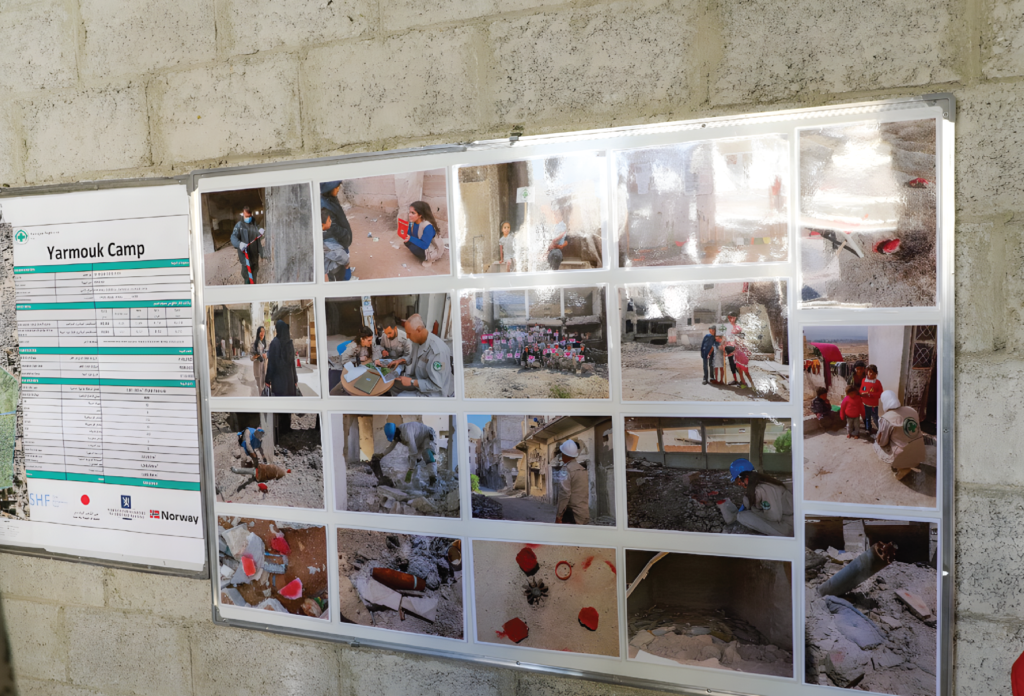
In an attempt to address part of this gap, the Ministry of Emergency and Disaster Management, through the National Centre for Mine Action and War Remnants, partnered with UNMAS and the Food and Agriculture Organization of the United Nations (FAO). Together, they launched a project, funded by the Japanese government, to clear mines and unexploded ordnance and rehabilitate agricultural infrastructure in affected areas.
The project aims “to support clearance operations, focusing on affected agricultural areas near former front lines, with the aim of enhancing civilian safety, supporting agricultural recovery and improving livelihoods in the governorates of Idlib, Aleppo and Hama, however, the scale of contamination across Syria far exceeds the capacity of current projects and requires long-term investment and programmes at the national level”.
Amid growing international attention to demining efforts in Syria, Michael Ohnmacht, Chargé d’Affaires of the European Union Delegation to Syria, said during a field visit to the Damascus countryside: “We have witnessed the scale of the destruction. Yet hope still lives on through the courageous work of mine clearance and raising awareness of the dangers. The European Union will continue to work with Syrian partners to make the land safer.”
In an effort to reduce the risks faced by demining workers, the National Centre for Mine Action, under the Ministry of Emergency and Disaster Management, announced in late 2025 that it would test a drone equipped with ‘magnetometer’ technology, capable of detecting mines and unexploded ordnance at depths of up to six metres below ground. The Civil Defence stated: “This technology can significantly reduce the risks faced by conventional survey teams by minimising the need to approach areas suspected of being contaminated directly.”
Despite these initiatives, data from the Syrian Civil Defence indicates that around 900 sites contaminated with mines and unexploded ordnance have been identified, whilst other estimates suggest that hundreds of thousands of mines and remnants of war are scattered across the country, making the scale of the challenge far greater than the resources currently available.
When volunteers take on the task
Local communities have been forced to rely on volunteers to secure agricultural land and residential areas in preparation for their return. In the town of al-Bara, located in the Jabal al-Zawiya region, some 30 kilometres south of Idlib, residents recount how their area has been turned into a minefield after years of war. Three of the town’s leading figures explain that the former Syrian army forced most of its residents – numbering around 300 families – to flee between 2018 and 2019, before turning the town and its surroundings into a military zone and planting mines in the land adjacent to the front lines with what were then opposition-held areas.
A few days after the fall of the Assad regime, residents began returning to inspect their homes and farmland, only to find widespread destruction: damaged houses, burnt fields, and landmines planted in farmland and on nearby roads.
Ibrahim Mohammed, a local resident, says that a number of civilians were killed when landmines exploded whilst they were attempting to return to or work on their land. Following repeated incidents, a team of volunteers arrived in the town and spent around a week carrying out mine clearance operations, during which they managed to remove nearly 50 landmines, including around 20 that had been planted on his farmland.
During their search operations, the team of volunteers discovered various types of anti-personnel and anti-vehicle landmines that had been planted around the town and on its agricultural land. According to one team member, the mines discovered included anti-personnel mines of the OZM-72, PMN-1, YM-1 and POM-2S types, as well as PMN mines, and anti-vehicle mines of the YM-2 and YM-3 types. The variety and density of these mines reflect the extent of the contamination left behind by years of conflict in the region, and the ongoing risks this poses to both returning residents and those working on mine clearance.
Today, more than a year after Fahd al-Ghajr’s death, his wife and four children continue to live in a makeshift home made of corrugated iron sheets amidst olive groves. The man who spent years clearing mines from other people’s homes was unable to clear the mine that ended his own life.
- Creative coordination and visual solutions: Radwan Awad.
- A version of this investigation was published on the Daraj website.