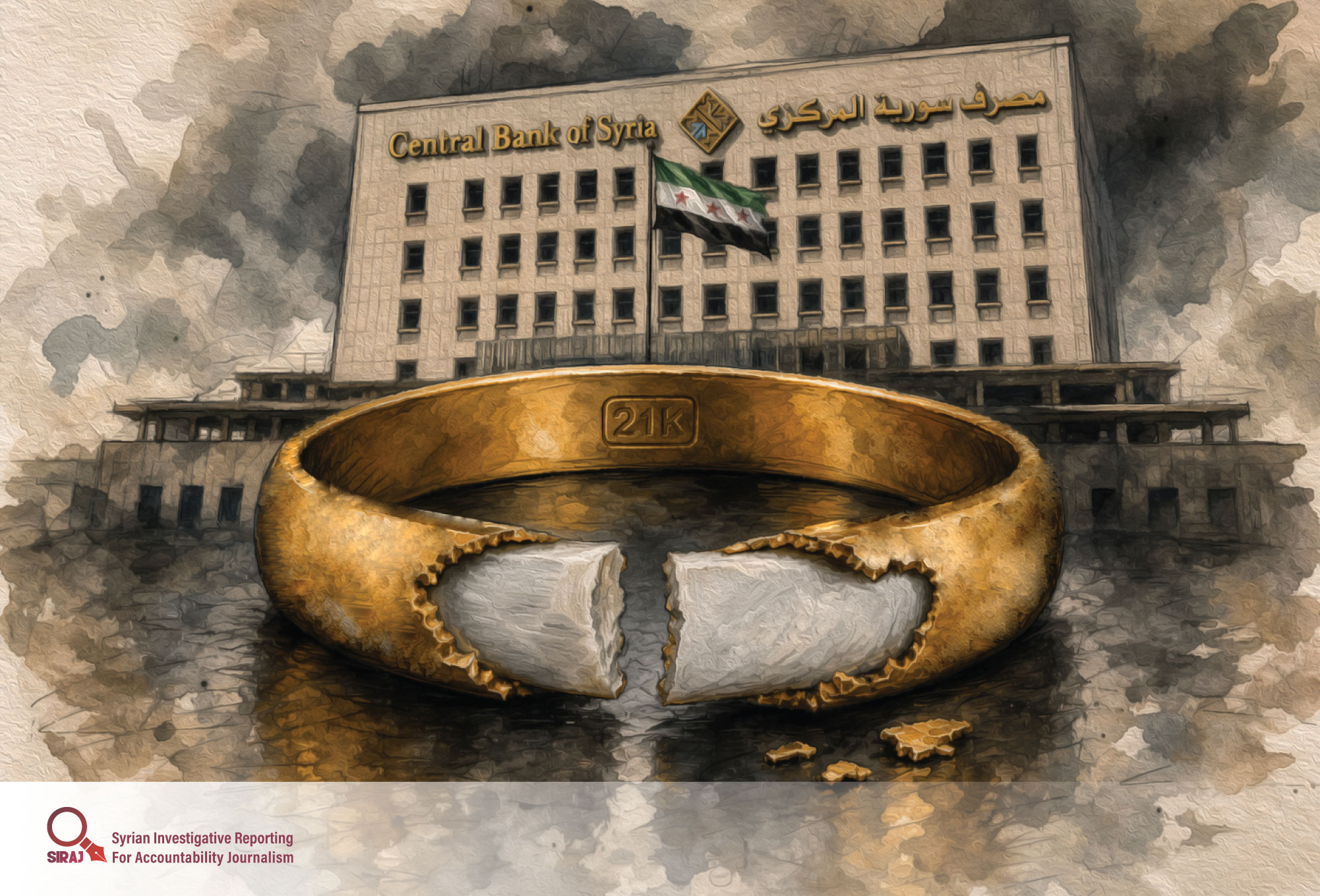


In late 2013, Maher Nahhas walked into a gold shop in Damascus to sell several gold coins he had purchased months earlier. Nothing about them raised suspicion. Their color matched genuine gold, their weight was accurate, and each bore an official hallmark indicating 21-karat purity.
But when the jeweler tested the coins, the results unveiled a different story. Although the coins appeared to hold evidence of meeting official standards, laboratory testing revealed that their gold content fell below the declared 21-karat purity.
Maher’s experience was far from unique.
Over the course of this investigation, similar accounts emerged from jewelers, gold traders and ordinary citizens, all pointing to a hidden flaw in one of Syria’s most trusted stores of wealth: gold.
This investigation seeks to answer two fundamental questions:
How could gold bearing the official hallmark of the Damascus Association of Goldsmiths and Jewelry Making contain less gold than its certified purity? And why do the findings suggest that these were not isolated incidents, but part of a broader pattern within Syria’s gold market?
The investigation draws on multiple sources, including 13 interviews with jewelers, workshop owners, former employees of the Syria Association of Goldsmiths and Jewelry Making, and gold traders who have since left Syria. Together, they describe how large quantities of under-karat gold entered the market despite carrying official certification.
Syria’s Law No. 34 of 2023 regulates the temporary entry of raw gold into the country, setting out applicable exemptions and fees. The law allows both Syrian and foreign residents—as well as non-residents—to bring raw gold into Syria without an import license, including as accompanied baggage, while prohibiting the import of processed gold jewelry.
Per this law, such entries are considered temporary admissions rather than permanent imports. Thus, Importers are required to export an equivalent weight of manufactured gold products, ensuring that the raw gold is processed domestically rather than treated as a commercial import.
Mahmoud Al-Nimer, head of the Association of Goldsmiths and Jewelry Making, told the investigation team that, following the fall of the Assad regime, the Association discovered gold items containing 760 shares of pure gold instead of the 875 shares required for 21-karat gold—a discrepancy he described as evidence of the scale of the problem.
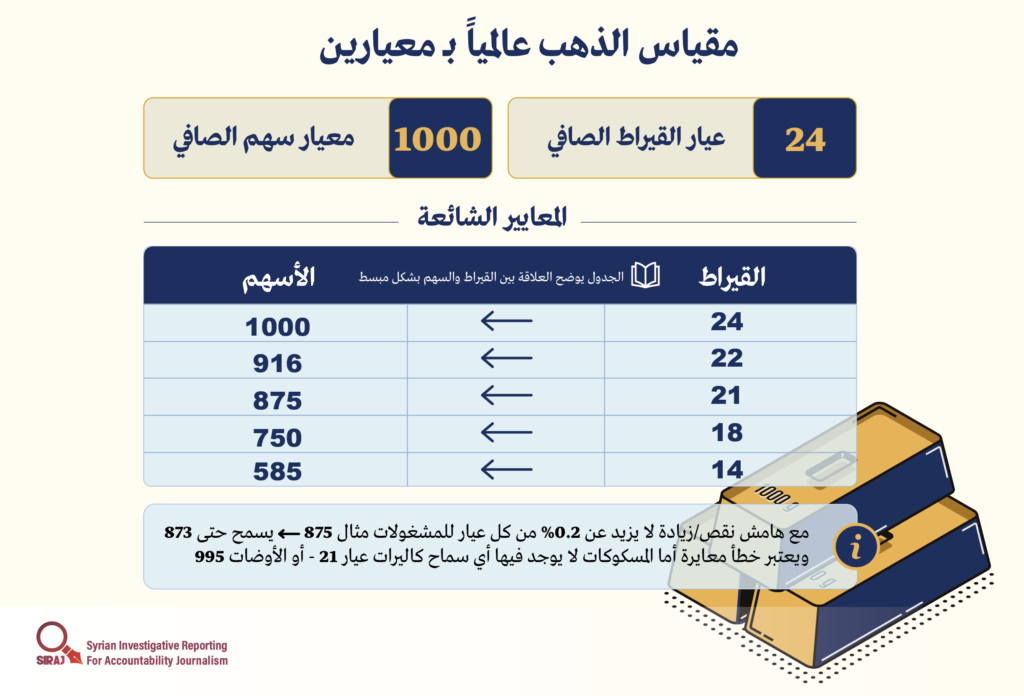
In Syria’s jewelry industry, a “share” (sahm) is a precision unit used to express gold purity by dividing the karat into finer measurements. A purity of 760 shares is closer to 18-karat gold. The difference represents a significant loss of value in a market where even the smallest deviation in purity carries serious financial consequences.
Syria is not a major gold producer. The domestic market relies primarily on recycling existing gold stocks, supplemented by imported raw gold, temporary admissions for manufacturing, and smuggled supplies that circulate between workshops, jewelers and consumers.
According to Trading Economics, Syria’s official gold reserves—held by the Central Bank of Syria—were estimated at 25.8 metric tonnes as of 2024, with an estimated value of approximately 42 trillion Syrian pounds.
How It Began
Following the outbreak of the Syrian uprising in March 2011, cases of gold fraud began to emerge in Damascus. Goldsmiths secretly sold bullion, coins and jewelry whose actual purity was lower than the karat stamped on them.
According to the head of the Association of Goldsmiths and Jewelry Making, today’s market inherited large quantities of under-karat gold from that period. Gold traders and consumers who monitored the market and spoke to SIRAJ estimate that tens of kilograms of counterfeit or under-karat gold entered circulation.
Former Association chairman George Sarji said demand for gold surged after 2011 as the Syrian pound rapidly lost value.
“We were hallmarking around 500 kilograms of gold every month,” he recalled.
The accounts gathered from victims, jewelers and traders suggest that the problem went beyond isolated fraud, pointing instead to both regulatory and technical failures. They also raise a more troubling possibility: the existence of a system that allowed what goldsmiths refer to as “counterfeit” or “tampered” gold to enter the market by exploiting weaknesses in the inspection and hallmarking process.
This occurred within an economic environment largely controlled by the Fourth Division of the former Syrian regime’s army and the country’s security services, particularly Branch 251, commonly known as Al-Khatib Branch, one of the regime’s intelligence directorates.
Unlike many international markets dominated by large manufacturing companies, Syria’s gold industry is built around independent workshops that produce jewelry for local sale.
Traditionally, the Syrian market relied on a two-tier verification system to guarantee the authenticity of gold before it reached consumers.
The first hallmark identifies the workshop where a piece was manufactured. The second, issued by the Association of Goldsmiths and Jewelry Making, certifies that the item complied with officially approved purity standards.
In theory, this dual-hallmark system provides both traceability and regulatory oversight. In practice, however, investigators found that it did not always function as intended.
According to the General Authority for Precious Metals, Damascus currently has 250 gold manufacturing workshops, Aleppo has 225, and Idlib has 30.
Between the middle of last year and the beginning of this year, Damascus produced approximately two metric tonnes of gold jewelry, Aleppo produced four tonnes, and Idlib produced one tonne.
Gold prices in Syria are officially determined according to the official U.S. dollar exchange rate and pricing issued by the Central Bank of Syria.
However, the sharp depreciation of the Syrian pound and the existence of a parallel (black) foreign-currency market created persistent instability, causing gold prices to fluctuate dramatically.
What Is “Counterfeit Gold”?
In a market built almost entirely on trust, an official hallmark is supposed to be sufficient proof of authenticity.
Hallmarking is the official stamp engraved on gold jewelry to certify its purity, legal status and compliance with national standards. It functions as a government-backed guarantee of quality.
Yet the cases uncovered by this investigation revealed something very different: jewelry bearing an official hallmark indicating one purity level while actually containing significantly less gold.
A gold item’s karat—the proportion of pure gold it contains cannot be determined by visual inspection alone. It must be measured using specialized equipment such as precious-metal analyzers or chemical and spectrometric testing methods capable of accurately determining gold content.
As a result, a piece may appear flawless in terms of color, weight and official hallmark while still containing less gold than its stamp indicates.
In many cases, the discrepancy was relatively small, only 10 to 15 shares (parts per thousand) below the legal standard. For jewelry stamped as 21-karat gold, even such seemingly minor deviations represent a significant loss in value.
Within the trade, goldsmiths refer to this practice simply as “counterfeit gold.”
One workshop owner who operated during that period explained the financial incentive behind the practice: “The difference may seem small. But when you’re producing hundreds of kilograms, it becomes a fortune.”
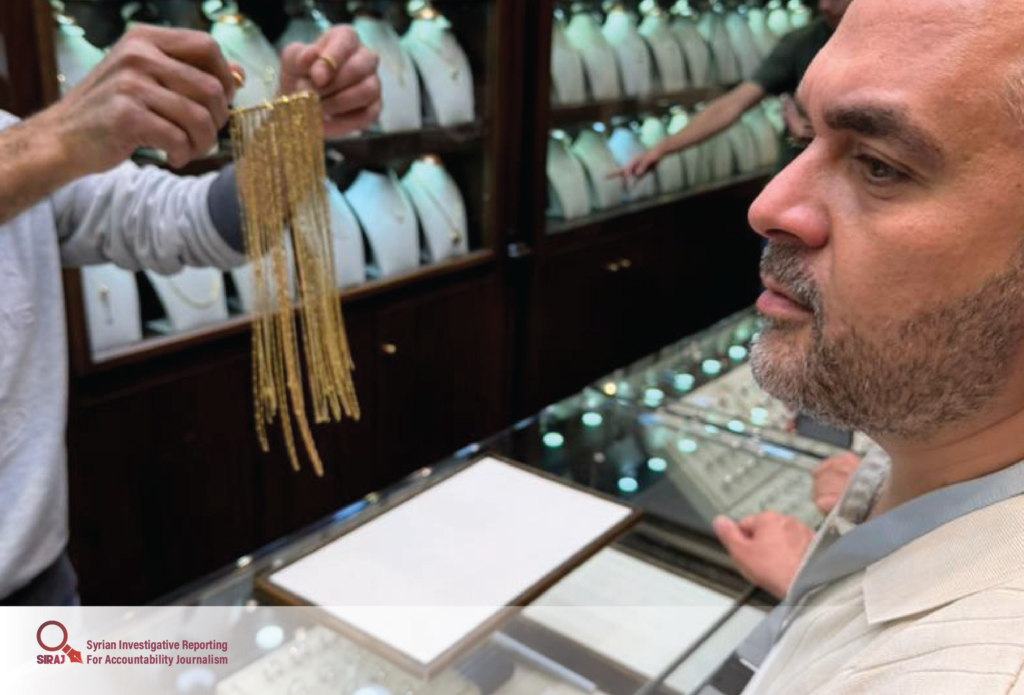
According to five jewelers interviewed by SIRAJ in the Al-Hariqa Gold Souq and the Barzeh district of Damascus, the greatest challenge was that this type of fraud was extremely difficult to detect within the market itself.
In everyday business, most jewelers relied primarily on the official hallmark—alongside the workshop’s own maker’s mark as proof of authenticity, without subjecting every item to laboratory testing or re-smelting.
Even when suspicions arose, advanced analytical equipment such as X-ray fluorescence (XRF) spectrometers was rarely available, particularly during the years of conflict, owing to high costs and import restrictions.
Musab Al-Aswad, Director of the General Authority for Precious Metals—a newly established government body tasked with restructuring the sector after years of overlapping authority between the Ministries of Finance, Economy and Industry, the Central Bank and other institutions—argues that the “counterfeit gold scandal” reflected the broader corruption that permeated the institutions of the former regime.
“It is only natural that corruption in the gold sector would be greater than elsewhere,” he said. “The financial returns are exceptionally attractive, and uncovering this type of fraud requires highly specialized expertise. The real problem was that the very institutions responsible for detecting violations were also managing the sector—and were themselves implicated. Once corruption reaches the oversight bodies, exposing it becomes vastly more difficult.”
A Market Under Pressure
As the Syrian pound rapidly lost value against foreign currencies, Syrians’ saving habits changed dramatically. Citizens increasingly sought safer ways to preserve their wealth, and gold—long regarded as the country’s most trusted store of value—became the preferred refuge. Within a short period, demand for gold coins and bullion ounces surged, placing unprecedented pressure on the market.
A Damascus jeweler who worked in the market during that period described the situation as “a state of madness.”
“Everyone wanted to convert their money into gold,” he said. “The quantities arriving at the Goldsmiths Association became enormous.”
According to former Association Chairman George Sarji, minting gold coins and bullion had originally been prohibited in Syria until he obtained approval from the Governor of the Central Bank of Syria, allowing locally produced coins to receive official hallmarks.
At the same time, however, Sarji acknowledged that some workshops had forged both the Association’s hallmark and the proprietary stamps of legitimate workshops by manufacturing counterfeit dies. As a result, part of the counterfeit gold entered the market entirely outside official channels, without ever passing through the Association’s inspection process.
An Association employee who served before, during and after the uprising—and remained in office following the fall of the Assad regime—described the immense pressure placed on the organization, which was the sole official body responsible for verifying gold purity and issuing hallmarks.
“On some days, we received more than 100 kilograms of gold,” he said. “Sometimes as much as 200 kilograms in a single day.”
Under normal circumstances, not every piece of jewelry undergoes an individual laboratory analysis before being hallmarked and released to the market. Instead, inspectors test random samples from each production batch before applying the Association’s official hallmark to the entire batch, certifying that it complies with legal purity standards.
As production volumes increased and pressure on the Association mounted, this quality-control system became increasingly vulnerable. Yet random sampling remained the primary verification method.
“That’s when the fraud started slipping through,” said an employee at a Damascus jewelry shop, referring to the declining ability of the regulatory system to detect every irregularity.
The First Signs of Suspicion
The issue of under-karat gold first surfaced as isolated rumors—cases that many jewelers hesitated to report to the security services for fear of retaliation or arrest.
Gradually, however, the issue became common knowledge throughout Damascus’s gold market.
The controversy reached a turning point in February 2013, when George Sarji was dismissed after serving 13 years as head of the Association of Goldsmiths and Jewelry Making (2000–February 2013), and Ghassan Jazmati replaced him.
Speaking to SIRAJ, Abu Maher, a veteran jeweler in Damascus’s Gold Souq, recalled what many in the industry consider the first public warning.
Between 2013 and 2014, he said, a well-known Syrian company distributed gold coins as prizes in commercial promotions, a common marketing practice at the time.
The problem emerged only when some of the winners attempted to sell their prizes.
“When people came to sell the coins,” Abu Maher said, “we discovered the purity wasn’t accurate. They contained around 800 parts per thousand instead of 875.”
According to Abu Maher, the matter quickly extended beyond isolated suspicions.
As similar cases multiplied, complaints spread throughout the market. Eventually, the coins were withdrawn, and the company responsible for minting them was required to compensate buyers for the difference in value.
But although that action appeared to resolve the immediate problem, it failed to restore confidence.
“At first we thought it was just a mistake,” Abu Maher said. “Later we realized the problem was much bigger.”
Former Association Chairman Ghassan Jazmati, however, rejected allegations that the market had been affected.
In an interview with SIRAJ, he insisted that all gold circulating during his tenure was legally compliant as long as it bore the Association’s official hallmark, implicitly denying any systemic failure in inspection or hallmarking procedures.
When asked about allegations of corruption, Jazmati dismissed them as “defamation” and subsequently ceased responding to journalists’ questions.
His account, however, is contradicted by judicial records and testimony from numerous goldsmiths describing what they characterized as a broad corruption network operating within Syria’s gold sector during that period.
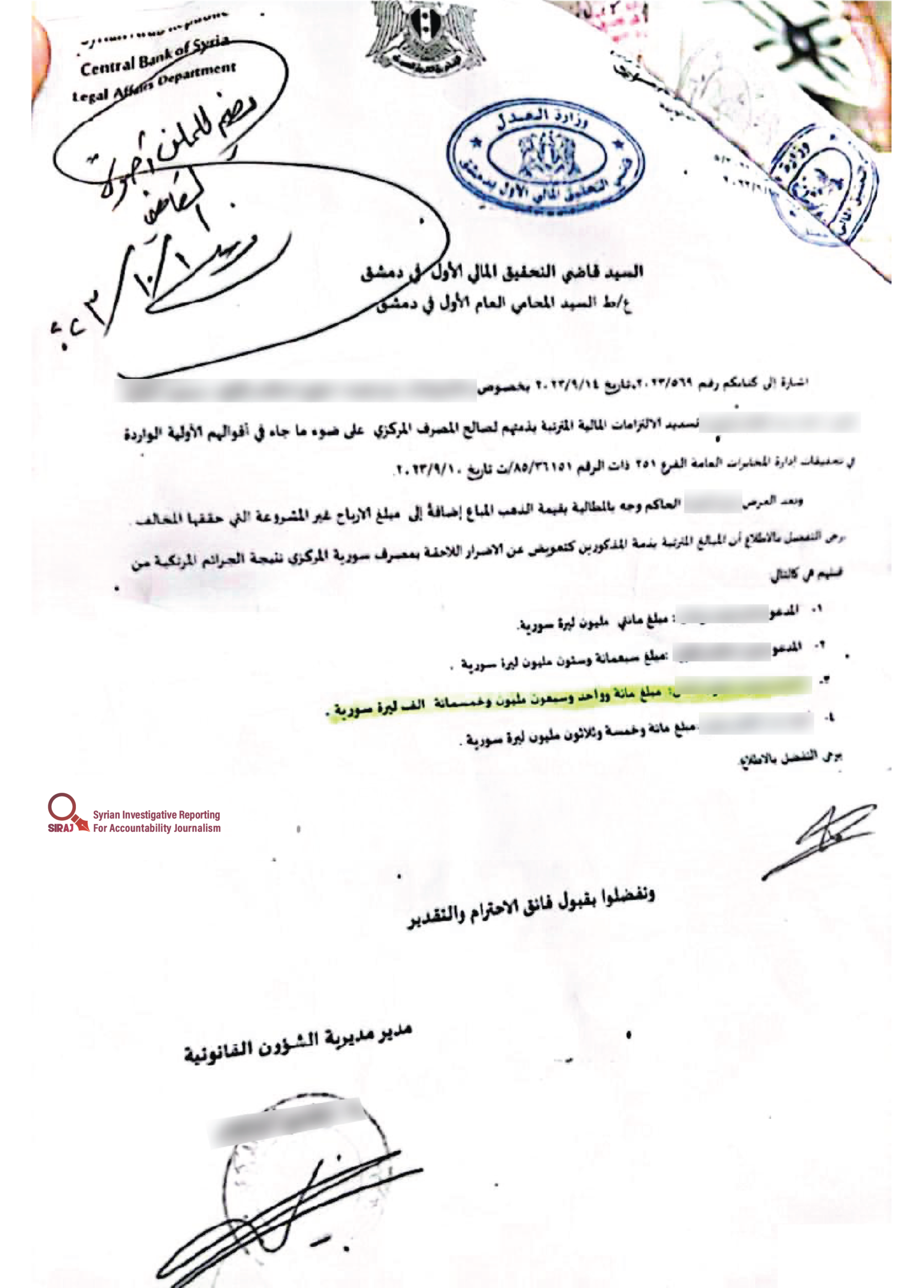
An appeal filed by eight Damascus jewelers directly accused Jazmati of systemic corruption, of manipulating gold purity standards and of extorting jewelers in cooperation with officers from Branch 251 (Al-Khatib Branch) and other security agencies under the former regime.
According to the appeal, submitted before the First Referral Judge in Damascus on 29 December 2025, the plaintiffs accused Jazmati of abusing his authority within the Association and allowing counterfeit gold bearing the Association’s official hallmark to circulate in the market.
The filing also alleged the disappearance of financial records, assay registers and quantities of gold, while describing systematic manipulation methods, including altering tested samples and resealing production batches. The plaintiffs argued that an earlier decision shielding Jazmati from prosecution had ignored what they described as “conclusive evidence and compelling indications.”
The appeal was ultimately rejected after the court upheld the previous decision not to prosecute Jazmati, citing insufficient evidence, according to documents reviewed by the investigation team.
Multiple witnesses also alleged that Jazmati maintained direct relationships with senior officers at the Al-Khatib Branch, including Major General Ahmad Dib and Yasar Ibrahim, a senior economic adviser to Bashar al-Assad.
According to these testimonies, the names of wealthy Damascus jewelers were routinely passed to the security services. This was allegedly followed by summonses, arrests on pre-prepared charges, and pressure on some detainees to pay hundreds of thousands of U.S. dollars in exchange for their release.
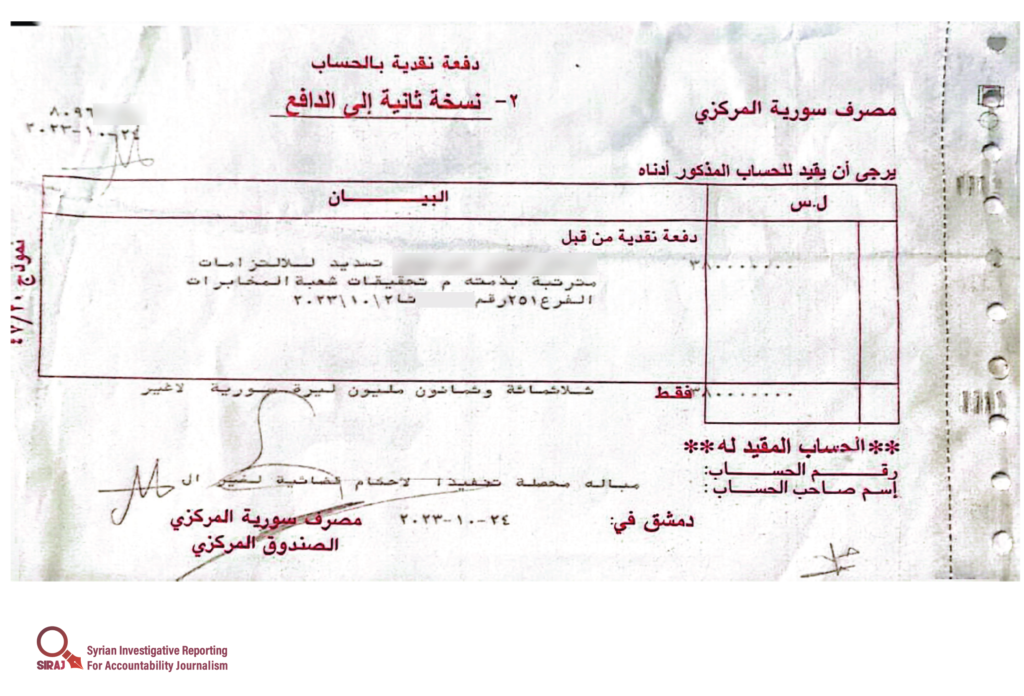
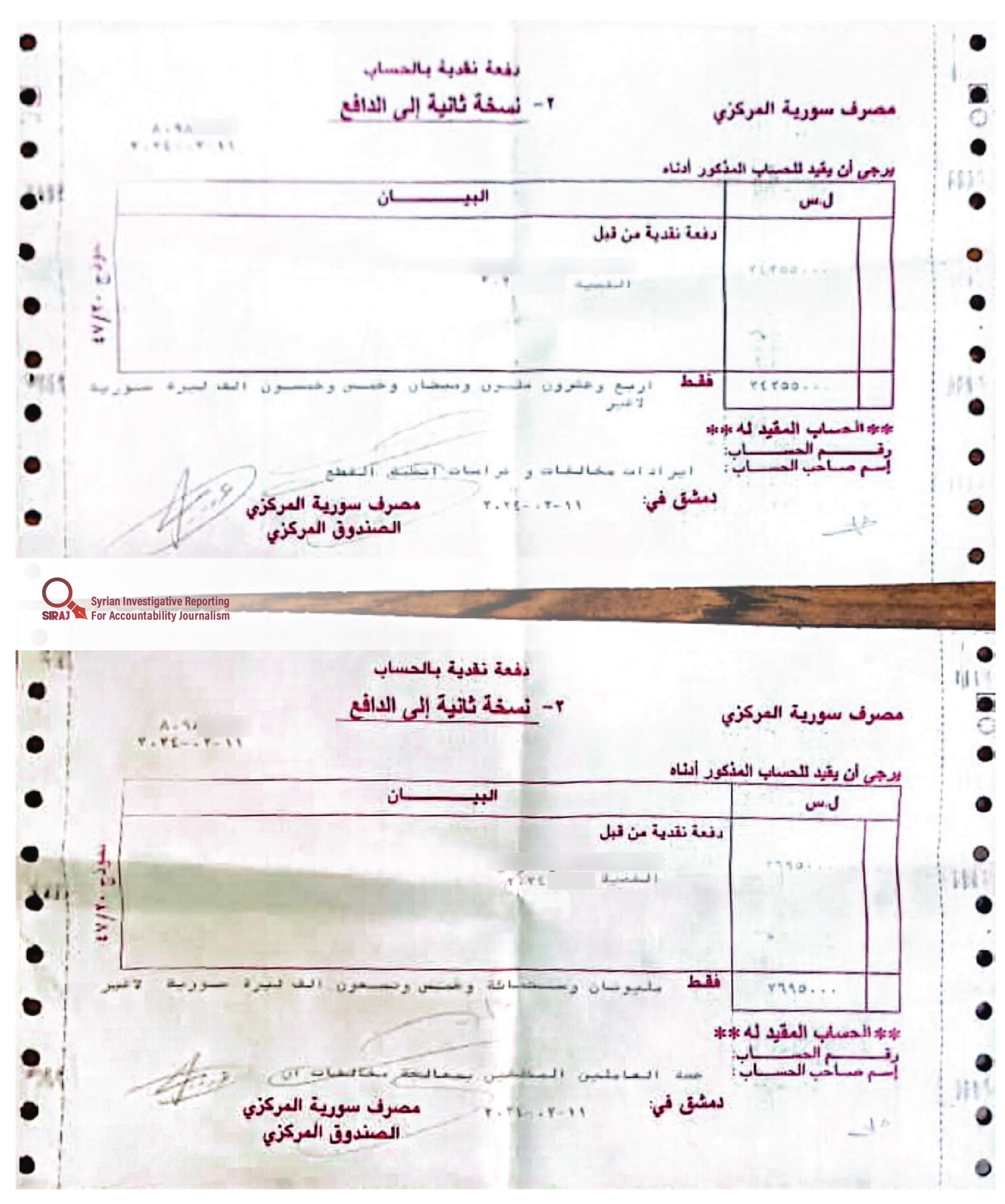
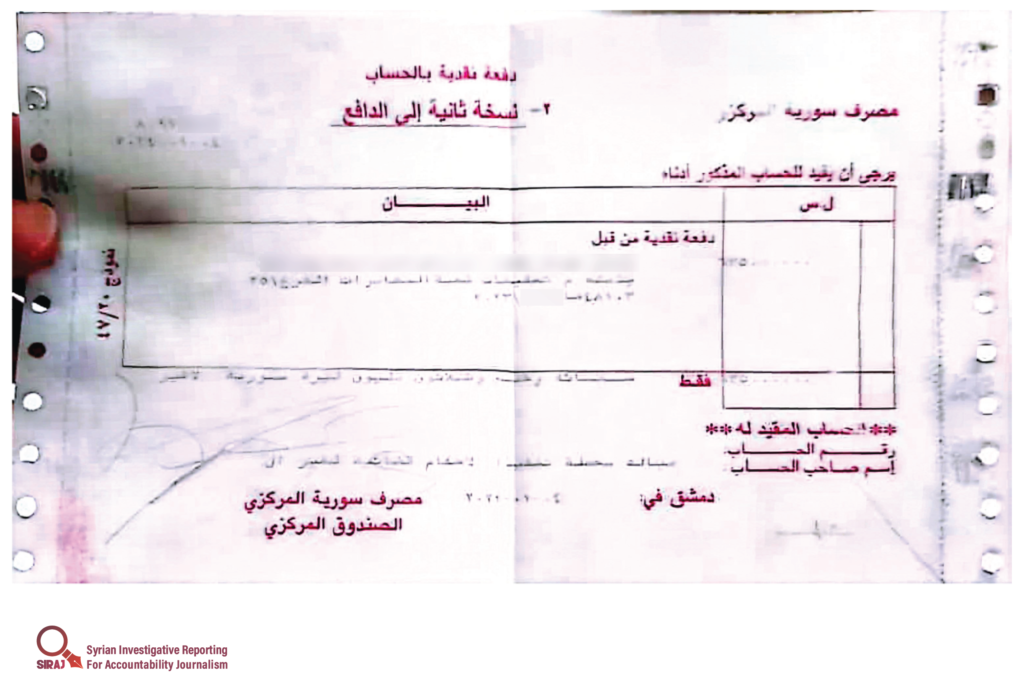
Payment receipts showing financial transfers made by gold traders to Branch 251 through the Central Bank of Syria – SIRAJ
Where the Fraud Began
Following the fall of the Syrian regime, journalists from SIRAJ began tracing reports of under-karat gold by following the metal’s journey through Syria’s gold market.
As they gathered testimonies from jewelers and industry insiders, nearly every account pointed to the same starting point: the workshops.
These workshops represented the first stage of production, where a gold item’s purity could be deliberately altered before it reached the Association of Goldsmiths and Jewelry Making for official hallmarking.
Throughout the investigation, one name repeatedly surfaced: a prominent businessman and gold trader, J. Z.
According to three well-informed sources within the jewelry sector, J. Z. owned his own workshop but did not always manufacture gold under his own name.
One market insider explained how the arrangement worked:
“He used another workshop’s hallmark, one whose owner had already died. That way, responsibility disappeared.”
The investigation was unable to obtain a response from the trader. Multiple sources later told SIRAJ that he had moved to an Arab country before the fall of the Assad regime and subsequently died there.
Neither the Syrian Ministry of Interior nor the Central Bank of Syria responded to requests for comment.
Using the names and hallmarks of inactive or abandoned workshops created an additional layer of obscurity around the true origin of the gold.
When a counterfeit item surfaced, tracing it back to its producer became significantly more difficult because the stamped hallmark no longer identified the workshop that had actually manufactured it. In the case of J. Z., the hallmark belonged to a workshop whose owner had already passed away.
Former Association Chairman George Sarji previously stated that he had reported cases of forged hallmarks to the relevant authorities and had attempted to trace their source within the market.
Taken together, these competing accounts illustrate the complexity of the scheme, in which direct responsibility, abuse of influence and regulatory failure often became intertwined.
Yet nearly everyone interviewed agreed on one point:
The workshops were no longer merely production sites—they had become the starting point for a chain of manipulation that eventually spread throughout the entire market.
Sarji told the investigation team that, during his tenure, the market was considerably more disciplined. The Association conducted regular inspection campaigns and destroyed any non-compliant gold it discovered.
He explained that the hallmarking process was never based on testing every individual item. Instead, inspectors randomly selected one or two samples from each production batch before applying the official hallmark.
“From every box we would take one or two samples,” he said. “Those boxes could contain rings, bracelets or other jewelry.”
From Guarantee to Loophole
If workshops marked the beginning of gold production, the official hallmarking tools—known within the trade as hallmark punches—served as the passport allowing jewelry to enter the market.
According to George Klass (a pseudonym), a former employee in the sector, the hallmarking system before 2011 relied largely on professional trust between workshops and the Association.
Workshop owners first had their gold assayed by specialized testing facilities before submitting it to the Association, where inspectors randomly tested samples to verify purity before applying the official hallmark.
Although the system was never entirely immune from abuse, Klass said that before 2011 cases of fraud remained relatively limited and never developed into a widespread phenomenon.
That changed dramatically in the years that followed.
According to Klass, regulatory oversight weakened while informal financial settlements increasingly replaced formal enforcement whenever purity violations were discovered.
Although SIRAJn could not independently verify every allegation, interviews consistently pointed to serious shortcomings in the control of the official hallmark punches after the Syrian uprising began.
Several witnesses stated that both workshop punches and Association hallmarking tools were not always kept under strict supervision.
A workshop owner identified only as Nihad said some Association employees routinely kept official hallmark punches in their personal possession outside working hours.
“Some people carried the punch with them all the time,” he said. “That meant they could stamp anything.”
Even more concerning, counterfeit hallmark punches themselves became increasingly common.
According to Nihad, forged punches circulated among certain workshops, allowing jewelry to receive what appeared to be legitimate official hallmarks despite failing to meet legal purity standards.
An Organized Operation
Gold and diamond trader Ahmad Al-Khayyat provided one of the clearest accounts of how the hallmarking system was exploited.
In a recorded interview for this investigation, he described 2013 as the turning point.
“Around 50 kilograms of under-karat gold entered the Syrian market that year,” he said. “They included gold coins and bullion ounces that looked completely legitimate, carried official hallmarks, but contained less gold than declared.”
He added that during the same period the Association replaced its official hallmark punch, officially claiming that the original had been stolen.
“That wasn’t simply a technical procedure,” Al-Khayyat said. “It opened the door to systematic manipulation of gold purity and jewelry quality.”
Musab Al-Aswad, Director of the General Authority for Precious Metals, believes forging an official hallmark punch was technically straightforward.
“Counterfeiting a hallmark punch was not particularly difficult,” he said. “In some cases it may even have happened with the knowledge of those responsible for overseeing the sector, in exchange for payments to facilitate the process.”
‘Just Fifteen Minutes’ at Al-Khatib Branch
Initially, cases of fraudulent gold were treated as commercial disputes.
A customer would discover a discrepancy, return to the jeweler, who would attempt to compensate the buyer or return the item to its supplier.
As complaints multiplied, however, the matter attracted the attention of the Assad regime’s intelligence services.
One Damascus jeweler described the shift as sudden.
“At first, we only heard about counterfeit pieces,” he said. “Then people started receiving security summons.”
Multiple witnesses told SIRAJ that intelligence officers transformed the issue into an opportunity for extortion.
Jewelers who had unknowingly traded under-karat gold were pressured either to recover the jewelry or compensate buyers while simultaneously becoming targets of security investigations.
Several Damascus jewelers said that some cases ended in arrests by Branch 251, better known as Al-Khatib Branch.
Possessing counterfeit gold or even violating official pricing regulations became pretexts for pressuring jewelers into paying substantial sums in U.S. dollars into intelligence-controlled accounts held at the Central Bank of Syria.
One jeweler from the Barzeh district recalled his arrest: “They told me, ‘Come with us for fifteen minutes.’ Those fifteen minutes turned into four months.”
He said he was transferred between several security branches before arriving at Al-Khatib Branch, where he underwent harsh interrogation and was later sent to Adra Prison.
Despite surrendering 1.3 kilograms of gold, he remained imprisoned for several months. The official accusation was manipulating gold prices.
“The charges were fabricated,” he said.
Jeweler Hanna Boutros described a remarkably similar experience.
In 2020, security officers raided his home before taking him to Al-Khatib Branch, which handled many of the gold market investigations during that period.
He too was accused of violating official pricing regulations.
According to Boutros, the charge was routinely used against jewelers.
After 15 days in detention, he secured his release only after paying the equivalent of five kilograms of gold.
His ordeal did not end there.
Approximately one year later, in 2021, he was arrested again and detained for several months.
This time, he says, his release was conditioned on paying 120 million Syrian pounds, a payment that consumed most of his capital and ultimately forced him to leave Syria.
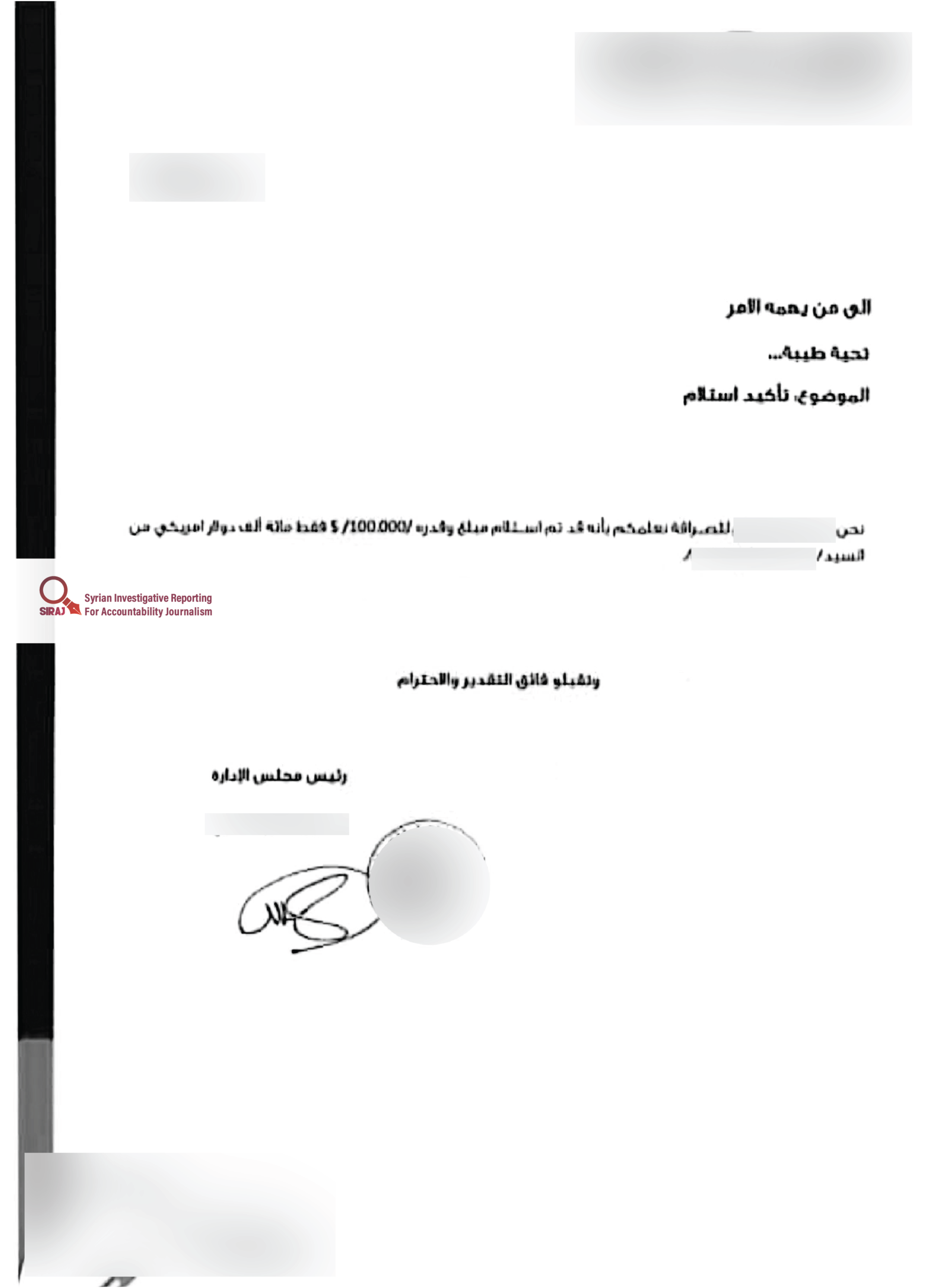
During the investigation, several traders also showed SIRAJ payment receipts issued by Al-Khatib Branch bearing the names of jewelers and gold merchants.
For security reasons, they requested that the documents not be published.
The receipts instructed recipients to pay fines denominated in U.S. dollars to the Central Bank of Syria within a specified deadline or face imprisonment.
Alternatively, they could deposit the required amount in cash into an account controlled by the General Intelligence Directorate through Al-Fadel Exchange Company.
“Don’t Buy Second-Hand Gold Without Testing”
According to Mahmoud Al-Nimer, the current head of the Association of Goldsmiths and Jewelry Making, the industry’s approach has fundamentally changed.
“Today, there is zero tolerance,” he said. “Any item that fails to meet the required purity standard is immediately broken up and returned to the workshop.”
Al-Nimer said the Association has introduced modern gold-testing equipment that, he said, had previously been prohibited under the former regime.
He also urged customers to insist on receiving an official, stamped invoice from licensed jewelers.
“A proper invoice is the customer’s guarantee,” he added. “If any problem arises later, it protects their rights.”
Yet the new testing technology remains out of reach for many jewelers.
One market insider explained that the specialized analyzers cost between US$20,000 and US$35,000.
“Not every jeweler can afford one,” he said, highlighting the technological gap that still exists across Syria’s gold sector.
Alongside these measures, the Association has begun inspecting jewelry displays and prohibiting the sale of second-hand gold unless it has been re-tested.
But according to one Association employee, the scale of the problem remains enormous.
“There’s an ocean of counterfeit gold in Syria.”
The total quantity of under-karat gold that entered circulation cannot be accurately determined, nor can it easily be removed.
“Every kilogram may be missing 20 or even 25 grams of gold,” one Association employee said, referring to the cumulative losses embedded in jewelry already circulating among the public.
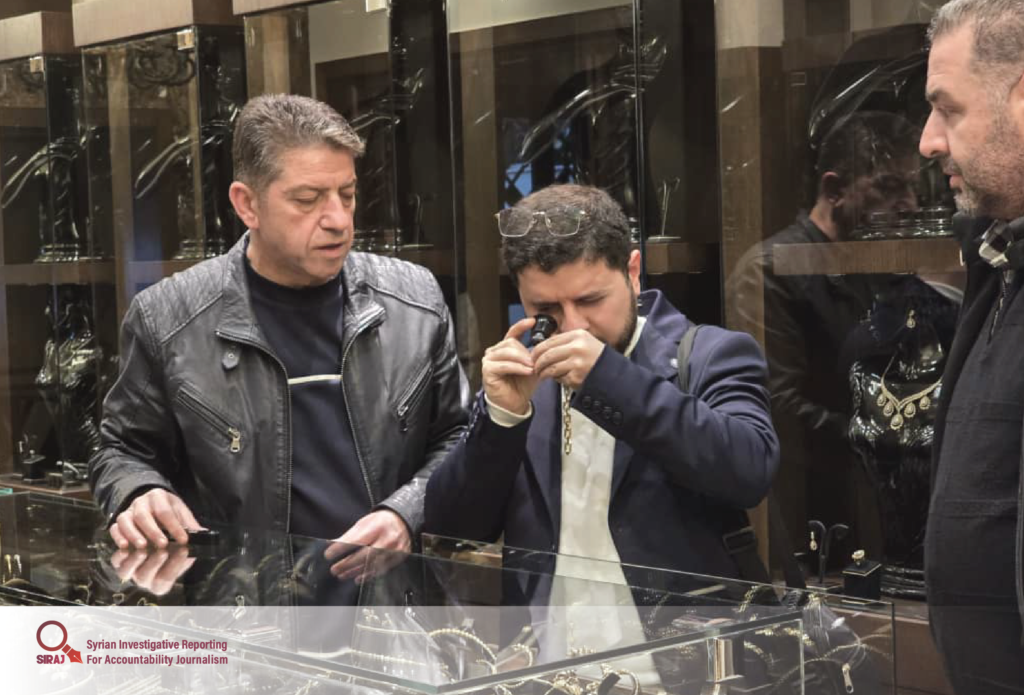
During an inspection campaign conducted by the General Authority for Precious Metals in the Damascus suburb of Qudsaya, attended by the investigation team, Nikola Al-Zahlawi, a member of the Authority’s Board of Directors, stressed that no second-hand gold should be bought or displayed before undergoing laboratory testing.
He said any item that fails to meet the legally required purity is immediately destroyed, while only jewelry that passes inspection is permitted to return to the market.
As a result, many Damascus jewelers now say they prefer to avoid second-hand gold altogether, choosing instead to sell only jewelry bearing the Association’s newly issued hallmarks.
One jeweler summed up this shift with a sarcastic remark: “Old gold? It’s plastic.”
Regarding consumers who previously suffered financial losses after unknowingly purchasing counterfeit gold, Al-Aswad, Director of the General Authority for Precious Metals, said the authorities have managed to restore compensation in many cases.
“People who have been affected can file a complaint with the Goldsmiths Association by presenting their original purchase invoice,” he explained. “If the invoice is available, the Association recovers the difference in value from the jeweler’s account. If the jeweler is still operating, compensation can be obtained from them. If the jeweler has already compensated the customer, they may in turn recover the loss from the workshop that originally supplied the jewelry. If this chain can be fully established, responsibility ultimately reaches the original producer.”
A version of this investigation was also published by Daraj Media
Creative Production and Visual Design: Radwan Awad