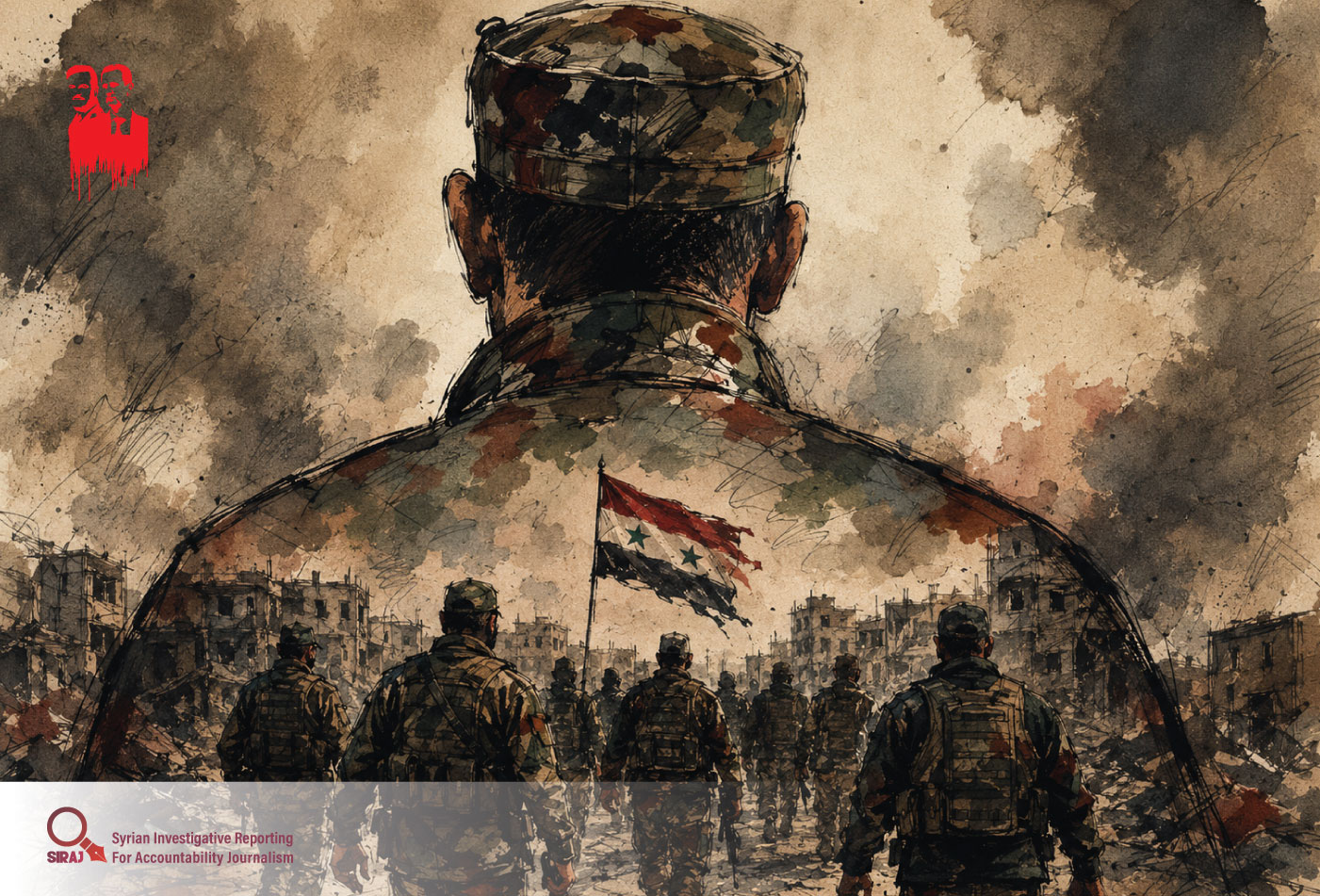


The “Mountain Battalion” or the Seventh Battalion is presented as a representative example of the National Defense Forces (NDF) units established by the former Syrian regime to fight alongside the regular army. The creation of these formations reflected the regime’s need for irregular forces viewed as more loyal than conventional military units.
In doing so, the regime revived an older model of parallel security formations dating back to the early years of Ba’ath Party rule. This model later evolved through the pro-Assad SHabiha militias closely associated with the Assad family before becoming a more structured network of paramilitary forces following the outbreak of the Syrian uprising in 2011.
Why Was the Seventh Battalion Created?
As the Syrian uprising gained momentum after it erupted in March 2011—particularly with the emergence of armed opposition factions—the Assad regime increasingly relied on more flexible, locally embedded forces capable of controlling daily life at the neighborhood and street level.
This strategy rested on a clear premise: maintaining control required more than deploying conventional military units. It also depended on building local patronage networks that combined intimate knowledge of the terrain with the ability to monitor and dominate it.
This investigation, produced jointly by the Syrian Investigative Reporting for Accountability Journalism (SIRAJ) and Daraj, examines the Seventh Battalion as a case study of the NDF—pro-government militias established during the Syrian revolution years to operate alongside the regular army. As defections weakened the military, the regime increasingly turned to irregular formations considered more politically reliable. The Seventh Battalion is presented not as an isolated example, but as a window into the broader ecosystem of militias that emerged during the conflict.
Digital records and internal documents reviewed by journalists from Daraj and SIRAJ suggest these forces or militias were built not only on political loyalty but also on local ties. Their appeal lay in offering immediate protection for communities, property, and familiar territory, unlike the regular army, whose soldiers were often deployed far from their hometowns.
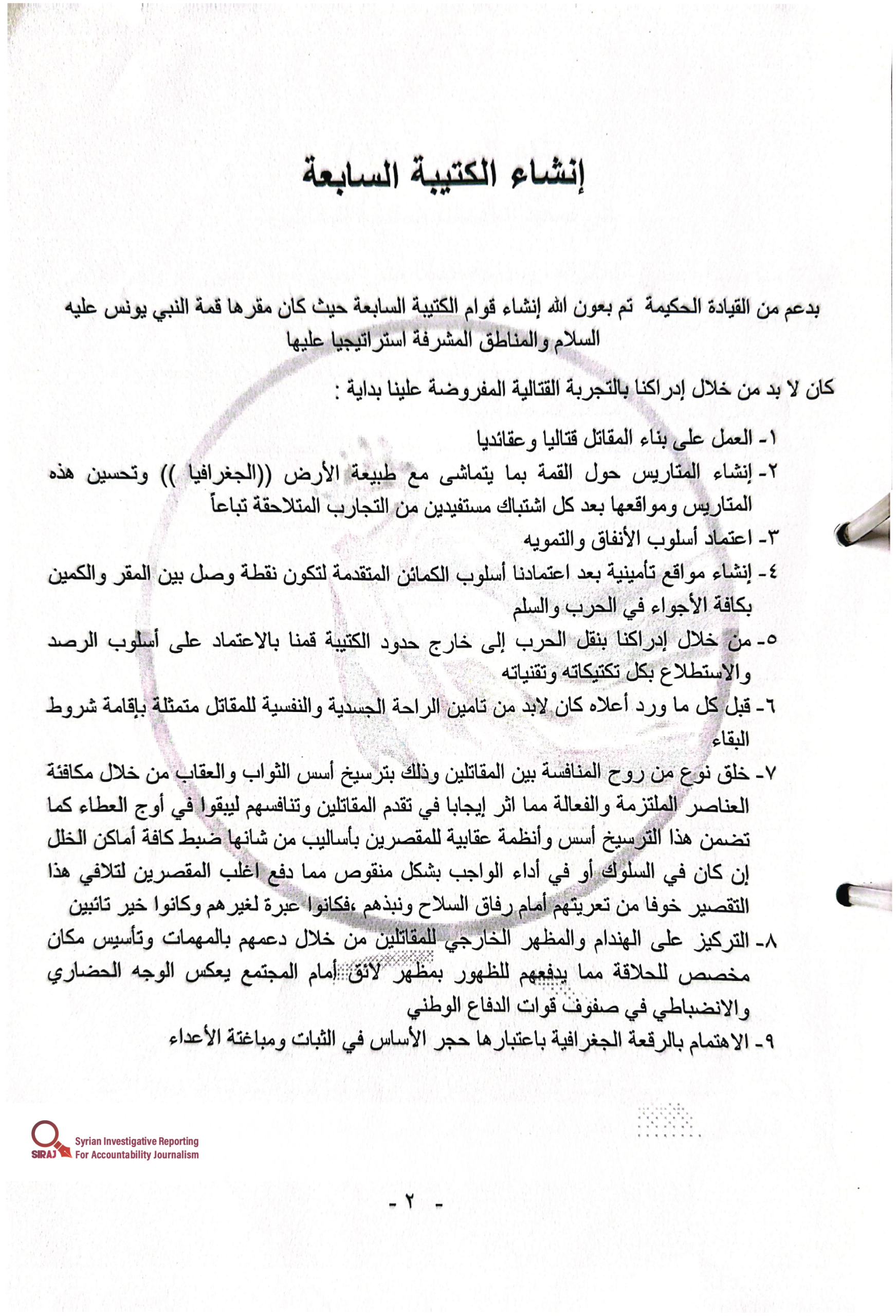
An internal document titled “Establishment of the Seventh Battalion,” identifying the unit’s headquarters at the summit of Nabi Yunis (Arabic for Prophet Yunis) in Syria’s coastal region, outlines its primary objectives: constructing defensive fortifications adapted to the mountain terrain, deploying forward ambush positions, conducting surveillance and reconnaissance, fostering competition among fighters, and emphasizing discipline in appearance and uniform standards. Notably, the founding document even specifies requirements for clean-shaven faces and neatly trimmed hair—suggesting an effort to build a militia with a distinctive identity, image, and authority.
The Battalion formed part of the NDF, a nationwide network of locally recruited militias created to support Syria’s military and security services. By 2013, the NDF had evolved into a more institutionalized organization, receiving weapons, salaries, and ammunition while operating within a formal command structure that blended military and intelligence oversight.
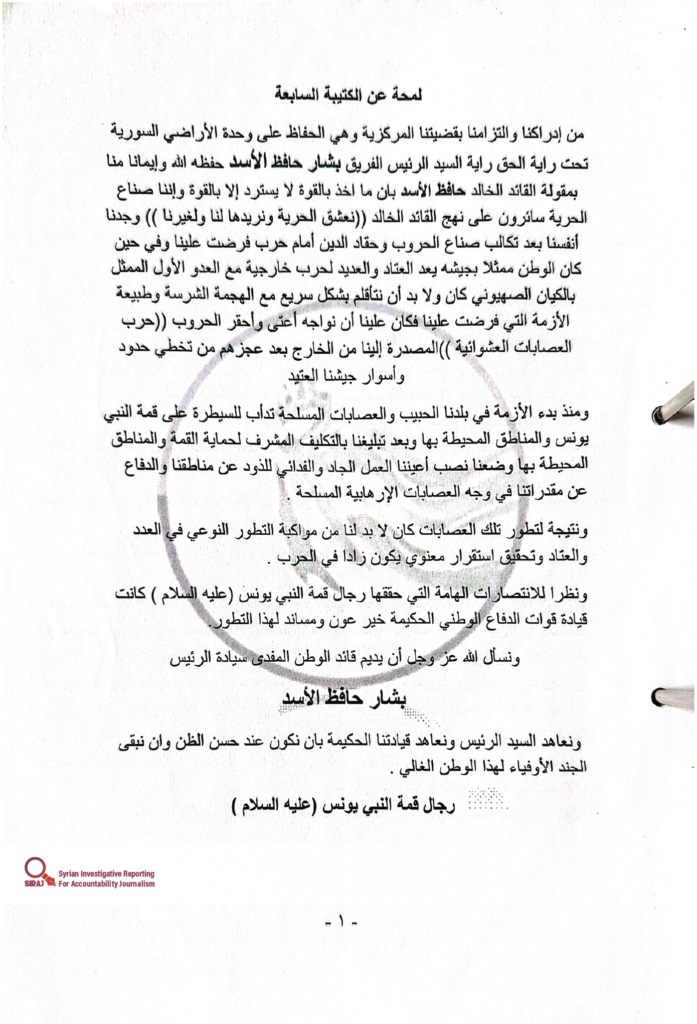
Another internal paper, titled “Overview of the Seventh Battalion,” offers less of a coherent operational history than an example of the regime’s characteristic ideological language. Its rhetoric closely resembles Ba’athist political education manuals, combining Arab nationalist themes with Islamic references to portray the state not merely as the source of political legitimacy but as the guarantor of Syria’s very survival.
The document begins with sweeping references to Syria’s territorial integrity, the country’s central national cause, defending the homeland, and confronting the external enemy represented by Israel. It then narrows abruptly to a much more localized focus: the battlefield becomes the summit of Nabi Yunis and its surrounding areas, and the battalion’s mission is framed simply as “defending our areas.”
In other words, the rhetoric starts as a defense of the nation but ultimately becomes a defense of a specific locality. The regime’s national discourse was thus translated in practice into localized, community-based warfare—a dynamic that reflected and reinforced the territorial and sectarian fragmentation characteristic of Syria’s civil war.
In 2015, reports circulated claiming that the Seventh Battalion had established a suicide unit whose stated mission was to “defend Islam, which had been distorted by terrorist groups, and defend the homeland through martyrdom operations.” The reported initiative illustrated an apparent contradiction: while seeking to reclaim religious legitimacy from jihadist organizations, the battalion simultaneously embraced one of their most notorious tactics.
Who Served in the Battalion?
As the Syrian military struggled to maintain control across the country, the regime increasingly relied on locally recruited fighters familiar with the terrain. These recruits received training that combined conventional combat skills with intelligence and security practices while remaining directly linked to the military establishment.
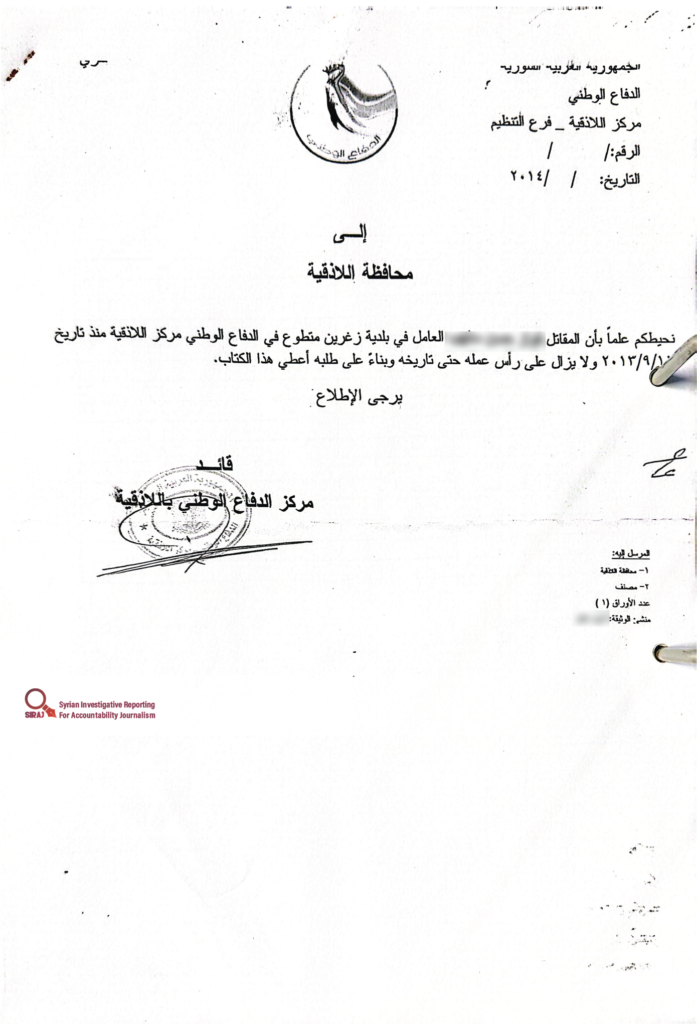
The documents also show that civilian government employees were temporarily released from their official duties to participate in combat operations. Military priorities took priority over civilian bureaucracy, reshaping the relationship between the state and society in favor of security institutions and armed authority. In one example, a battalion fighter is identified as a municipal employee in civilian life.
An internal administrative memorandum outlining the requirements for building the ideal fighter in the Seventh Battalion bears the slogan: “We believe in the principle: Give the fighter what he needs, and he will deliver victory.” Beyond its rhetoric, the document offers a glimpse into the battalion’s daily reality. Rather than describing military operations, it reveals a relationship built on dependence and exploitation.
The memo lists persistent shortages of basic supplies and equipment—including tea, sugar, wrenches, and even electricity. These deficiencies appear not as isolated logistical problems but as symptoms of how the unit itself was managed. Fighters were treated primarily as instruments of war, provided only the minimum necessary to survive in exchange for risking their lives in the name of defending the state. Rather than cultivating an independent professional soldier, the Battalion sustained a combatant whose continued participation depended on access to basic daily necessities.
In this system, those who controlled food, water, warmth, and other essentials also controlled the fighter’s ability to remain in service. What appears on paper as logistical support functioned as a subtle mechanism of control, fostering loyalty through dependency. Fighters’ ability to fight was shaped by what the system provided—and by what it demanded in return.
The language of the Battalion’s supply requests also points to deeper administrative dysfunction. The documents reflect chronic austerity, constant appeals for basic resources, and an inability to meet even fundamental needs, to the point where day-to-day survival itself became a persistent challenge.
Viewed in this light, the Battalion’s support system extended beyond food and shelter. It also offered recognition and belonging—but only on the condition of continued service. Acceptance within the organization was tied to the bare minimum required for survival, reinforcing a structure that was difficult to leave because it was intertwined with the defense of one’s immediate community and geographic area.
The Seventh Battalion can therefore be understood as a microcosm of what might be described as a failed armed welfare state. The Assad regime demanded loyalty, commitment, and combat readiness from its recruits, yet lacked the capacity to provide stable living conditions in return. What fighters received was not an entitlement but a conditional benefit linked to remaining in service.
In this context, the Battalion members emerge as more than military personnel. They became individuals bound to a closed economic and social system whose power rested on their own vulnerability. What appeared to be a simple exchange concealed a deeper structural imbalance: the resources provided were insufficient to sustain a dignified life but adequate to discourage defection. This dynamic also helps explain the wartime proliferation of checkpoint economies, extortion, and pro-regime militia racketeering, which functioned as informal incentives within a broader patronage system.
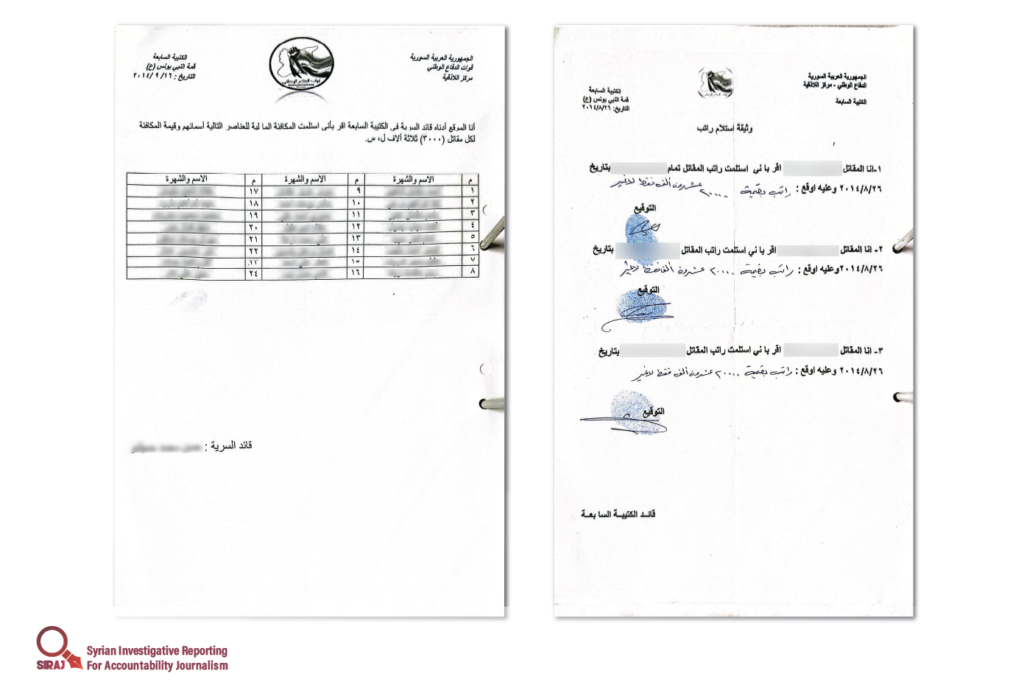
The documents further reveal chronic delays in salary payments. In 2014, fighters reportedly earned monthly wages of 20,000 to 25,000 Syrian pounds, supplemented by bonuses of 3,000 pounds. Even at the time, these were meager sums. With the Syrian pound trading then at roughly 170 pounds to the U.S. dollar, total monthly compensation amounted to little more than $20, underscoring the limited economic value of military service despite the risks involved.
What Were the Battalion’s Responsibilities?
The Seventh Battalion did not operate in isolation. Internal contact lists indicate that its members maintained regular communication with NDF commanders in other regions, as well as with members of the Desert Hawks militia and a group referred to simply as “the Friends.” The latter designation appears to refer to operatives affiliated with Lebanon’s Hezbollah or Iran’s Islamic Revolutionary Guard Corps (IRGC), identified only by aliases such as Hajj Zuhair and Hajj Alaa, without full names. The Battalion also coordinated with commanders of regular Syrian Army regiments, reflecting the close integration of its fighters with official military units—a relationship also evident in inventory records documenting the battalion’s weapons and equipment.
Internal Fractures and Attempts at Recovery
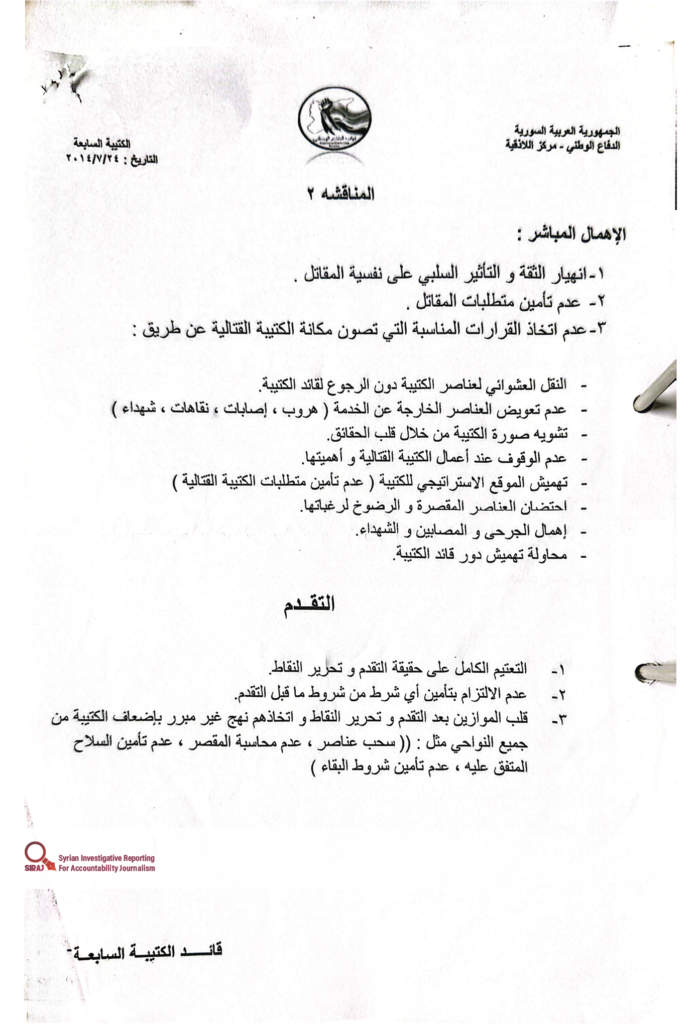
One internal document labeled “Discussion” captures what appears to be a rare moment of institutional self-assessment, revealing growing cracks within the Battalion. It was written at a time when the Syrian regime, like the regular army, was increasingly struggling to sustain its allied militias. The very structures created to compensate for military weakness were themselves beginning to show signs of exhaustion and declining effectiveness in defending the areas under their control.
Rather than serving as a routine administrative record, the document reads like the minutes of an internal crisis meeting. It catalogs a wide range of organizational problems: declining trust, deteriorating fighter morale, unmet logistical needs, arbitrary personnel transfers, lack of compensation, damage to the battalion’s reputation, marginalization of commanders, tolerance of underperforming personnel, and neglect of wounded fighters and the families of those killed in action. Together, these complaints suggest not merely operational shortcomings but a deeper institutional crisis affecting the militia itself.
Even the document’s title—“Discussion”—is somewhat misleading. Rather than reflecting an open exchange of views, it appears aimed at containing organizational breakdown and preserving discipline. Repeated references to sidelined commanders, transfers made without consultation, and the protection of ineffective personnel indicate an effort to reassert a chain of command that was increasingly eroding from within.
The timing reinforces this interpretation. The document was produced during a period when the Assad regime was losing territory and becoming increasingly dependent first on Iranian and later Russian military intervention. The battalion’s internal dysfunction mirrored the broader deterioration of the regime’s war effort.
Perhaps most revealing is the contrast between the Battalion’s public rhetoric and its internal reality. While official documents celebrated steadfastness, discipline, and victory, this memorandum paints a very different picture: collapsing trust, exhausted fighters, and an inability to meet even basic operational requirements. Military advances, when they occurred, did not translate into stability but instead produced further disorder, withdrawals, shortages of weapons, and a lack of accountability.
Even the document’s language appears fragmented and disjointed, suggesting that the institution struggled not only to manage the crisis but also to construct a coherent narrative about it.
These internal discussions become more meaningful when placed within their broader historical context. Beginning in 2012, as defections weakened the Syrian Army and its ability to hold territory declined, the Assad regime expanded auxiliary militias to compensate not only for manpower shortages but also for eroding confidence in the regular military. Yet this expansion did not produce a more resilient security structure. Instead, it created new vulnerabilities, as the militias established to fill institutional gaps gradually developed crises of their own.
By 2014 and 2015, as regime forces lost significant territory and military setbacks mounted, these weaknesses became increasingly apparent. The regular army was under strain, allied militias were experiencing fatigue, and command structures struggled to maintain the stability they publicly claimed to represent. The growing reliance on Iranian support, followed by Russia’s military intervention, further underscored that these paramilitary formations were no longer capable of sustaining the war effort independently—or, in many cases, sustaining themselves.
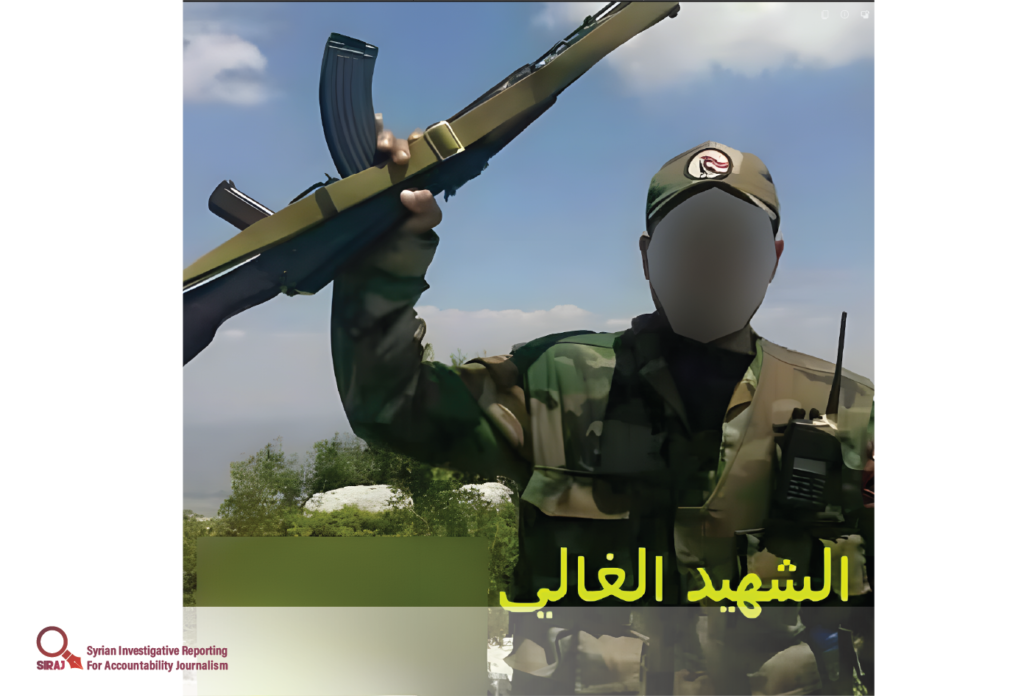
The reporting team attempted to contact three individuals identified in the documents as members of the Seventh Battalion but received no response. Open-source research also confirmed that Battalion members were killed during the conflict, with photographs of some circulated online and memorial pages created in their names on Facebook.
The journalists also submitted questions to the Ministry of Interior in Latakia regarding the government’s postwar handling of NDF personnel, including whether reconciliation measures offered to former Syrian Army members also applied to militia volunteers or whether separate procedures existed. No response had been received by the time this investigation was published.
Following the fall of the Assad regime, however, the Ministry of Interior announced in October 2025 that it had arrested Colonel Qusai Wajih Ibrahim, identified as the commander of the Seventh Battalion, in Latakia. According to the Ministry, he was accused of leading military operations targeting the region in 2012 and of participating in attacks against the General Security Directorate prior to the outbreak of the 2025 coastal violence.
- A version of this investigation was also published by Daraj Media
- Creative Production and Visual Design: Radwan Awad