

When Turkish-backed Free Syrian Army (FSA) factions took control of the village of Kaljibrin in northern Aleppo, driving out ISIS during Turkey’s Operation Euphrates Shield in late 2016 and early 2017, residents initially welcomed the offensive that pushed the militant group out of their community.
For Abdullah Sheikho’s family, however, the outcome was very different.
After entering the village, Turkish forces decided to establish a military base on his farmland. Construction of the facility resulted in the destruction of approximately 1,000 pistachio and almond trees that he had cultivated over decades. His family received no compensation.
Kaljibrin had changed hands repeatedly throughout the Syrian conflict. It was first controlled by the Assad regime, then captured by the Free Syrian Army, later seized by ISIS, and eventually retaken by opposition factions during Operation Euphrates Shield. These factions subsequently became part of the Syrian National Army.
Faraj Sheikho, Abdullah’s son, recalled how his father tried to persuade Turkish forces not to use the property.
“My father told them that the land was agricultural and uneven, making it unsuitable for a military post. But they decided to establish their position there anyway. They then used the uneven terrain as a justification to bulldoze the land,” Faraj said.
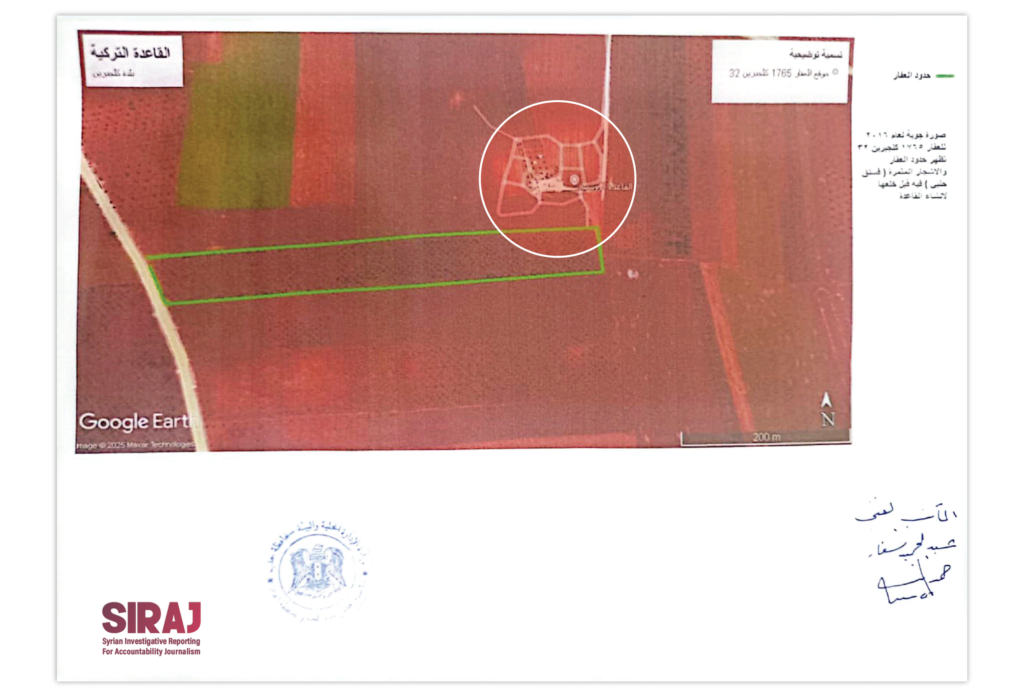
Faraj and Dirar Sheikho’s land, shown on a map – SIRAJ
Initially, Abdullah was assured that Turkish forces would not remove any trees during the land-clearing operation. However, once the bulldozers arrived, they began cutting them down.
When the family objected, Turkish personnel responded that only a limited number of trees would be removed.
“When we tried to stop them, they pointed their weapons at us and continued bulldozing until approximately 80% of the land had been cleared,” Faraj said. “The military post itself occupied only a small part of the property, but they cut down the surrounding trees to create an open perimeter.”
The land affected by the Turkish military base in Kaljibrin covers approximately six hectares, including three hectares belonging to the Sheikho family.
Although the base itself occupies just one hectare, trees were uprooted across the remaining two hectares of the family’s property, where landmines were also planted.
According to Dirar Sheikho, Faraj’s brother, the mines were intended to “prevent Kurdish units from infiltrating the area.”
Dirar said he personally removed several mines and threw them into a trench dug by Turkish soldiers around the base.
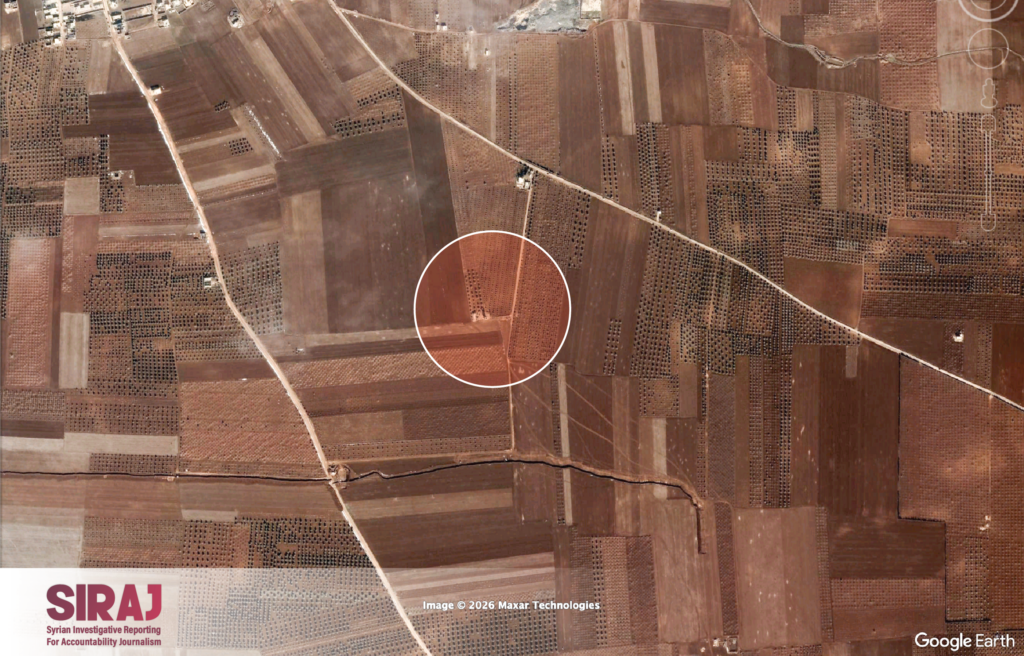
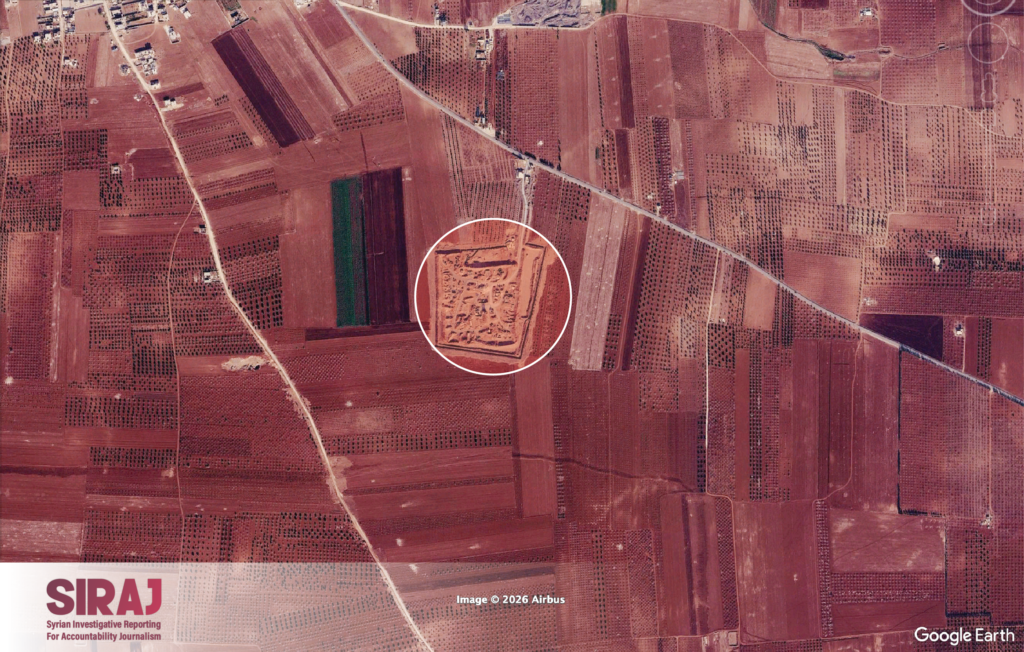
Satellite imagery and geographic analysis showed that the Sheikho family’s land remained covered with trees until December 2016. Construction of the military base began in early 2017 and continued for several months.
Dozens of Turkish Military Bases Documented
The Sheikho family’s property was not an isolated case.
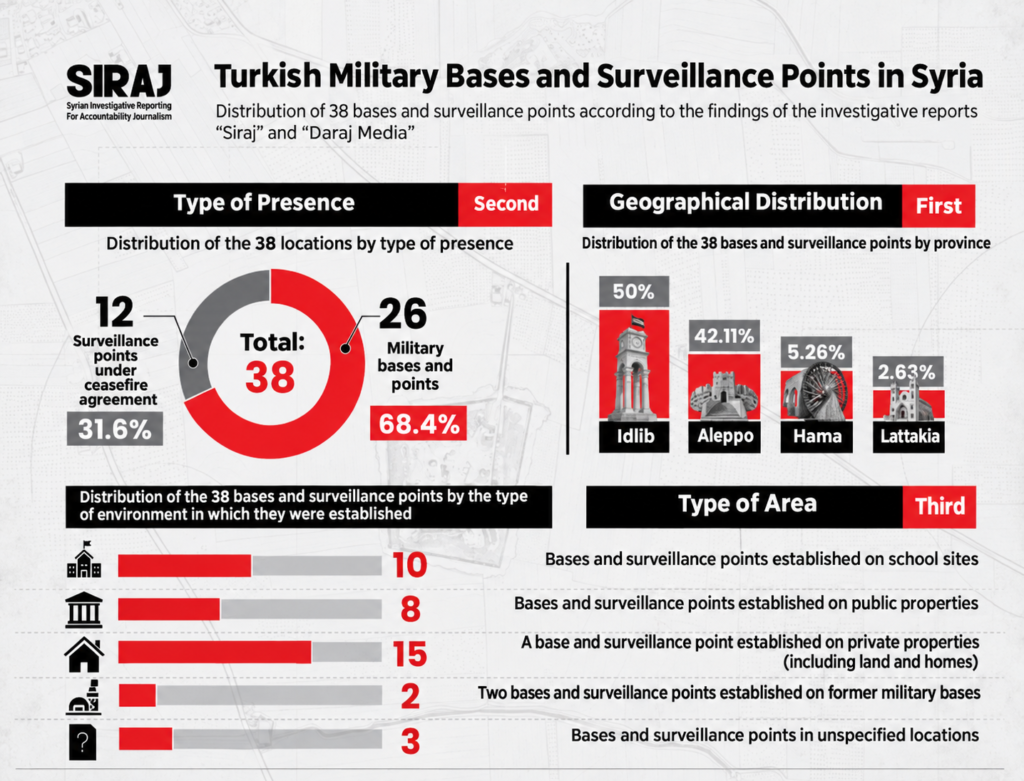
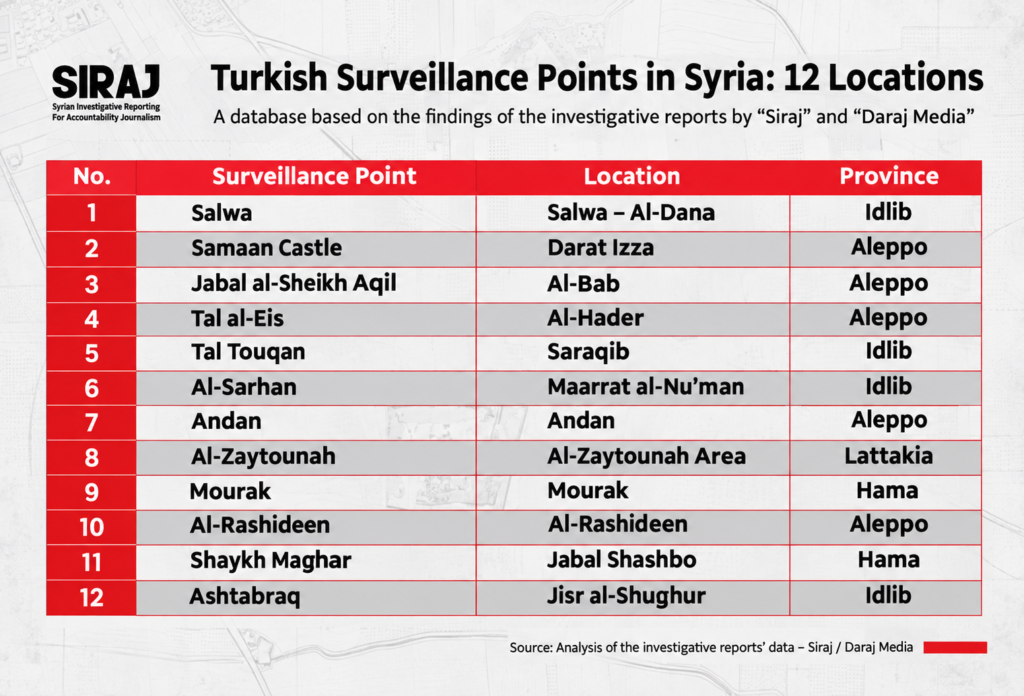
This investigation documented 38 Turkish military bases and observation posts across rural areas of four Syrian provinces: Aleppo, Idlib, Hama, and Latakia.
The facilities were constructed on former military installations, agricultural land, civilian homes, schools, and, in some cases, state-owned property.
In numerous cases, private landowners received no compensation, despite having been promised payment.
Among them was Abdullah Sheikho, who, according to his son Faraj, “died heartbroken over the loss of his land and only source of livelihood.”
“My father spent 40 years of his life turning that land into what it was,” Faraj said.
He estimates that approximately 960 trees were cut down or uprooted, including 860 mature pistachio trees, each more than 40 years old, and another 100 almond trees.
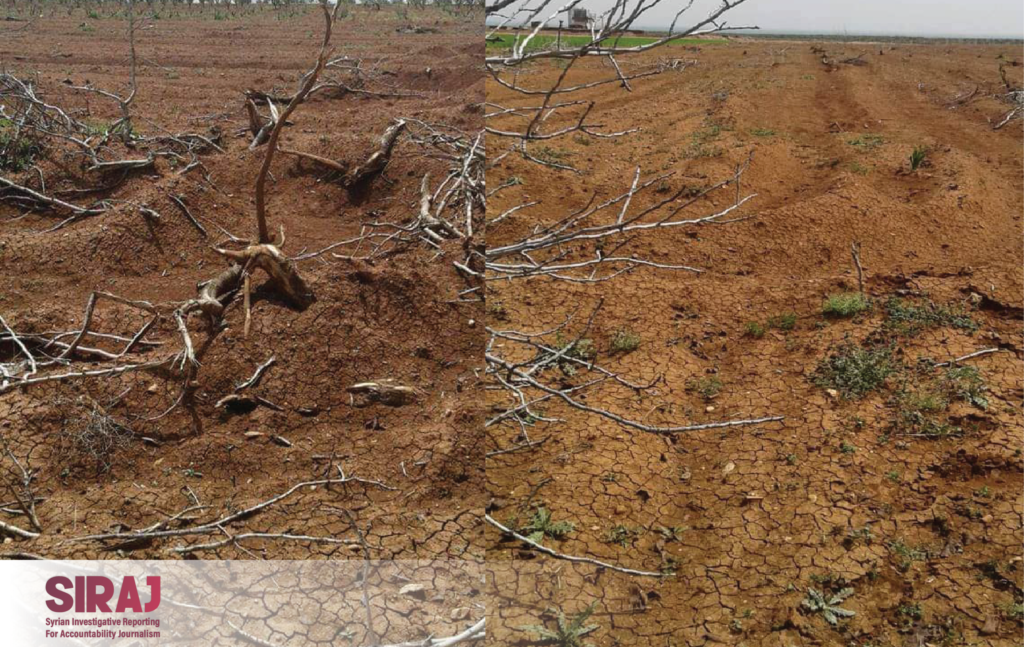
The Sheikho family’s land after being bulldozed – SIRAJ
The same military base affected seven people in the area, although most of the other properties consisted of uncultivated land unsuitable for farming.
Sheikho submitted written requests to Syria’s Ministries of Agriculture, Foreign Affairs, and Defense, explaining his situation and seeking compensation. His efforts, however, produced no results.
Syrian judge and legal researcher Riyad al-Ali said that pursuing legal action is theoretically possible but practically unfeasible.
In a detailed legal assessment provided to the investigative team, al-Ali suggested that Syrian authorities engage with their Turkish counterparts, with independent experts involved in assessing the damage and determining appropriate compensation.
Meanwhile, Syria’s National Commission for Transitional Justice, responding to the findings presented in this investigation, stated that it handles testimonies, complaints, and requests submitted by affected individuals through its established procedures, including documenting and verifying reported incidents.
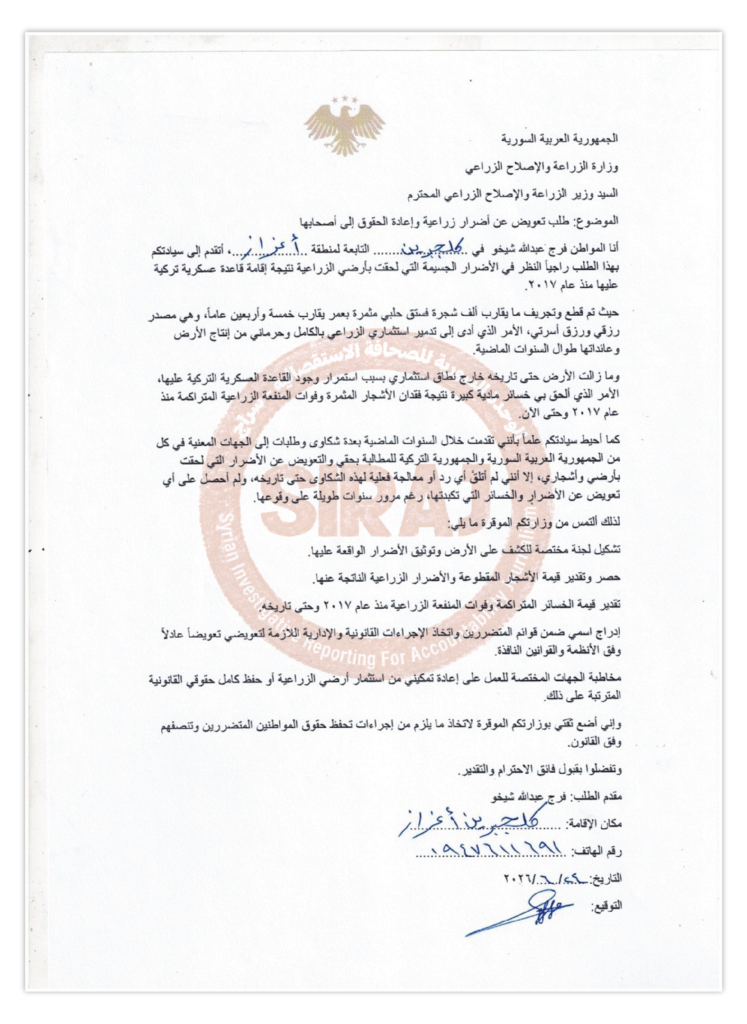
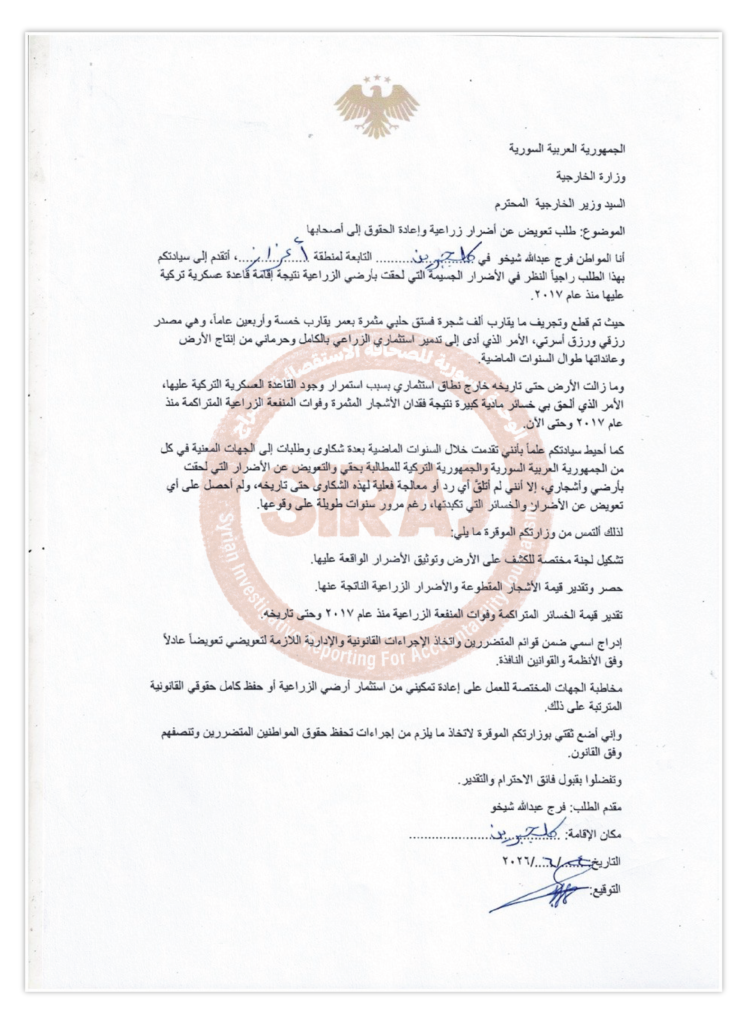
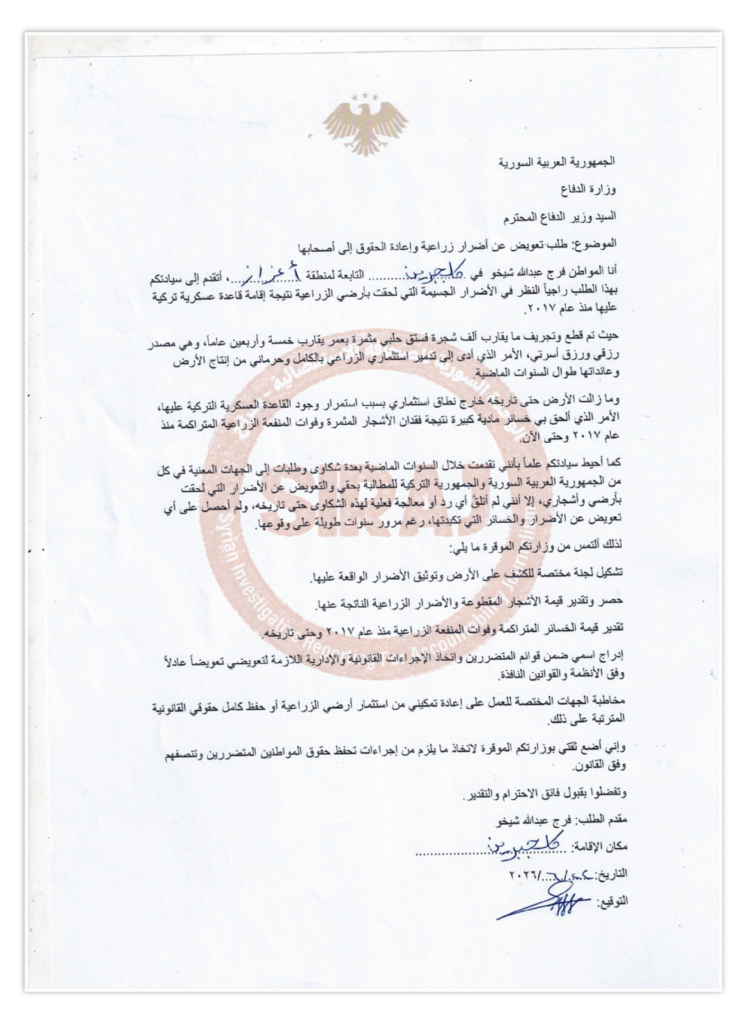
Written requests and memoranda submitted by Sheikho to Syria’s Ministries of Foreign Affairs, Defense, and Agriculture seeking compensation – SIRAJ
Although the Turkish military has evacuated some observation posts, both before and after the fall of the Assad regime, compensation for affected landowners remains absent, as this investigation reveals.
Geographic Investigation: Mapping Dozens of Military Bases and Observation Posts
SIRAJ’s investigative team conducted a comprehensive geographic survey of Syria to identify and document Turkish military bases and observation posts.
Using open-source intelligence (OSINT) techniques, the team identified dozens of military installations, mapped their geographic distribution, and cross-referenced available information to establish their precise locations.
Investigators analyzed satellite imagery captured at different points in time, comparing sites before and after the construction of military facilities to identify changes to the surrounding landscape.
These changes included the removal of trees, the destruction or demolition of buildings, and the appropriation or conversion of agricultural land for military purposes.
The investigation went beyond satellite imagery and geographic analysis.
Journalists interviewed affected residents, including individuals who had lost their homes, portions of their farmland, or mature trees that had stood on their properties for decades.
The team also documented cases in which landowners said they had signed rental agreements but never received the payments specified in those contracts.
The investigation examined both private and public property, including state-owned land and public facilities such as schools, to determine the types of property used for military installations.
Documented cases were also reviewed by legal experts, who assessed property rights, contractual obligations, compensation claims, and the legal implications of using civilian land for military purposes.
By cross-referencing geospatial evidence, satellite imagery, eyewitness accounts, documentary records, and legal analysis, the investigative team identified and verified cases supported by multiple independent sources of evidence.
Farmland Bulldozed, Homes Demolished
Our analysis of satellite imagery reveals the extensive damage left behind by Turkish military bases and observation posts. Large areas of farmland were cleared of trees to make way for military installations, while surrounding agricultural land was bulldozed. Civilian homes were also demolished or extensively modified to accommodate military infrastructure.
For example, satellite imagery of the third Turkish observation post on Sheikh Aqil Hill, near the city of al-Bab in Aleppo province, shows how numerous civilian homes were demolished and the area subsequently redeveloped for military purposes. The imagery documents changes associated with the establishment of the observation post on November 19, 2017.
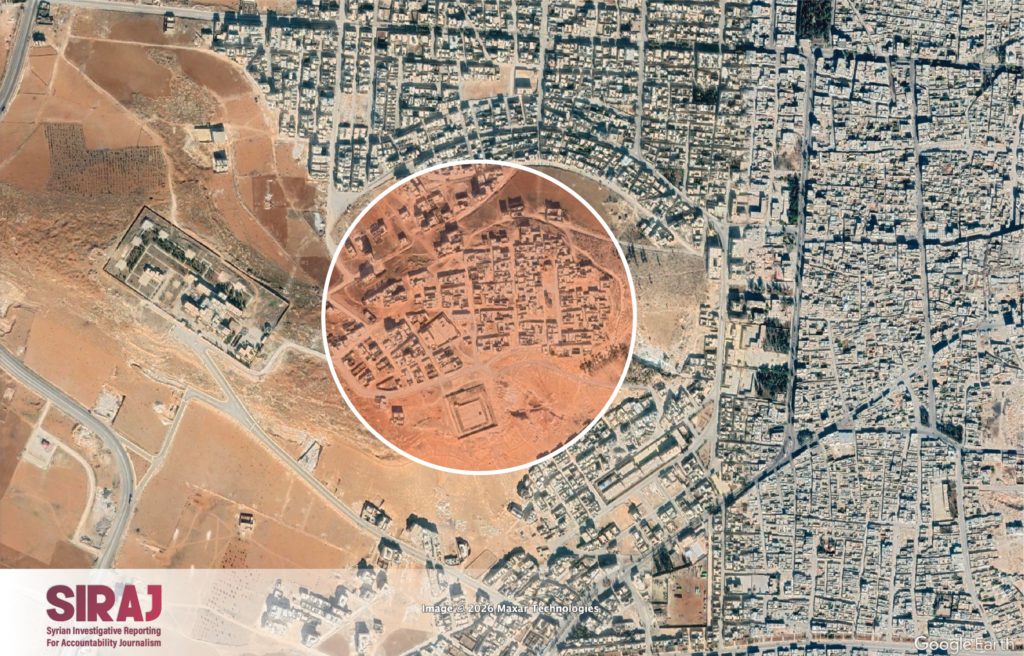
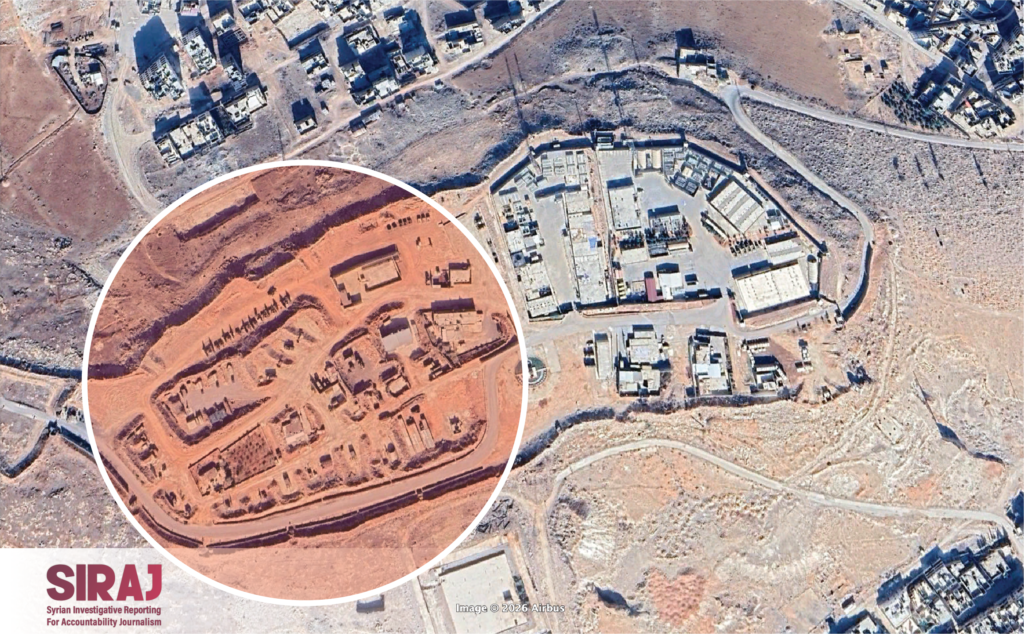
Sheikh Aqil Hill before and after the establishment of the third Turkish observation post. Source: Google Earth.
Aleppo to the Turkish border. Following the expulsion of ISIS from the al-Bab area in 2017, residents were unable to return to their homes.
The hill, once home to more than 500 houses and approximately 3,000 residents, was transformed into a strategically located military installation serving as Turkey’s third observation post.
ISIS seized control of Sheikh Aqil Hill in 2014, using its public hospital to treat wounded fighters. Turkish-backed opposition factions subsequently took control of the area.
In February 2017, a Turkish military base was established just days after Turkish forces and allied factions captured al-Bab during Operation Euphrates Shield.
The site of Sheikh Aqil’s former public hospital became the center of the observation post. Its construction involved extensive land clearing and the demolition of approximately 400 homes surrounding the hill, effectively transforming the entire area into a closed military zone.
Even after the fall of the Assad regime, Turkish forces have not withdrawn from the observation post.
Abdullah Hassan is still waiting to return home.
He sent our investigative team a satellite map with a red arrow pointing to a specific location.
“This is my house,” he said.
His former home remains part of what he describes as a Turkish military position, surrounded by a trench.
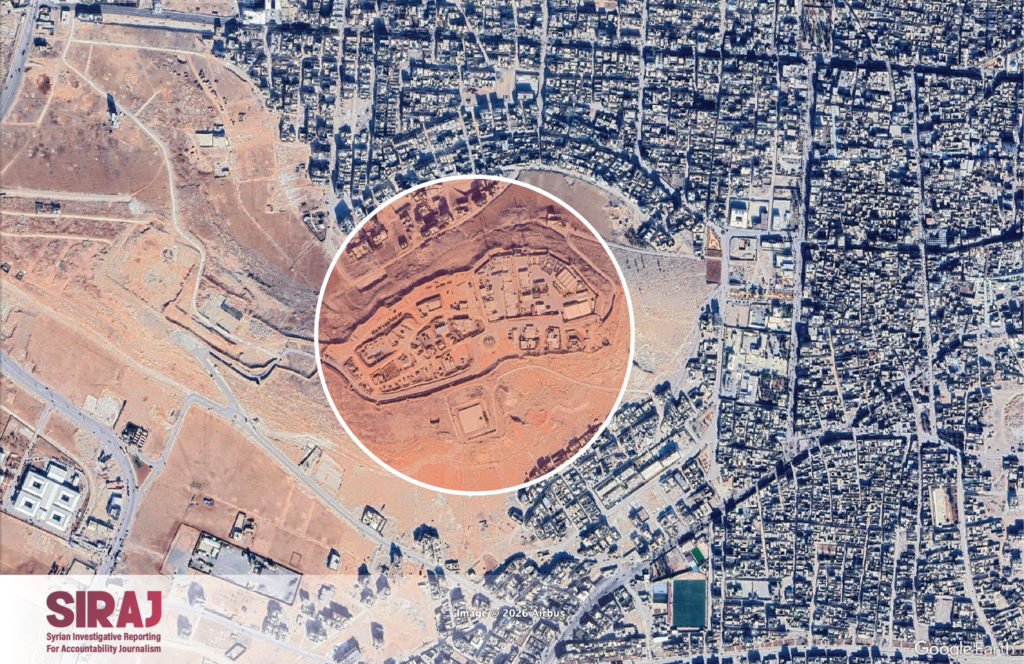
The location of Abdullah Hassan’s home on Sheikh Aqil Hill. Source: Google Maps
Hassan refuses to give up his family’s ancestral land.
He traces his family lineage through generations: from Sheikh Hussein to Khalifa, Hammoud, Mustafa, Mousa, Mohammad (al-Qallash), Hassoun, Ahmad, and Hassan, eventually reaching Abdullah Hassan himself.
According to Hassan, his family has lived on Sheikh Aqil Hill for more than 350 years.
Abdullah lost everything.
His house was completely demolished, and the official property deeds stored inside were destroyed along with it.
Despite losing the original documents, he has retained alternative records supporting his family’s ownership claims. These include notices challenging property ownership listings on Sheikh Aqil Hill, sales contracts, and officially registered powers of attorney held by the al-Bab Religious Endowments Office and the Syrian Land Registry.
While many of Abdullah’s documents were lost, another resident, Saleh Aqil, managed to preserve records establishing his ownership of property on Sheikh Aqil Hill.
He shared documents with the investigative team showing the transfer of ownership of a property identified as Sheikh Aqil Hill, First District, Parcel 127, Subdivision 16.
The documents indicate that Aqil legally purchased the property from the religious endowments authority in 2000, paying the full purchase price to the state.
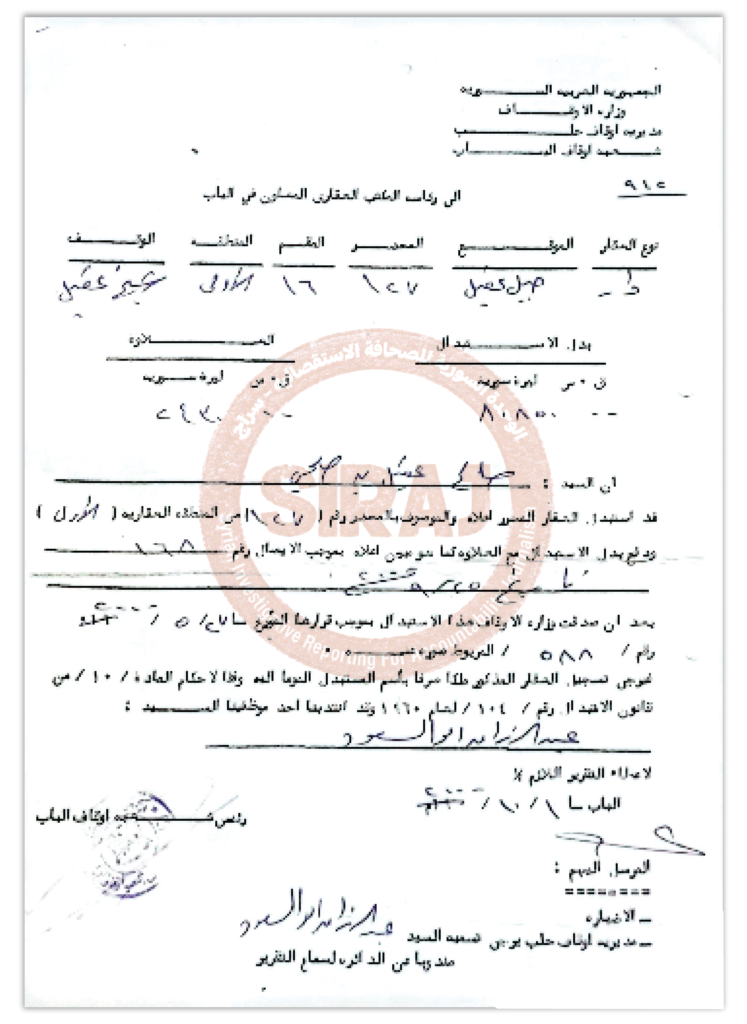
Under Syrian law, this transaction is known as “cash substitution” (istibdal naqdi), a legal mechanism through which religious endowments authorities can sell older or unproductive properties in exchange for cash, typically to acquire replacement properties.
From the buyer’s perspective, the process effectively constitutes a property purchase.
On June 18, 2026, Aleppo Governor Azzam al-Gharib met with a delegation of Sheikh Aqil Hill residents in the presence of Brigadier General Ahmad Saeed Issa, a representative of the Syrian Ministry of Defense.
During the meeting, residents demanded either permission to return to their homes or alternative solutions that would safeguard their property rights.
Al-Gharib confirmed that the matter would be followed up with the relevant authorities.
Syrian judge and legal researcher Riyad al-Ali explained that, in principle, affected individuals have the right to pursue legal action and seek compensation.
“From a legal standpoint, every affected person has the right to turn to the courts and seek compensation, particularly since Turkey is a party to the four Geneva Conventions and is therefore legally obligated to fulfill its commitments. Turkish domestic law also criminalizes the seizure and looting of other people’s property,” al-Ali said.
In practice, however, he believes such legal proceedings would face significant obstacles.
These include the difficulty of identifying the names and ranks of military personnel allegedly responsible for the violations, making it challenging to bring cases against individuals whose identities remain unknown.
Potential plaintiffs may also fear retaliation from Turkish forces, including threats, detention, or other punitive measures if they attempt to pursue legal action.
Agricultural Land Destroyed in Afrin
The demolition of homes on Sheikh Aqil Hill was not an isolated consequence of Turkey’s military presence.
The construction of Turkish military bases and observation posts also damaged agricultural land in other parts of northern Syria.
In Kafr Jannah, in the Afrin area, satellite imagery analysis revealed extensive tree removal associated with the construction of a Turkish military base.
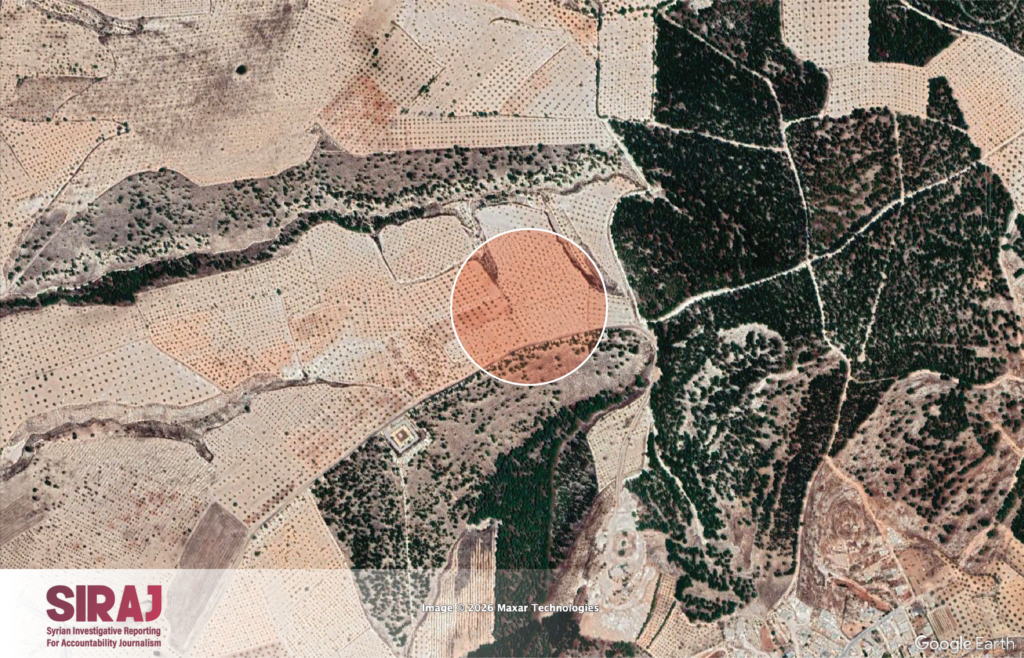
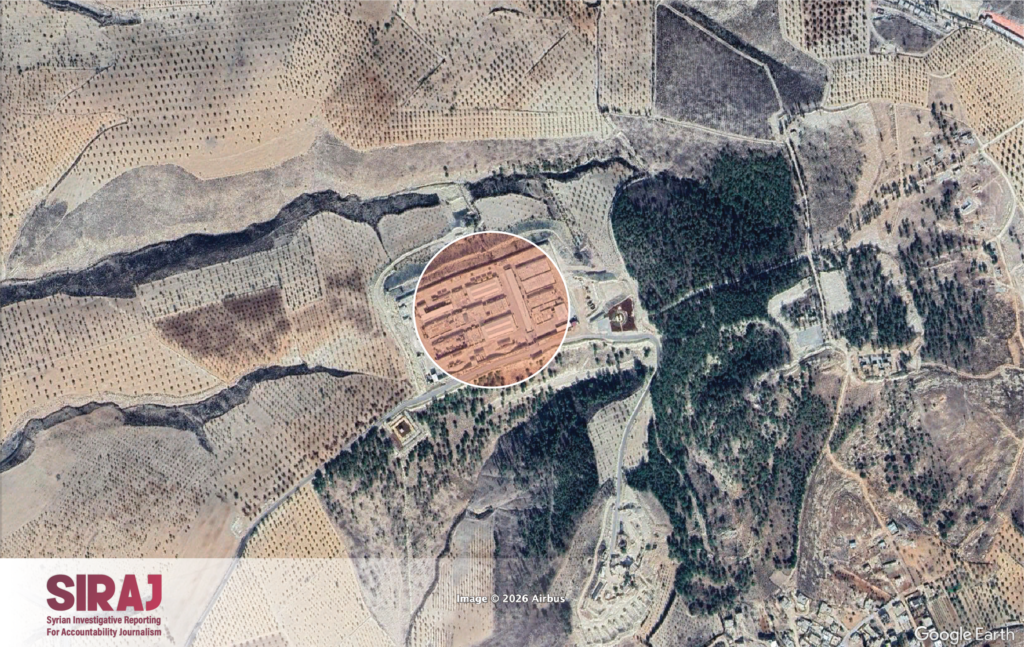
The Kafr Jannah military base before and after construction. Source: Google Earth
Similar patterns of tree removal and agricultural land clearing were documented at several other Turkish military installations.
Among them was the Maryamin military base in Afrin, which was constructed on farmland.
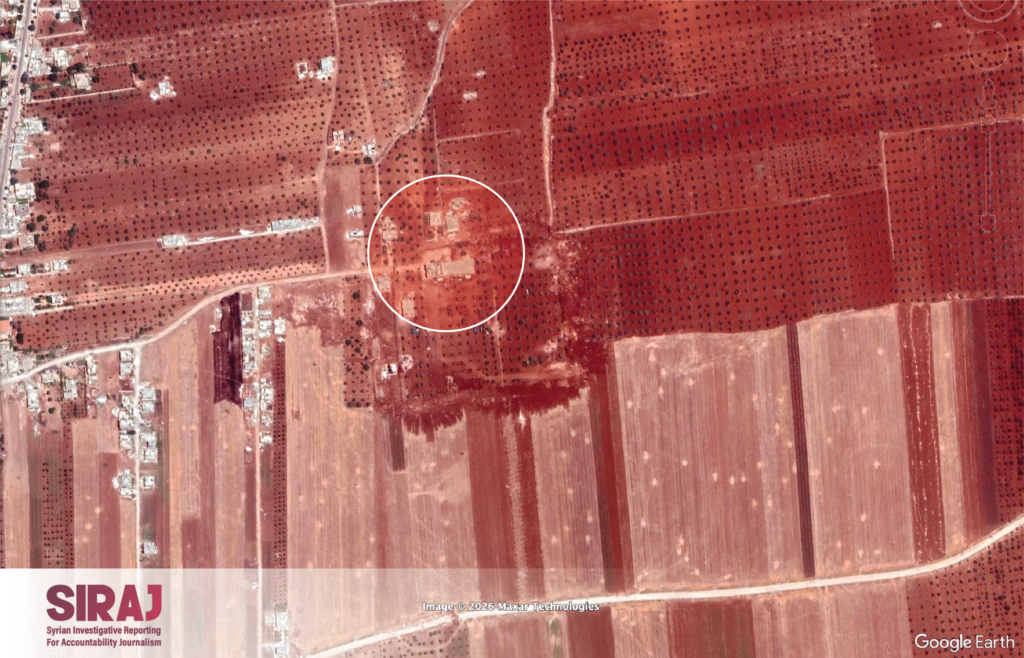
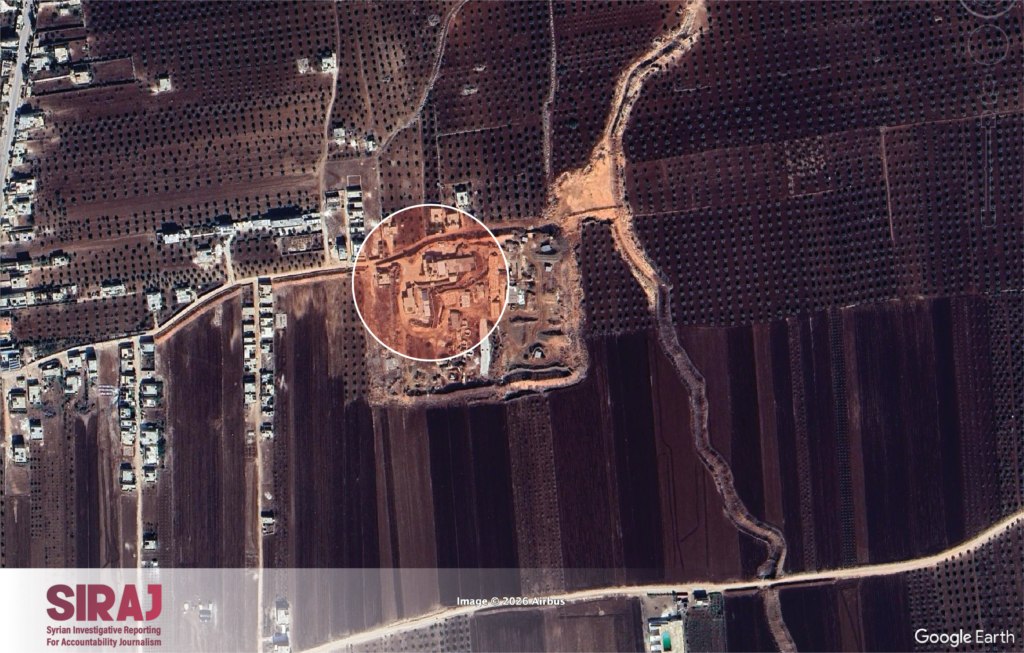
The Maryamin military base before and after construction. Source: Google Eart
The satellite survey also revealed that some Turkish military installations were established on school properties.
One example was Turkey’s tenth observation post in the village of Shir Maghar, located in the northern Hama countryside.
The observation post was established on the site of the village school.
Satellite imagery showed the construction of military fortifications and extensive earthworks around the school to make the area suitable for military use.
Turkish forces evacuated the observation post in late October 2020.
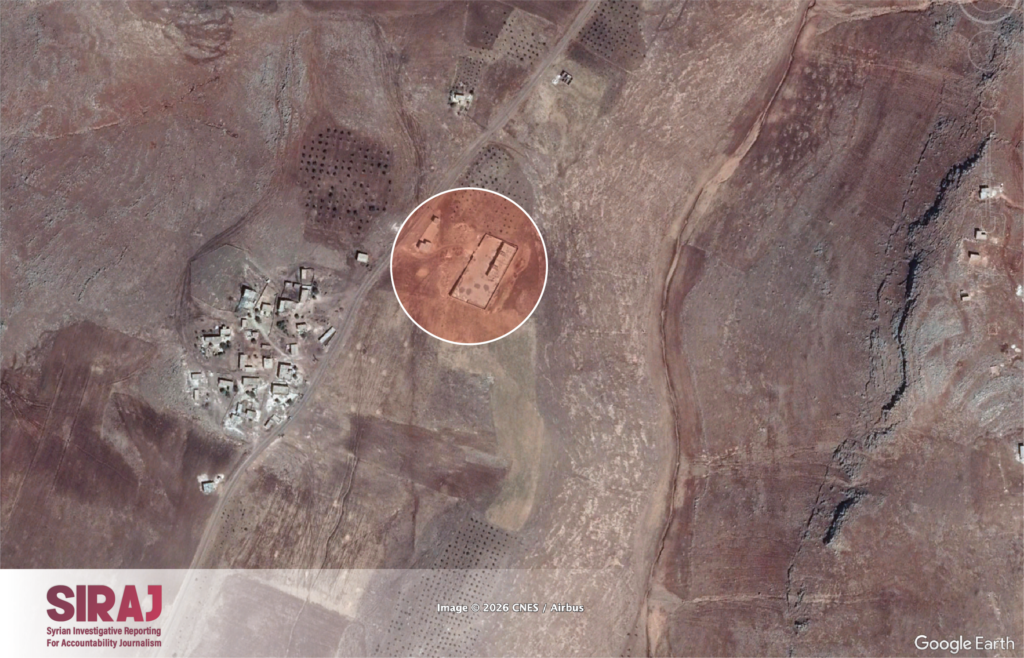
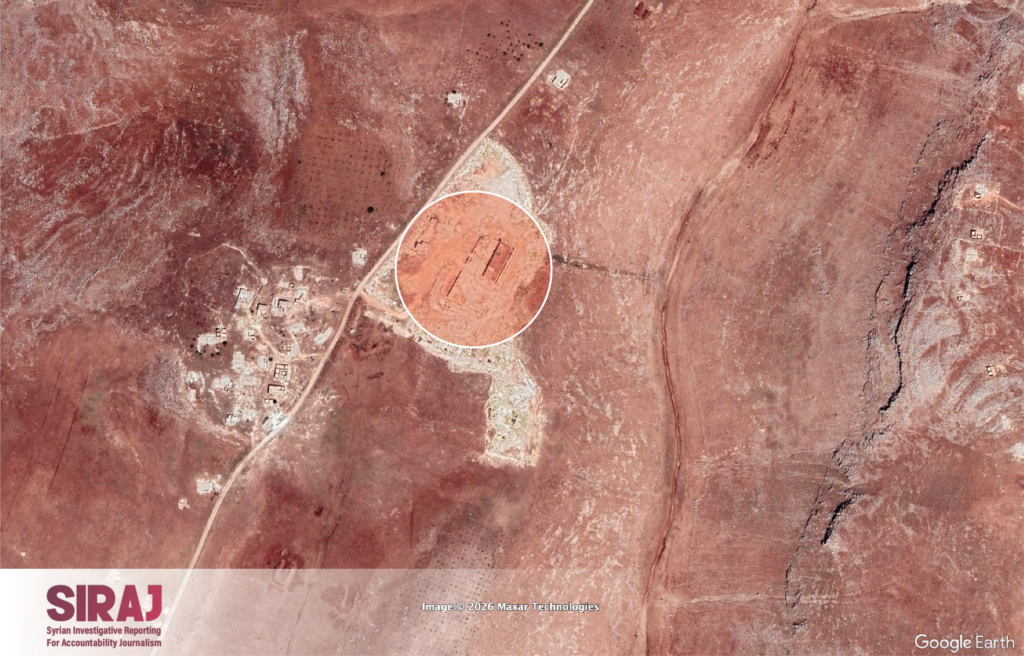
The tenth Turkish observation post in Shir Maghar before and after construction. Source: Google Earth
Satellite imagery also revealed the clearing of farmland and residential property following the establishment of a Turkish military base at the National Hospital in Azaz, in northern Aleppo province.
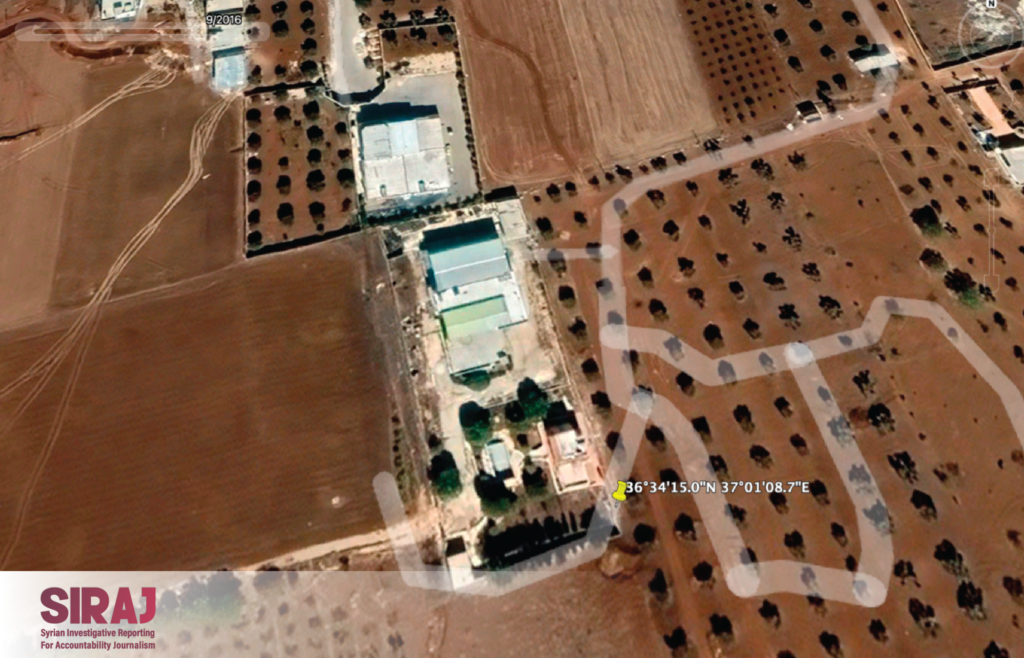
The National Hospital military base in Azaz before and after construction. Source: Google Earth
According to Syrian judge and legal researcher Riyad al-Ali, the actions of Turkish forces and their former allied factions violate the four Geneva Conventions of 1949 and customary international humanitarian law.
He further argues that these actions may constitute war crimes under the Rome Statute of the International Criminal Court.
Al-Ali also believes that the actions conflict with Syria’s 2012 Constitution, which was in force at the time, and the 2025 Constitutional Declaration, which protects private property and prohibits its expropriation except for public benefit and in exchange for fair compensation.
He added that such actions may also violate the Syrian Civil Code and constitute the criminal offense of unlawful seizure of real property under the Syrian Penal Code.
Observation Posts That Failed to Meet Their Financial Obligations
The impact extended beyond land directly occupied by Turkish military bases to observation posts established in Syria to monitor the de-escalation agreement.
What Was the De-escalation Agreement?
On May 4, 2017, Russia, Turkey, and Iran reached a de-escalation agreement following lengthy negotiations in Astana, the capital of Kazakhstan.
The agreement aimed to reduce hostilities between Syrian government forces and opposition factions.
Under its provisions, Turkey and Russia deployed observation posts to monitor compliance with the agreement and document violations.
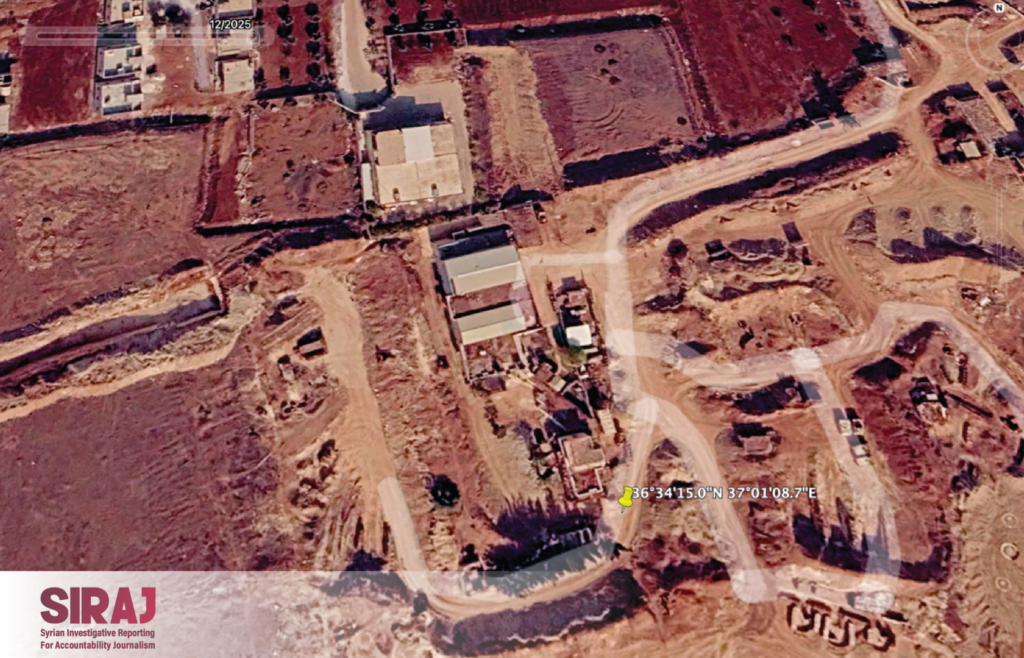
Turkey established 12 observation posts across northern Syria, including the ninth observation post in Morek.
On several occasions, these posts helped prevent advances by Syrian government forces and contributed to averting further violence, mass killings, and displacement.
On several occasions, these posts helped prevent advances by Syrian government forces and contributed to averting further violence, mass killings, and displacement.
For Mustafa Fawaz al-Mustafa, however, whose land was used to establish one of these posts, the experience came at a devastating personal cost.
A Rental Agreement That Was Never Honored
Among the properties affected was farmland belonging to Mustafa Fawaz al-Mustafa in Morek, in the northern Hama countryside.
Turkish forces leased his land under a formal agreement to establish an observation post.
However, despite the contract, Mustafa says he never received a single dollar of the agreed rent during the years Turkish forces occupied his property.
The Morek installation was known as Turkey’s ninth observation post.
It was established on April 7, 2018, as part of Turkey’s role as a guarantor of the de-escalation agreement and was one of the 12 Turkish observation posts created under that arrangement.
On April 7, 2018, a Turkish military convoy entered Morek and established a position in the area.
The convoy selected several plots of land for the observation post, including property belonging to Mustafa Fawaz al-Mustafa.
His land, classified under Syria’s state-domain ownership system (amiri land), covered approximately 30 dunams, equivalent to 28,688 square meters according to property record No. 1289.
The farmland was Mustafa’s only source of income.
It included a water well and mature pistachio trees that had provided a livelihood for years.
After losing access to the property, Mustafa was forced into a long and difficult period of displacement, living in camps.
Mustafa signed an official lease agreement as the authorized representative of 15 co-owners and heirs.
He was identified as the first party to the contract.
The second party was listed as the “Turkish Government – Observation Post No. 9,” represented by its agent, the Sham Legion (Faylaq al-Sham).
The contract bore the signature and official stamp of the head of the Sham Legion’s judicial office.
It described the property as agricultural land registered under Parcel No. 1289 in the Morek cadastral district, covering 30 dunams and containing an artesian well that the tenant was entitled to use.
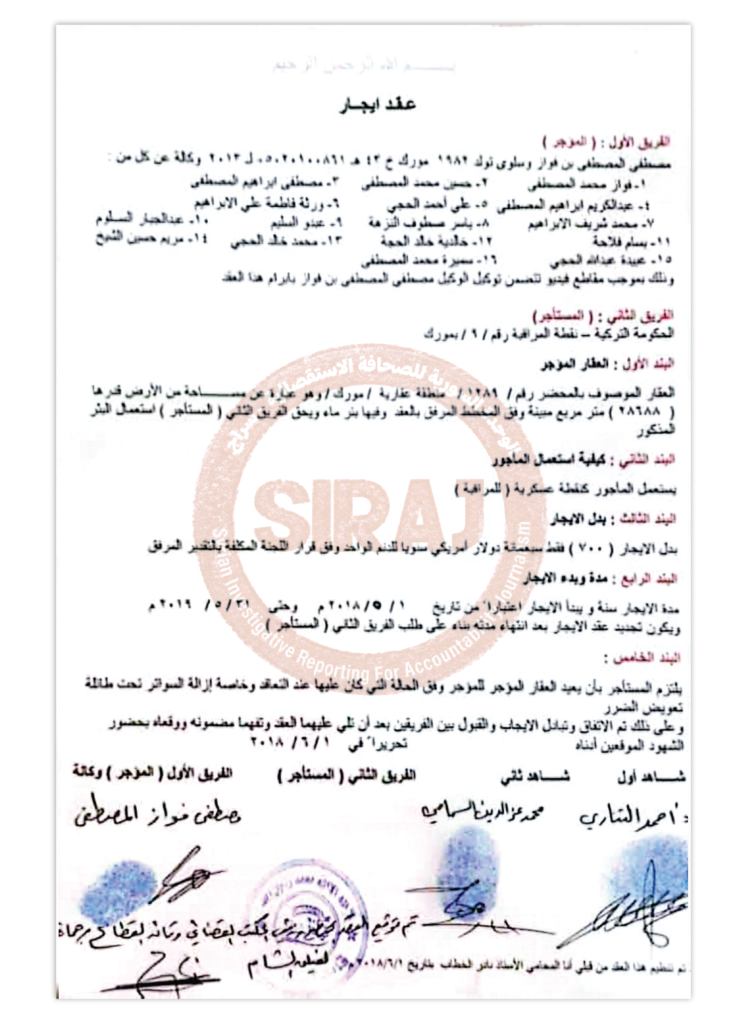
Lease agreement between Mustafa al-Mustafa and the Turkish government for land used as the Morek observation post – SIRAJ
The contract specified that the property would be used as a “military observation post” in exchange for annual rent of $700 per dunam.
The initial lease term was one year, renewable, and took effect on May 1, 2018.
Yet Mustafa says he never received the agreed payments.
“The ink on the contract dried, but I never received a single dollar,” he said, referring to the two and a half years Turkish forces remained on his land.
His contractual rights, he explained, became little more than repeated promises passed between Turkish officers stationed at the site.
Mustafa’s repeated attempts to collect the rent, amounting to approximately $20,000 per year for the entire property, were unsuccessful.
He said Turkish officers consistently responded with the same statement:
“Your request has been forwarded to the command.”
The signed contract remained unenforced, leaving the landowner unable to compel the military forces, representing a state that had guaranteed the de-escalation agreement, to meet their financial obligations.
Withdrawal Left Behind Extensive Damage
As Syrian government forces advanced during the summer of 2019, the Morek observation post became completely surrounded, cutting off its overland supply routes.
Turkey eventually withdrew its forces and dismantled the installation in October 2020, after approximately 30 months.
But Mustafa’s losses extended far beyond unpaid rent.
The withdrawing forces left significant damage to his farmland.
A video recorded by Mustafa himself and shared with the investigative team shows his property covered in piles of concrete and debris, preventing the land from being used for agricultural activities.
Video recorded by Mustafa Fawaz al-Mustafa documenting the destruction left behind following the Turkish military’s withdrawal from the Morek observation post in 2020. The footage shows damage and debris that have prevented the farmland from being returned to agricultural use – SIRAJ
This destruction appears to directly contradict Clause Five of the lease agreement, which required the Turkish tenant to:
“Return the leased property to the landlord in the same condition as at the time of contracting, particularly by removing earth embankments, failing which compensation for damages shall be payable.”
Instead, Mustafa said, Turkish forces carried out extensive bulldozing operations before withdrawing.
These operations reportedly uprooted numerous mature trees, damaged the area surrounding the water well, and destroyed agricultural equipment left on the property.
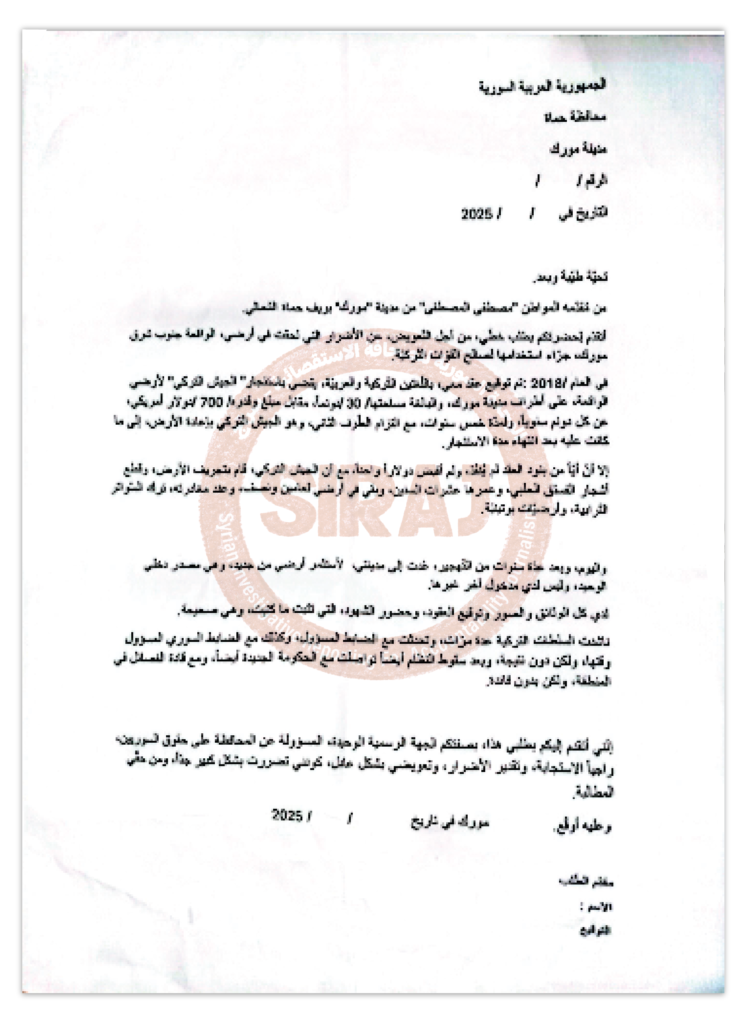
Following the fall of the Assad regime, Mustafa submitted a compensation request to Syria’s Ministry of Defense four months before the investigation was prepared.
As of the time of reporting, he had received no response.
Compensation Remains Out of Reach
Turkish forces occasionally distributed in-kind assistance to local communities and contributed to the restoration of certain infrastructure. Nevertheless, they did not compensate all landowners whose properties were occupied to establish military bases and observation posts.
Following the fall of the Assad regime, amid growing discussions about transitional justice, SIRAJ submitted questions to Syria’s National Commission for Transitional Justice concerning compensation for damages caused by Turkey’s military presence in Syria.
Asked about its role in addressing these claims, the commission explained:
“Reparations fall within the scope of transitional justice. However, determining whether a particular incident or violation falls under the commission’s mandate requires examining the nature of the incident, when it occurred, the party responsible, and its connection to the legal framework governing transitional justice.”
Regarding damage to public and private property, the commission stated:
“Reparations may include compensation for documented material damage, alongside other forms of redress, depending on the legal framework established for transitional justice and its implementation mechanisms.”
However, the commission emphasized that not every instance of property damage or ownership dispute automatically falls within its jurisdiction.
Such cases, it explained, must undergo legal assessment and verification of the facts and responsibilities involved.
The commission said it receives testimonies, complaints, and requests from affected individuals through its established procedures and works to document and verify the reported incidents.
It declined to comment on specific allegations involving Turkish military bases and observation posts, or on individual testimonies, before completing the necessary verification procedures.
The commission said this approach was intended to protect the rights of those involved and preserve the integrity of any potential legal proceedings.
It emphasized that anyone who believes their property or rights have been violated should have the opportunity to submit relevant documents and supporting evidence, allowing authorities to establish a properly documented case that can be addressed under the law.
How Could Compensation Be Pursued?
According to the commission, the first step toward compensation involves documentation and verification.
This process includes collecting testimonies, property ownership records, documents establishing the nature and extent of the damage, the date of the incident, the party allegedly responsible, and any additional evidence that could substantiate the claim.
Depending on the circumstances of each case, the process may then proceed to determining responsibility and establishing the appropriate legal classification of the alleged violation.
From there, cases could move toward reparations, judicial proceedings, or other transitional justice mechanisms, as provided by law.
The commission stressed that transitional justice is not limited to financial compensation.
Reparations may take several forms, including acknowledgment of harm, restitution of rights and property where possible, financial compensation, rehabilitation, and guarantees of non-recurrence.
The appropriate measures would depend on the nature of the violations and the needs of those affected.
The commission also emphasized that it does not approach such cases through a political or selective framework. Instead, it said its work is guided by facts, evidence, and the determination of individual and institutional responsibility under the law, while safeguarding victims’ rights to access justice and obtain reparations.
Proposed Paths Toward Compensation
Syrian judge and legal researcher Riyad al-Ali argues that Syria’s transitional government should implement the 2025 Constitutional Declaration and formally demand that Turkey end its military presence in the affected areas.
He also called for the return of seized properties to their rightful owners and for Syrian armed groups and factions involved in the alleged violations to surrender occupied properties and compensate landowners for damages resulting from years of deprivation of their land and its agricultural production.
“Legal committees should also be established to receive complaints from citizens affected by these unlawful actions, while permanently preserving their right to seek justice through the competent courts and ensuring accountability for those responsible,” al-Ali said.
Regarding how damages should be assessed, al-Ali proposed that Syria’s Ministry of Foreign Affairs engage directly with Turkish authorities.
He recommended establishing joint technical discussions involving legal experts, real estate specialists, engineers, and economists from both countries to evaluate property damage and agree on appropriate mechanisms for compensation and restitution.
He also emphasized the importance of ensuring that representatives of affected property owners participate in these technical discussions.
Syria’s Ministry of Defense did not respond to requests for comment regarding Turkish military bases in the country or how their presence would be addressed in the coming period.
Meanwhile, most of the landowners whose properties were used to establish Turkish military bases and observation posts remain without compensation.
Among them is the Sheikho family, whose once-productive farmland was stripped of its trees and transformed into military fortifications and earthen barriers.
Years later, the family is still waiting for compensation.
Ahmad Hazrouma, Member of the “National Commission for Transitional Justice” and Director of the Reparations Department
Does compensation for material damage resulting from the establishment of Turkish military bases fall within the mandate of the “National Commission for Transitional Justice”?
Reparations fall within the scope of transitional justice. However, determining whether a particular incident or violation falls within the Commission’s mandate requires examining the nature of the incident, the period during which it occurred, the party responsible, and its connection to the legal framework governing transitional justice.
Regarding damage to public or private property, reparations may include compensation for proven material losses, alongside other forms of redress, in accordance with the transitional justice legal framework and its implementation mechanisms.
However, not every instance of damage or property dispute automatically falls within the Commission’s jurisdiction. Such cases are subject to legal assessment and verification of the facts and responsibilities involved.
Has the Commission received any complaints from landowners or individuals whose property rights have been violated?
The Commission handles testimonies, complaints, and requests submitted by affected individuals in accordance with its established procedures, working to document and verify the reported incidents.
Specifically regarding incidents involving Turkish military bases and observation posts, we do not wish to disclose details of any individual cases or testimonies before verification processes are complete, in order to protect the rights of those concerned and safeguard any potential legal proceedings.
Most importantly, we believe that anyone who considers their property or rights to have been violated or harmed should have the opportunity to submit relevant documents and evidence. This would help establish a documented case that can be addressed in accordance with the law.
If the Commission has taken any steps toward achieving justice for those affected, what are these steps?
The first step involves documentation and verification, including collecting testimonies, documents, and records related to property ownership, the nature of the damage, when it occurred, and the party responsible, along with any additional evidence that may help establish the facts.
Depending on the circumstances of each case, the process may proceed from documentation and verification to determining responsibility and legal classification, followed by reparations, judicial proceedings, or other transitional justice mechanisms, as provided for by law.
In this context, I emphasize that transitional justice is not limited to financial compensation. Reparations may take various forms and are based on acknowledging the harm suffered, restoring rights wherever possible, providing compensation, rehabilitation, guarantees of non-recurrence, and other measures determined by the nature of the violation and the needs of those affected.
Furthermore, the Commission does not approach these cases through a political or selective lens. Rather, its methodology is grounded in facts and evidence, with a focus on establishing individual and institutional responsibility in accordance with the law, while safeguarding the rights of affected individuals to access justice and obtain reparations.
- Creative Direction and Visual Design: Radwan Awad
- A version of this investigation was also published by Daraj.