

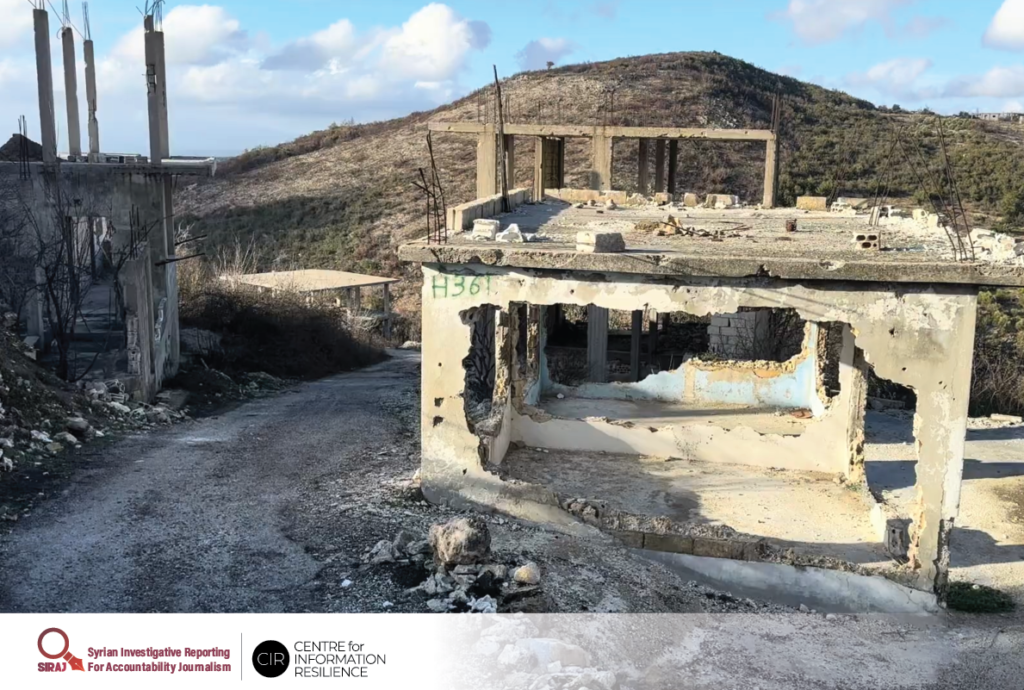
On 7 February 2026, seven-year-old Jana Rajbou was playing near what remained of her relatives’ home in the village of Ako in the Latakia countryside when a large explosion shook the area. Her family rushed to see what was happening and found the 7-year-old girl injured by a landmine explosion, which had resulted in the amputation of her right leg. Doctors inserted metal pins into her left leg, which had also been struck by shrapnel.
A relative, Abdullatif Rajbou, described the tragedy to SIRAJ during a visit to Jana’s family, who had recently returned after 12 years of displacement to live amid the ruins of their destroyed home in rural Latakia. He also spoke of the constant fear of hidden landmines: ‘Demining teams removed 140 mines from my land, including a tank mine, as well as eight detonators for which we did not find the associated mines. We are not afraid of the mines we can see, but rather those that are hidden.’
The ‘hidden mines’ Abdullatif refers to are not confined to the village of Ako. They are a reality experienced by thousands of Syrians in areas that were previously on the front line between Syrian opposition forces and the Syrian regime forces. Those areas are now littered with mines and unexploded remnants of war, posing a continuing threat that may persist for years to the lives and futures of Syrians returning home.
This investigation by the Syrian Investigative Journalism Unit – Siraj draws on open-source tools, interviews with residents and victims, and field visits to examine the reality and conditions in some of the towns and villages that previously lay along former frontlines in the southern countryside of Idlib, Hama and Latakia. It documents the suffering of their residents due to the danger, including the human, livelihood and environmental costs they pay as a result, and the impact on the present and future return of displaced Syrians.
By collecting dozens of reported deaths and injuries in that area using open-source material and databases maintained by independent organisations, determining approximate geographical locations, and tracking patterns of those incidents, our investigation concludes that agricultural land was a primary target of minelaying along the line of contact.
Based on observed mining patterns in specific areas of the former frontline, our investigation estimates that 13,700 hectares of agricultural and civilian land remain at risk from mines. According to this report, the cost of demining this area alone amounts to US$137 million (approximately SYP 15.2 billion at the official exchange rate).
The investigation team also conducted field visits in rural Hama and Latakia, which enabled us to document the most prominent types of mines scattered in that area. Many were manufactured in the Soviet era and were held by the former government’s forces, posing a threat to civilians, civilian vehicles and military vehicles.
The landmines are closely linked to the 14-year military campaign waged by the former Syrian regime against the opposition between 2011 and 2024, and to the repeated shifts in control over large parts of the country—especially in what later became known as the “lines of contact”.
The line of contact: a method of collective punishment
The areas known as the ‘line of contact’ include southern Idlib province and large areas of eastern rural Aleppo, as well as Jabal al-Zawiya in Idlib, extending to the Kurdish and Turkmen mountains in western rural Latakia and continuing through northern Sahel al-Ghab in rural Hama.
The region includes dozens of towns and villages, including Ma’arat al-Nu’man, al-Bara and Kafr Nabl in the Idlib countryside, Qastoun, al-Ankawi, al-Ziara and al-Sarmaniya in the Hama countryside, and Ako in the Latakia countryside. Since the formation of the “line of contact” in early 2020, these areas have been a clear target for mining operations by Assad regime forces, which caused hundreds of deaths and injuries until the fall of the regime. Today, returnees face the same threat that prevents them from settling in the villages they were forced to abandon years ago.
To gain a deeper understanding of the reality of this region, the SIRAJ team, with support from the Centre for Information Resilience (CIR), conducted research using open-source data on reported deaths and injuries caused by mines recorded by various civilian and humanitarian sources in these ‘line of contact’ areas. The team also extracted data from the Armed Conflict Location and Event Data Project (ACLED)’s database, an independent US-based non-profit organisation that documents data on armed conflicts around the world.
Based on this research, the investigation recorded 75 deaths and injuries caused by mines between January 2020 and till the end of 2024, when Assad’s regime fell. This only accounts for a fraction of the overall civilian harm caused.
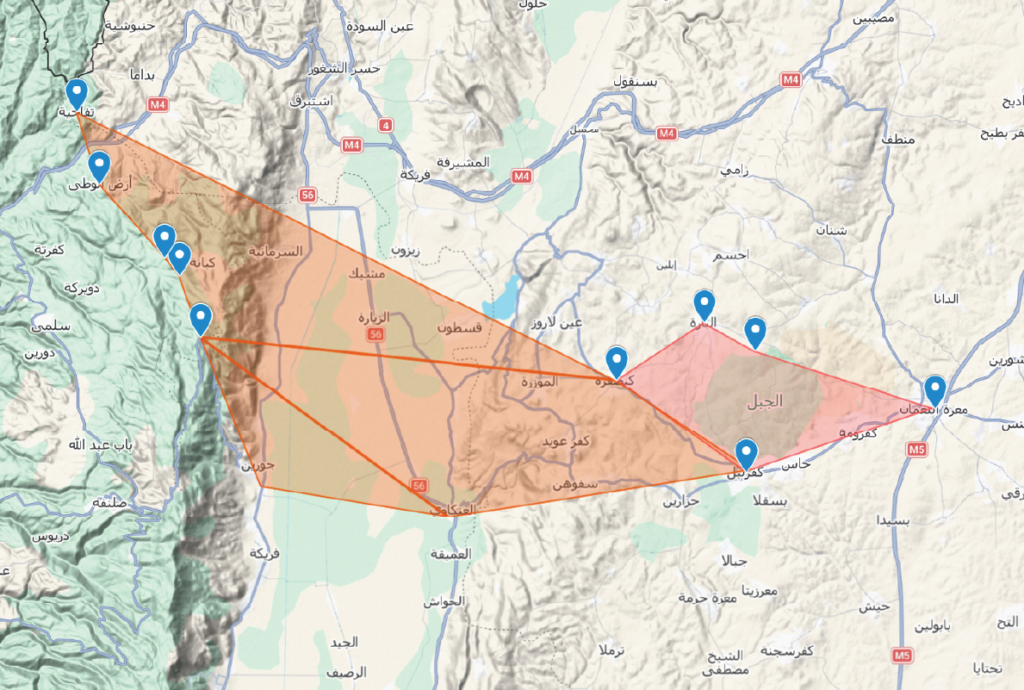
According to Maysara al-Hassan, commander of engineering operations in the Syrian Ministry of Defence’s 80th Division, the number of deaths and injuries caused by mines in these contact line areas between 2020 and 2024 is estimated to total 15,000 cases.
Statistics based on open-source data helped the team map the towns and villages that have seen documented and reported cases of mine victims to form a broader understanding of the patterns of targeting that this region has experienced through the use of mine laying, with civilians bearing the brunt of the impact.
The cases analysed by the investigation team show that mines caused the deaths of 58 civilians, including three demining volunteers and injured eight others. Vehicles belonging to the White Helmets (now known as the Civil Defence) were also destroyed while carrying out relief work in those areas.
A clear and recurring pattern emerged: mines were heavily concentrated in agricultural land. This directly contributed to many of the deaths and severe injuries, as farmers returned to cultivate fields and were killed or maimed by explosives.
Warning: Some links on the map contain graphic images. Please exercise caution.
This pattern that SIRAJ has observed and documented is not a coincidence. In an interview with SIRAJ, Muayad al-Nofali, director of operations at the non-governmental organisation Halo Trust, which specialises in mine clearance, said that “the Syrian regime was carrying out mining operations with the aim of protecting its forces and directly harming civilians.” Therefore, it deliberately targeted all civilian facilities, such as schools and agricultural land, in areas along the front-line.
The director of the Syrian Network for Human Rights (SNHR), Fadel Abdul Ghani, echoed this view, adding that the regime was working to contaminate agricultural land with mines to weaken the livelihoods and production of the population, and as a form of collective punishment. He said the former government also failed to provide maps of minefields or warning signs, thereby increasing the likelihood of casualties after areas fell out of its control.
Abdul Razzaq Qantar, director of victim support at the Syrian National Mine Action Centre at the Syrian Ministry of Emergency and Disaster Management, also warned that these agricultural areas are among the most heavily contaminated areas due to the intensive minelaying.
Indiscriminate mining and ongoing retaliation
The policy of retaliation after losing control, referred to by Abdul Ghani, has killed thousands and left many more with permanent injuries and disabilities. SNHR has documented the deaths of 3,485 people, including 872 children, from landmine explosions between March 2011 and the beginning of this year (2026).
Since the fall of Assad in particular, mines have killed 607 people, including 177 children, and injured 1,087 people, including 443 children, between 8 December 2024 and 16 January 2026, according to Abdulrazzaq Qantar.
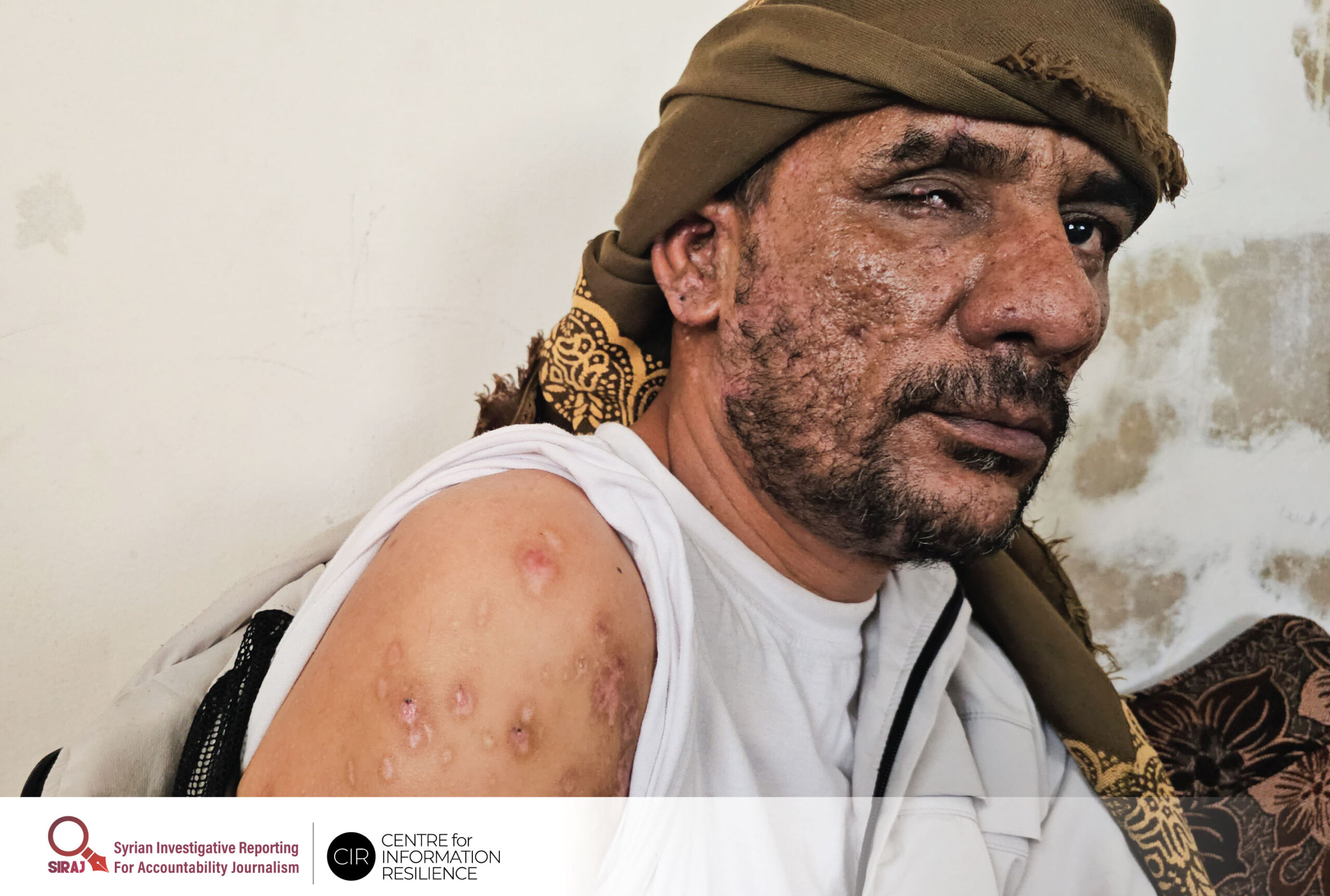
Among those injured is farmer Muhammad Marai Mazan, who was injured by a mine explosion on his farmland near the village of al-Ziara, north of Sahel Al-Ghab in Hama governorate, in December 2025.
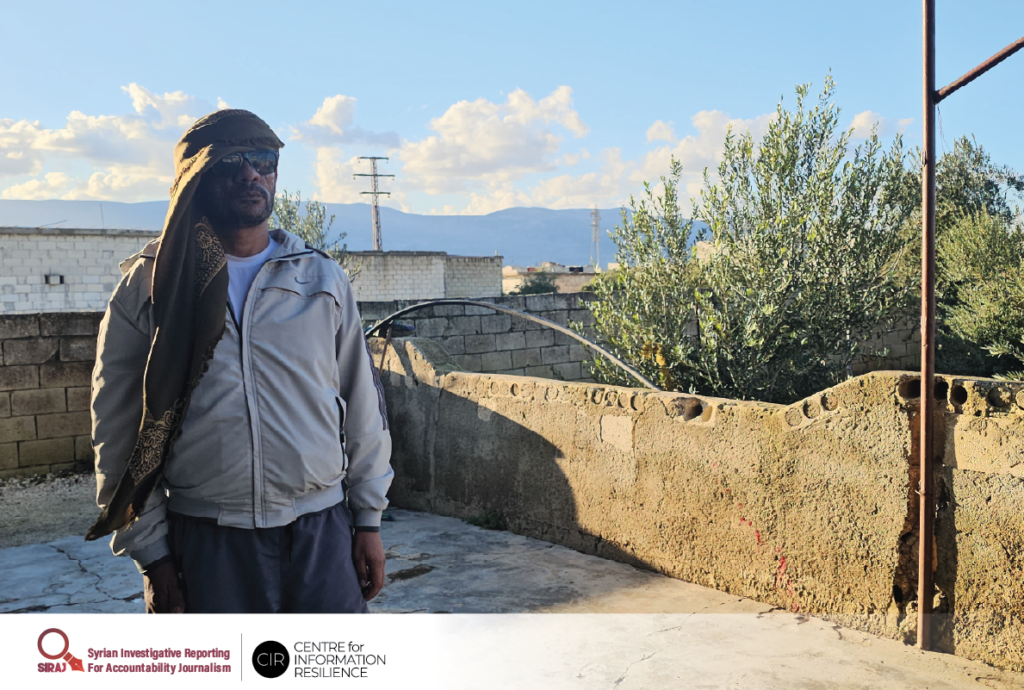
Mazan, who grows wheat and vegetables to support his wife and six children (aged between two and fifteen), said he was injured after pulling a strange black string on his land for fear that it would get caught in the harvester. This caused a mine planted about 2.5 metres away to detonate. The shrapnel burned the right side of his body, disfigured his face and arm and the loss of sight in his right eye, as well as damage to his left eye. These injuries continue to hinder his ability to work to this day.
Mazan explains that his land is located near military headquarters that belonged to the former regime’s army, and that the incident came as a shock to him because the area had previously been cleared of mines and the land had been ploughed. He adds that the mines were cleared by ‘a volunteer from the village of al-Sarmaniya who was also killed by a mine’.
The 47-year-old farmer now visits the doctor weekly for treatment of his left eye, after undergoing an initial operation. He also suffers from constant pain due to being bedridden for more than a month after his injury. Mazan insists his case is not unique in the area. Al-Nofali, from Halo Trust, described the minelaying as indiscriminate. He explains that “the regime had no clear methodology for planting mines. In addition, Russian forces also planted some minefields, as did Iranian and Lebanese militias such as Hezbollah. It is noteworthy that there was no coordination between these parties in planting mines, and this is the major challenge we face.”
Death by Russian-made mines
On 30 September 2015, Russian aircraft carried out their first airstrikes in Syria, marking the beginning of Russia’s direct military intervention at the request of the former regime’s president, Bashar al-Assad. Russian military campaign has claimed the lives of 6,993 civilians, according to a SNHR report released in 2025, the Russian military campaign has claimed the lives of 6,993 civilians. Moscow’s involvement, the report argues, extended beyond shifting the military balance. It says Russia tested weapons in Syria and used civilians as a testing ground. This is an allegation reinforced, noted in the report, by statements from President Vladimir Putin, who said the experience gained in Syria supported the development of Russian weapons.
Although the fall of the Syrian regime in December 2024 ended Russia’s direct intervention, mines supplied to the former government and mines used in mining operations continue to kill Syrians.
During our field trips accompanied by volunteers and demining workers in the villages of al-Ankawi, al-Ziara and al-Sarmaniya in rural Hama, the village of Ako and the Kurdish Mountain areas in Latakia province, and through open-source research, the team collected dozens of photos and videos showing mines scattered across agricultural land. Some were buried in the soil and difficult to see, while others were clearly visible. Several mines that were found bore markings and symbols in Russian. Residents also showed us the remains of mines that had already exploded or had been removed by volunteers and clearance teams from the Ministry of Defence. It was not easy to identify the types of these mines and the extent of damage they could cause to civilians and the environment. The team archived these photos and videos and compared them with photos and videos from other areas in the Idlib countryside, revealing a recurring pattern in the mining, the type of mines and the extent of the damage possible. The team shared the photos and videos with a weapons expert who concluded that most of the mines identifiable were Soviet made, though they varied in size, purpose, and the type of explosion they caused.
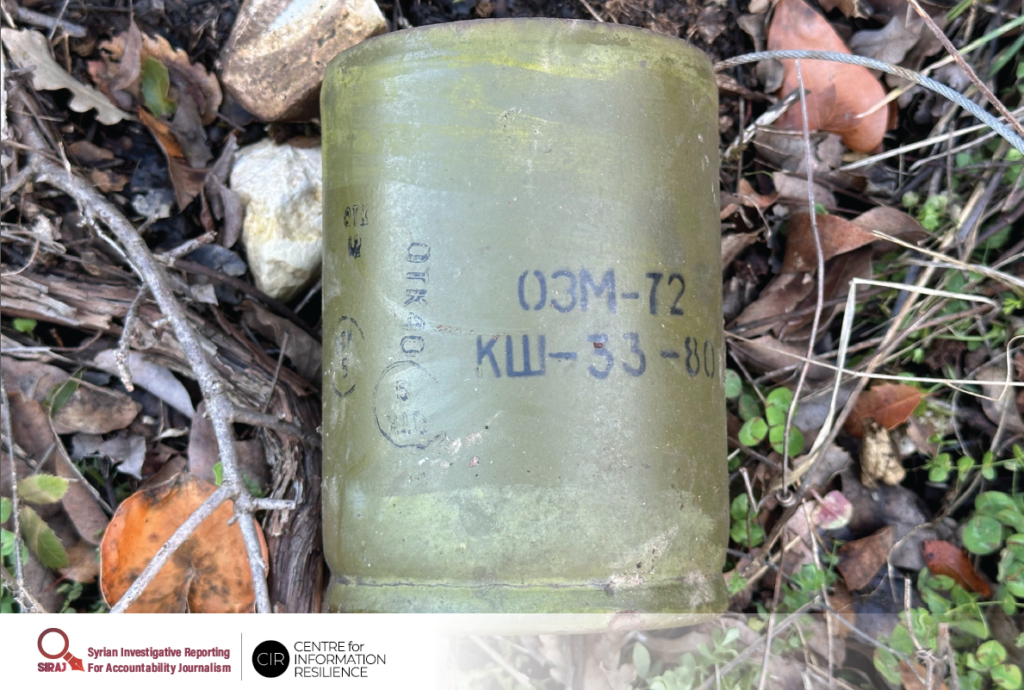
According to the expert, one of the mines photographed on farmland in the village of Ako, near the site where Jana Rajbou was injured, is a Soviet OZM-72 anti-personnel mine. It does not explode immediately upon activation but has a mechanical mechanism that propels it into the air to explode and disperse shrapnel over a wide area, increasing the likelihood of multiple casualties.
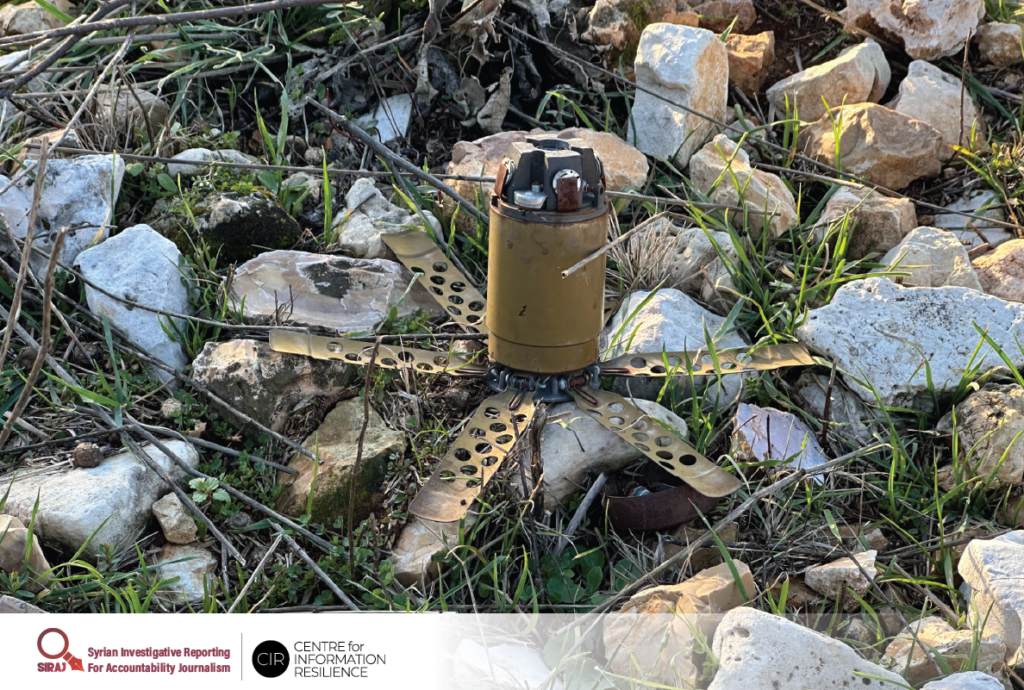
Other photos from the Latakia countryside show Soviet POM-2 anti-personnel mines, identifiable by their propeller shape. Plastic wires ranging from 9.5 to 10 metres in length, called ‘trip wires,’ extend from the mine. The mine is activated immediately when someone trips or steps on the wire, exploding and scattering its fragments over a wide area in a mechanism similar to the OZM-72.
Open-source footage from mine clearance operations in Jabal al-Zawiya and the forests near al-Bara and Kafr Nabl shows dozens of Soviet-made TM-62M anti-armour mines, which are usually used against tanks and military armoured vehicles.
The presence of these mines in agricultural forests pose a tremendous danger to farmers who use harvesting machines or their vehicles on agricultural roads, as this mine explodes under pressure ranging from 150 to 550 kilograms to activate the conventional detonator. The danger of this mine is increased if it is equipped with more sensitive secondary detonators, making it susceptible to explosion under much lower levels of pressure or movement.
Video shows the dismantling of dozens of TM-62M mines in Al-Bara and Kafranbel in Idlib Governorate – Facebook
In one of the photos taken during the demining operations, Syrian teacher Fahd al-Fajr appears with eight Russian-made PMN-3 mines behind him. This anti-personnel mine is specially designed to hinder clearance operations, as it is equipped with anti-handling devices and a self-destruction mechanism that make it one of the most dangerous anti-personnel mines.
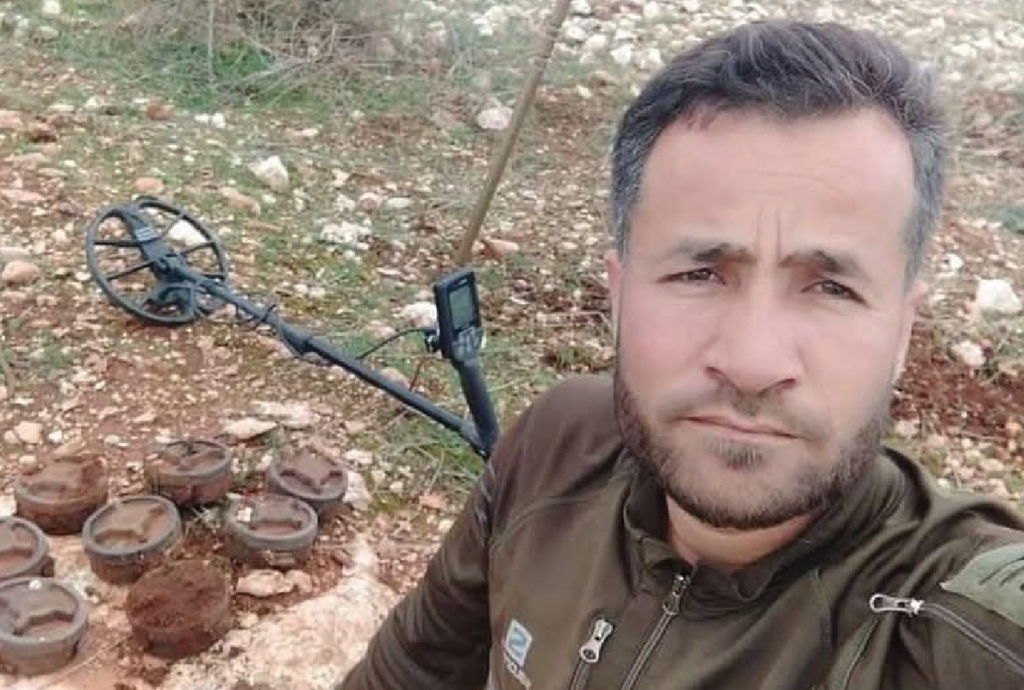
The Syrian volunteer, who was a schoolteacher and member of the Olive Branch organisation, was killed on 21 February 2025 while volunteering to clear mines in the village of Fatira in the southern rural Idlib.
An environmental disaster
Mines in agricultural land put thousands of Syrians at direct risk of death or injury from mine explosions and also create a dilemma about how to remove them. Despite mine-clearance efforts since the fall of the Assad regime, many agricultural areas remain contaminated. Even remote detonations or clearance using mechanical equipment can damage soil and deepen farmers’ losses. In response to questions from the investigation team about the consequences of mine explosions on agricultural land, a spokesperson for the Syrian Ministry of Agriculture explained that there are immediate and long-term effects that could last for years, and possibly decades, if not dealt with carefully.
The ministry said immediate effects include disruption of soil structure from shock waves, loss of fertile topsoil rich in organic material, deposition of explosive residue and metal fragments, and the death of soil microorganisms essential to crop growth. Long-term impacts can include degraded soil quality, depleted organic matter, and the accumulation of toxic compounds that inhibit plant growth.
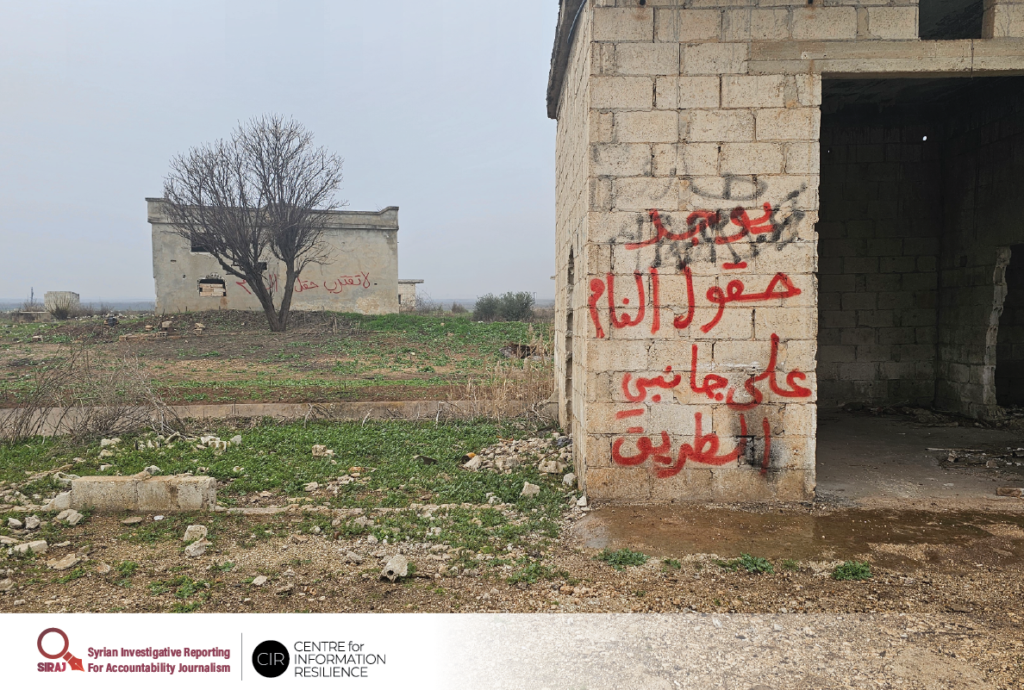
The danger is not limited to the soil, warned Dr. Ma’an Daniel Daoud, a researcher specialising in water resource management and investment. He said it can also extend to the contamination of groundwater and surface water in agricultural areas, which can lead to the poisoning of plants and animals. In an interview with SIRAJ, he added that some mines may contaminate drinking or irrigation water, as some contain substances designed to render water resources unusable.
The Ministry of Agriculture warned that some explosive materials, such as TNT, can remain partially stable in water and soil for many years unless treated appropriately.
In addition to the direct damage to the soil in the event of a mine explosion, mines continue to keep thousands of farmers away from their land in many areas, such as in al-Ankawi village, north of the Al-Ghab Plain in the Hama governorate. The village is littered with warning signs to not approach due to the danger of mines. Aerial drone imagery of the village shows vast areas of agricultural land that owners cannot approach because of the danger of mines. This forced displacement threatens farmers’ livelihoods and the fertility of their land, which has been left untilled and untreated for long periods.
Using distance-area calculations in satellite applications and based on the pattern of landmines in agricultural and residential areas, the investigation team estimated that 13,700 hectares of agricultural land and civilian areas in the Idlib countryside, northern Al-Ghab Plain, and Latakia countryside are at risk from landmines. This is roughly equivalent to 19,200 football pitches. This area is equivalent to approximately 10% of the total area of the al-Ghab Plain, which covers 141,000 hectares and is considered one of the largest and most important agricultural areas in Syria. In Ako village, farmers were forced to burn dozens of trees on their land out of fear of mines, which led to many of them exploding. According to farmer Abu Adel, this was the only way to get rid of them. Speaking to SIRAJ, the farmer, who is a native of the village, expressed his sadness, saying, “These trees survived for years after we were displaced, and now we have returned to burn them today because of the mines underneath them, instead of caring for them.”
These desperate efforts by farmers are not a coincidence, but rather the result of the significant challenges surrounding the landmine issue in Syria today, despite the considerable voluntary efforts of many individuals and local and international organisations.
Victims without support
Since being injured by a mine that blinded his right eye and impaired his mobility, farmer Muhammed Marai Mazan, his wife and their six children have been living without any source of income. At the same time, he has to cover the cost of the necessary medication he needs following his injury, which amounts to 450,000 SYP (about $40) per week, in addition to the cost of his ambulance and emergency surgery, which amounted to $3,200.
“In this area, we rely on God and agriculture, and we have no other source of income,” he tells the SIRAJ team, pointing out that no mine action agency has visited him since his injury. He has withdrawn from the outside world and barely leaves his home since his injury, wearing gloves, glasses and a scarf to cover the disfigurement caused by the injury.
In the village of Ako, where 20 families have returned after displacement, the men of the village gather to drink coffee near the school, and their only topic of conversation is the mines. Farmers continue to suffer daily from the danger that hinders all aspects of their normal lives.
Speaking to SIRAJ in front of the rubble of his house, farmer Khaled Sando explains the difficulty of living among the mines. “The car is always ready to transport the injured. I have transported four injured people from the village in my car.” He adds that the poor road conditions make reaching the nearest medical centre a difficult task that can take up to two hours. As for the school, which shows signs of recent renovation, Sando says, “They built this school for nine villages.” But “I live 200 metres away and I don’t dare send my children there because of the mines. Who would send their children to school in such conditions?”
Farmer Abu Adel says that organisations working to repair destroyed villages and houses have refused to work in their village because of the mines. “Since we returned, one person has been killed and seven injured by mines, and who knows how many more will be killed and injured in the future.”
He adds that the Ministry of Defence’s engineering teams respond to all reports of mines and dismantle them, but they have not carried out a comprehensive survey of the village, and their equipment is old and unable to detect all the mines.
However, outdated equipment is not the only obstacle to demining in Syria. The process is complex and requires years of work and huge funding, according to the Syrian Ministry of Agriculture, which confirmed to SIRAJ that the cost of removing mines from agricultural land ranges from $3,000 to $10,000 per hectare.
Based on these figures, the cost of clearing the agricultural areas in the area covered by our investigation ranges from $41 million to $137 million.
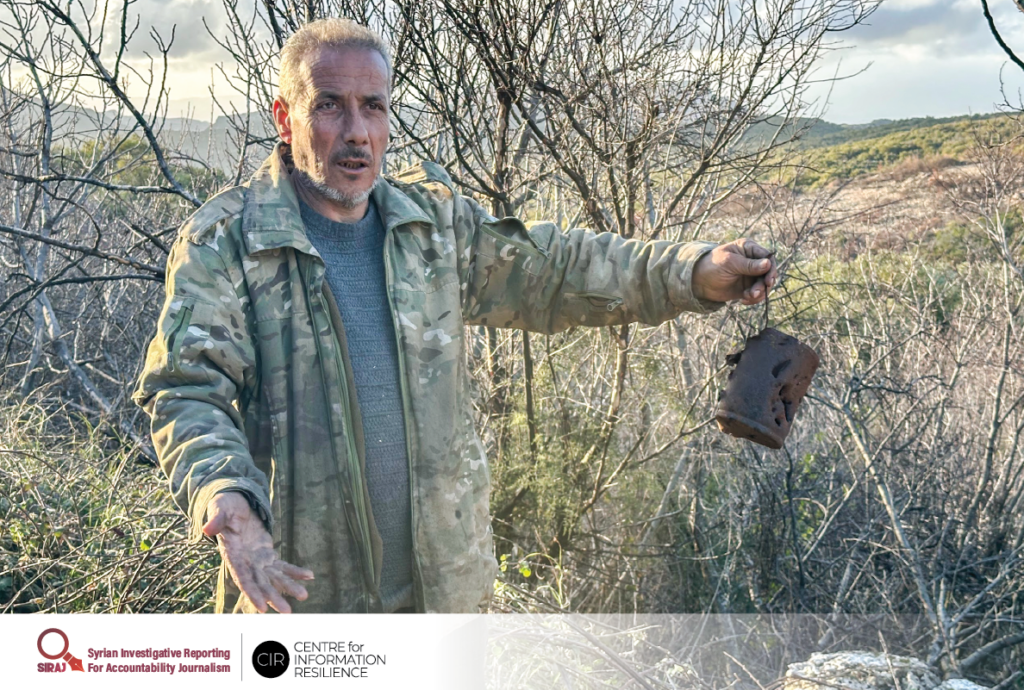
Furthermore, the reclamation of land damaged by mines requires stages of removal and environmental treatment of the soil, followed by agricultural rehabilitation. The ministry emphasises that farmers are unable to do this without support.
If the land is not rehabilitated, the effects of some explosive and toxic materials, especially in poor soil, may persist for periods ranging from 20 to 40 years.
Maysara al-Hassan, commander of the engineering regiment in the 80th Division of the Ministry of Defence, said that the Syrian government has received promises of support from international organisations and the United Nations to expand mine clearance operations. Currently, these promises have not yet been fulfilled.
Amidst local and international promises, residents of contaminated areas continue to live in daily fear and despair due to the lack of support for their cause. Farmer Khaled Sandou recalls with sadness the names of some of those he rescued who were not lucky enough to survive.
He says: ‘What are they waiting for? Do they want us to remove all these mines with our own bodies? Almost every week, someone is injured by a mine. At this rate, we will either all be killed or we will detonate all the mines.’
- Creative coordination and visual solutions: Radwan Awad.
- This investigation was produced with support from the Centre for Information Resilience (CIR).