

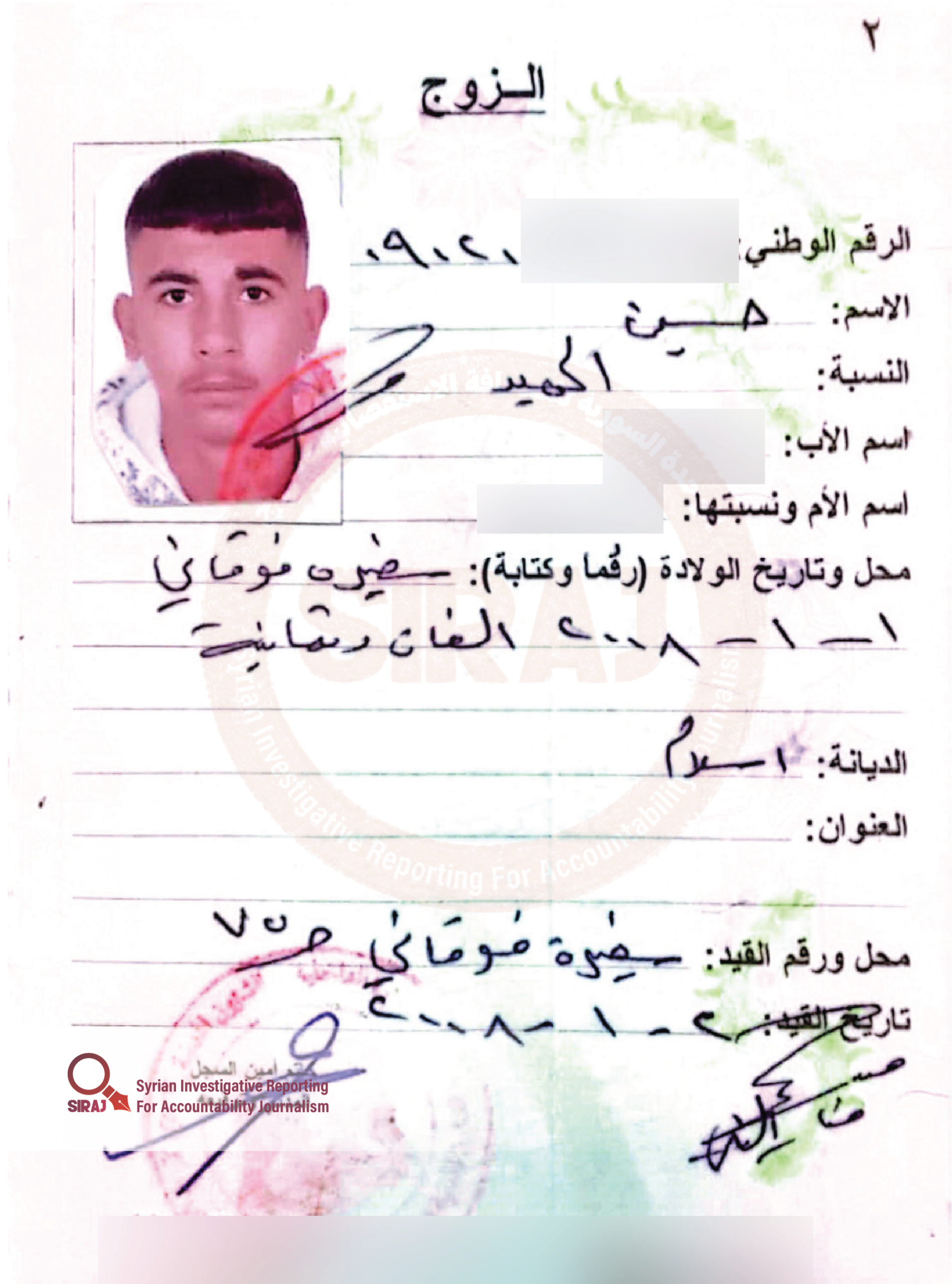
Until recently, Ali al-Hamid knew where his son was. He knew which prison was holding him, which lawyer was handling his case, and what charge the lawyer was trying to defend him against. Since Hussein, his only son among six daughters, was arrested, Ali had gathered documents, hired a lawyer, and waited for the case to reach court.
Then, without warning, Hussein disappeared.
He had not been released, nor had he been transferred to another prison known to the family. News of him stopped coming from the facility where he had spent roughly nine months in the custody of the Syrian Democratic Forces (SDF). His father received no court order or official notice explaining where he had been taken or why.
Weeks later, the family’s phone rang. The call was from the International Committee of the Red Cross (ICRC). The message was brief: Hussein was in Iraq.
For Ali, the question was not only how his son had been taken across the border, but how his case had reached this point in the first place.
Hussein was born in 2008. He worked alongside his father in agriculture in Deir ez-Zor, eastern Syria. His father says Hussein never carried a weapon and never joined any armed faction. According to Ali, the case began with a family dispute involving a relative, which ended with a report accusing the teenager of belonging to ISIS. From that point on, the father tried to prove his account through what he believed were the available legal channels: a lawyer, witnesses, complaints, and documents he expected a court would eventually review.
Ali found the irony in the accusation against his son difficult to accept.
Nearly a decade earlier, Ali himself had been detained by ISIS. He says the group arrested him in 2016 for allegedly smuggling food into areas outside its control, confiscated his money, and sentenced him to qisas—retributive punishment—before releasing him after a payment was made. Hussein was still a young child at the time.
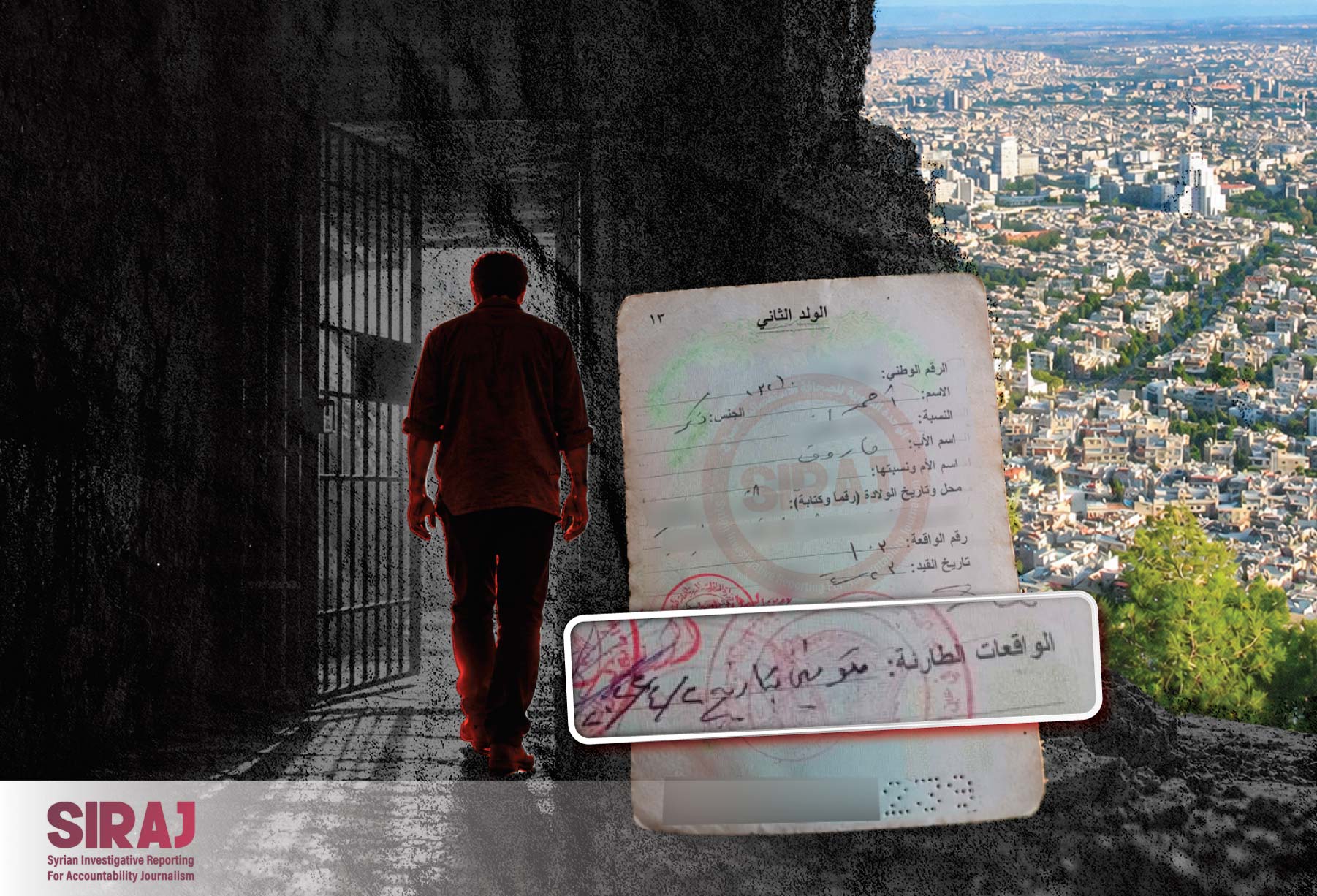
Today, Ali flips through the documents he collected for his son’s case.
“I was among the first people harmed by ISIS. They arrested me and confiscated my money, and my son was only a child at the time. How does it make sense that today he is accused of belonging to the same group? My son worked beside me and never carried a weapon. What happened was that a family dispute ended with someone reporting him, and a few days later SDF arrested him on accusations of belonging to ISIS.”
A court was supposed to be the place where the father’s previous account would be tested against the evidence held by the authorities that detained Hussein. But Hussein never made it to that court.
In January 2026, the military control map of northeastern Syria was changing rapidly. As the Syrian army advanced to retake areas previously controlled by SDF, the fate of prisons holding thousands of people suspected of links to ISIS became part of a broader security crisis.
On January 21, the United States began transferring detainees from those prisons to Iraq as part of Operation Inherent Resolve.
Hussein was one of them.
Within days, a case his lawyer had been pursuing in Syria became a legal proceeding in another country. The family did not know who had reviewed Hussein’s file before his transfer, what information had been sent with him, or where he was being held after arriving in Iraq. Most importantly, they did not know whether the accusation his father had been preparing to challenge in Syria had undergone any review before his son was handed over to Iraqi authorities.
Once in Iraq, the issue was no longer simply where he was being detained.
Iraq announced that those transferred would be investigated and tried under Iraqi law. For those convicted of certain terrorism offenses, the sentence can be death.
But Hussein was only one name among many.
The plane that carried him to Iraq was one of several used in an operation that transferred thousands of detainees. For many families, the flight marked the moment they lost the ability to track their sons’ cases.
For months, the reporters tracked the names of detainees transferred from northeastern Syria to Iraq beginning on January 22, after obtaining the complete list of those included in the transfer operation. They cross-checked the names against hundreds of official documents, including transfer records; detention and interrogation files from the SDF-run prisons; civilian and military records; Iraqi court decisions; visitation and inmate-account receipts; files found inside detention facilities after they were evacuated; and documents provided by detainees’ families and lawyers. They also interviewed 52 people — including relatives of detainees, attorneys and sources familiar with individual cases — to reconstruct the path of each person, from arrest in northeastern Syria to transfer to an Iraqi prison.
The transfer of thousands of Syrians to Iraq has raised legal questions not only about the conditions of their detention and prosecution, but also about the legal basis for handing them over. Syria’s constitutional declaration, issued on March 13, 2025, after the fall of the Assad regime, contains no provision regulating or prohibiting the extradition of Syrian citizens to foreign authorities. That left the issue without a clear constitutional framework as thousands of Syrians were transferred to another jurisdiction to face prosecution outside their country.
Syrian lawyer Anwar al-Bunni, director of the Syrian Center for Legal Studies and Research, said the problem extends beyond the transfer itself to the question of jurisdiction.
“These people are accused of crimes that are alleged to have taken place in Syria, so how will Iraqi courts be able to gather evidence and hear from witnesses who are in Syria?” he said. Al-Bunni added that what took place was “not simply a judicial procedure, but a political decision.”
As the names were cross-checked against the documents, the case no longer appeared to be simply one of a mass transfer of people suspected of belonging to ISIS. The records showed that some were minors when they were arrested; some had returned to Syria after years of living in Turkey; and others had been described differently within the detention system from the charges they would later face after being transferred to Iraq.
Those discrepancies do not, by themselves, establish that the detainees are innocent of any potential crimes. But they raise the question: What was enough to reclassify a detainee and place his name on a list for transfer to Iraq?
Al-Mutasim al-Kilani, a lawyer specializing in international criminal law and human rights, said the stakes are especially high when an administrative or security classification can result in someone being transferred into a judicial system where a conviction could carry the death penalty.
“The greater the likelihood that a classification will result in a person being transferred to a jurisdiction where he could face the death penalty, the greater the level of scrutiny required,” al-Kilani said. “A box checked in a database is not enough to justify such a consequence.”
According to al-Kilani, placing someone whose detention had been linked to another armed group or a different set of circumstances on a list of “ISIS detainees,” without individualized evidence, could raise questions about the accuracy of the classification itself, the legal basis for continued detention and transfer, and the presumption of innocence. He said the case should have been reviewed first by the detaining authority before any handover, and then by Iraqi authorities when they accepted the detainee or immediately upon his arrival.
The Road to Iraq
The transfer operation did not take long, but its consequences altered the legal trajectory of thousands of detainees. Amid a Syrian government offensive to retake the country’s northeast, the United States began air and ground transfers to Iraq on January 21, 2026, as part of Operation Inherent Resolve.
Within days, thousands of detainees — along with their files — were moved from prisons in northeastern Syria into Iraqi jurisdiction. Washington justified the move on security grounds, citing the risk that detainees could escape as fighting intensified. Iraqi officials, meanwhile, said the United States would cover the costs of their detention and prosecution.
Human Rights Watch (HRW) said the United States transferred 5,700 detainees accused of alleged ISIS affiliation from northeastern Syria to Iraq, where they face risks of enforced disappearance, unfair trials, torture and other ill-treatment, as well as violations of the right to life.
The Syrian Network for Human Rights (SNHR), meanwhile, documented the transfer of at least 4,743 Syrian citizens to Iraq between 2019 and the final period in which the detention facilities concerned remained under SDF control. The organization said the figure represented only the minimum number of cases it had been able to verify. It also said the absence of an official registry identifying those transferred, their places of detention and their legal status remains one of the main obstacles to determining their fate and following their cases.
The last time Iraq conducted terrorism trialswas in 2018 and 2019, after Iraqi government forces recaptured territory that had been under ISIS control.
Baghdad defended the 2026 transfers on national security grounds. On January 29, Iraqi government spokesman Bassem al-Awadi described the transfer of ISIS detainees from Syria to Iraq as a “preemptive step” to protect Iraqi national security, amid concerns that detainees could escape because of fighting and instability in Syria.
After the transfer operation was completed, Adm. Brad Cooper, commander of U.S. Central Command, said on February 13 that the United States “appreciates Iraq’s leadership and recognition that the transfer of detainees is essential to regional security,” referring to Baghdad’s role in receiving detainees transferred from Syria.
Lawyer al-Kilani draws a distinction between the decision to transfer detainees and a judgment on the legality of the operation as a whole. He cautions that the absence of an individualized judicial order does not automatically make every transfer unlawful.
“The absence of an individual judicial order does not automatically make every transfer illegal, but it makes it difficult to confidently describe the process as a fully fledged judicial surrender,” al-Kilani said. “Transferring thousands of people on the basis of a collective classification, without an individualized assessment of the legality and risks of the transfer, raises serious concerns that the process amounted to an arbitrary mass transfer.”
In a joint January 2020 report on prosecutions under anti-terrorism laws following the defeat of ISIS, the United Nations Assistance Mission for Iraq and the Office of the U.N. High Commissioner for Human Rights examined serious shortcomings in Iraq’s administration of justice. The report documented concerns over due process and fair-trial guarantees in terrorism cases.
Other rights reporting from that period found that Iraqi authorities detained tens of thousands of men for prosecution in proceedings marked by serious rights violations. Many were sentenced to death after trials that, in some cases, lasted only minutes, with concerns including inadequate access to lawyers, reliance on anonymous informants and confessions allegedly obtained under torture.
How Were the Transfer Lists Compiled?
When military aircraft took off from northeastern Syria in January 2026, they carried 3,543 Syrians, according to figures released by Iraqi authorities, out of a total of 5,704 detainees transferred to Iraq. But their journey did not begin on the runway. It began years earlier, inside a detention system that expanded after the fall of ISIS’s last stronghold in Baghouz in 2019 — a system where files were assembled, accusations recorded and lists compiled that would later help determine who was transferred to Iraq.
By the end of the fighting, SDF were running one of the region’s largest detention systems. Thousands of Syrians, Iraqis and other foreign nationals were held in facilities including al-Sina’a prison, also known as Ghwayran, in Hasakah; Alaya prison; the Chinese Camp; and other detention centers across northeastern Syria.
Abdul Ghany said the American role could not be reduced to logistics alone.
“The U.S. role cannot be described as merely logistical,” he said. “The United States announced the start of the operation, funded the detention of those transferred and their trials, and declined to disclose whether the detainees received judicial review or access to lawyers.”
The detainee records reviewed by SIRAJ show that the prison system held people arrested during security operations against ISIS, as well as others detained following local accusations, on suspicion of dealing with armed groups, or during clashes in Deir ez-Zor and Hasakah after the territorial defeat of ISIS. The system also included minors, people who had returned to Syria from abroad, and detainees whose cases were already pending before the SDF-run courts. All were ultimately accused of affiliation with ISIS.
HRW said in a February 17, 2026, report that part of the problem can be traced to the nature of the detentions themselves. Sarah Sanbar, the organization’s Iraq researcher, said thousands of people had been held for years without adequate judicial review before being transferred to Iraq.
“Regardless of their affiliations or alleged actions, these detainees have been held for years without due process and are now detained in another country without adequate safeguards,” Sanbar said.
Those concerns echo what SIRAJ found in its review of more than 50 case files and testimonies.
In several cases, the story did not begin with an accusation involving ISIS at all.
al-Kilani said the transfers also raise questions about the role the United States played in the operation itself: Who selected the names? Who issued the orders? And who had effective control over the detainees — and the ability to stop their transfer?
“A state that puts a detainee on a vehicle or an aircraft cannot simply say it relied on another party’s list,” al-Kilani said. “Effective control creates an obligation to conduct meaningful verification.”
In one village in rural Deir ez-Zor, a boy who was no older than 14 was arrested during clashes between SDF and tribal armed groups in the summer of 2023. His family said it later learned where he was being held and hired a lawyer to follow his case. According to the family and documents reviewed by SIRAJ, the judgment against him was connected to his alleged participation in events involving the “Tribal Army.”
In early 2026, the family lost contact with him. ICRC later informed them that he was in Iraq.
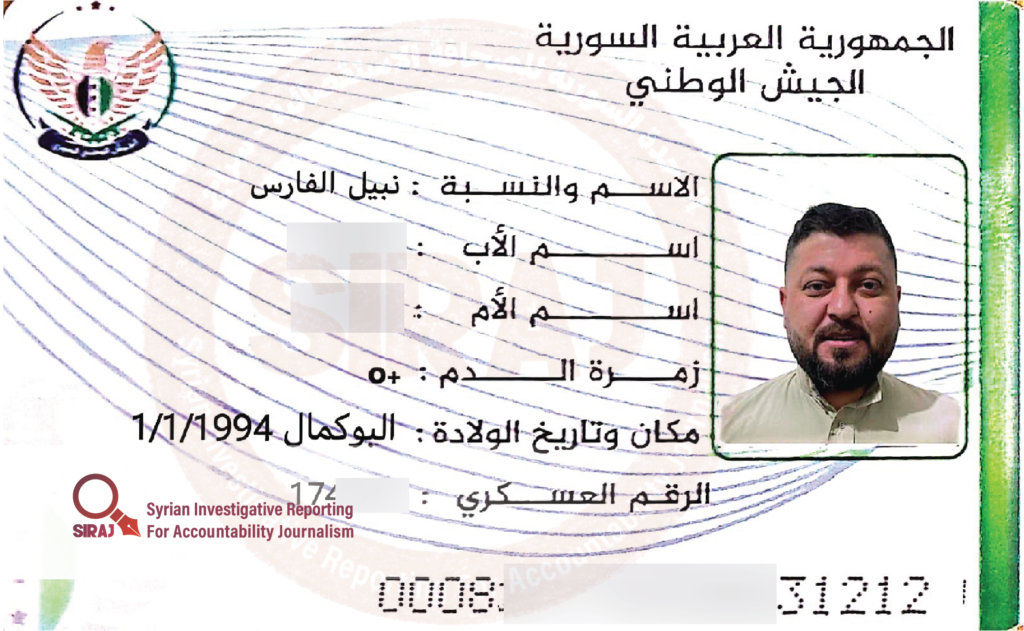
In another case, SIRAJ obtained documents belonging to a detainee who had served in the military police of the Syrian National Army. His family said his lawyer reviewed his case file while he was being held at Alaya prison and that the accusation recorded there was not related to ISIS, but to his affiliation with an opposition armed group. The man was arrested on March 20, 2025. Months into his detention, he disappeared from the prison, and his family began hearing conflicting accounts that he had been transferred to Iraq.
A document showing membership in the military police of the Syrian National Army, which fought ISIS. The document belongs to a detainee who was later transferred to Iraq – SIRAJ
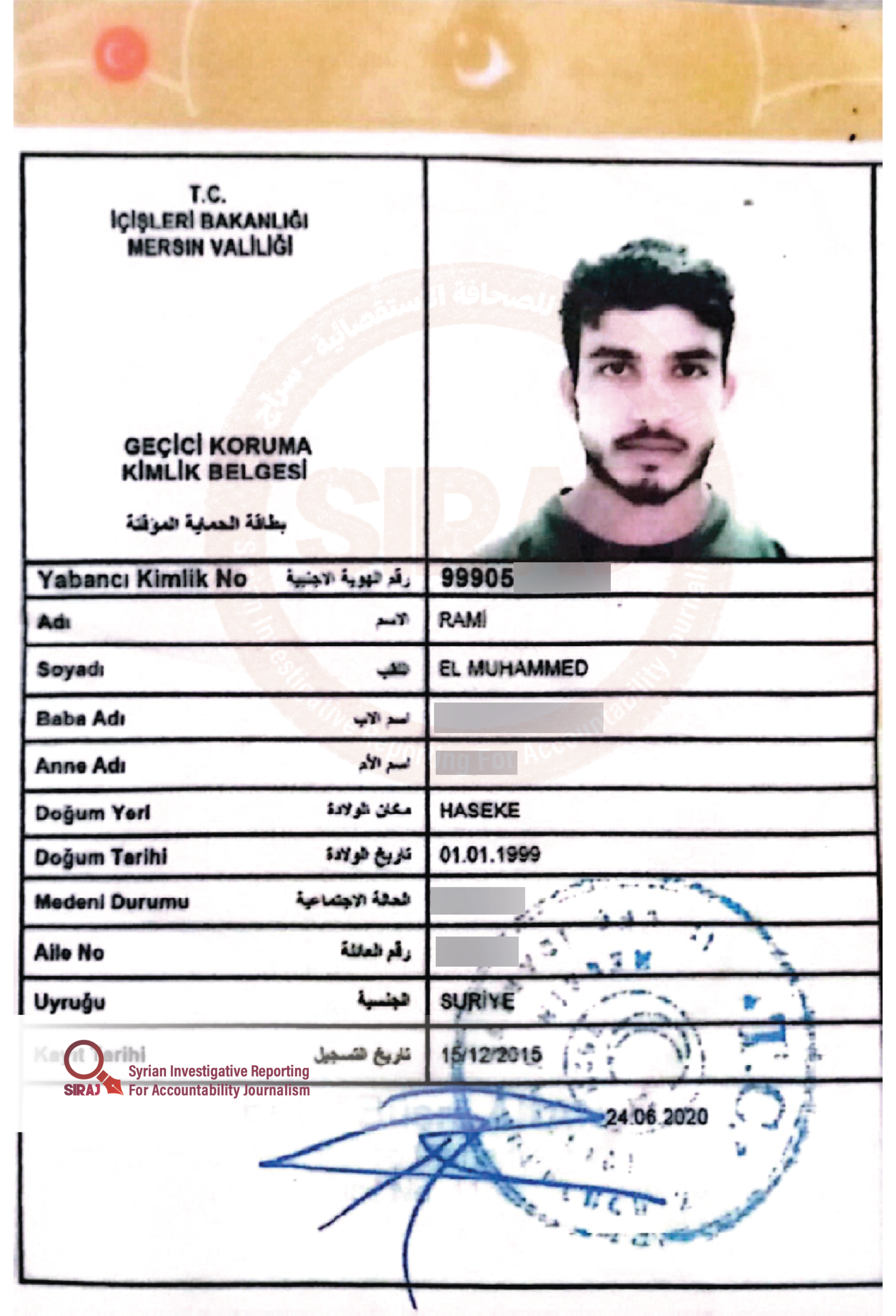
In northern Hasakah, a different case reveals a similar pattern. One detainee held a temporary protection card issued by Turkish authorities, along with records showing that he had lived in Turkey for years before returning to Syria in late 2025. His family retains documents recording his travel and education. They said he was arrested after entering SDF-controlled territory and that his name later appeared among those transferred to Iraq.
These cases do not establish that all of those transferred were civilians, nor do they prove that the accusations against them were unfounded. They also do not negate the presence of actual ISIS members and commanders among the thousands transferred. Iraqi authorities have said that some of the detainees are accused of committing grave crimes in Iraq, including genocide and the use of chemical weapons.
But SIRAJ’s review of these cases raises a different question.
If some detainees had such different backgrounds, who reclassified them before their names were added to the transfer lists? And were all of their cases individually reviewed, or did the operation rely on broader lists whose details were examined only after the detainees arrived in Iraq?
Syrian journalist Ibrahim Hajji al-Halabi, a spokesman for detainees’ families who has been following their cases, said the issue is not about presuming anyone innocent or guilty, but about ensuring that any prosecution is based on fair and transparent legal procedures.
“This is not about proving someone’s innocence or guilt,” al-Halabi said. “It is about ensuring that any trial is based on fair and transparent legal procedures. What the families are asking for is to know what happened to their sons and for them to have access to their basic legal rights. Real justice cannot be built on uncertainty. It requires respect for the right to a defense and guarantees of a fair trial.”
Given the serious risk of torture in Iraq, the transfers would appear to violate the international legal principle of non-refoulement, which prohibits transferring a person to a country where they face a risk of ill-treatment, according to HRW. The organization said that, given Iraq’s well-documented due process violations in counterterrorism proceedings, the U.S. role in detaining these individuals and carrying out their cross-border transfers could make it complicit in resulting abuses.
The Documents Tell a Different Story
After the announcement that more than 5,000 detainees had been transferred from northeastern Syria to Iraq, the official account appeared straightforward. Statements from Baghdad and Washington described an operation targeting ISIS members who had been held for years in the SDF-run prisons and portrayed the transfers as a necessary security measure to prevent their escape as the military landscape in northeastern Syria shifted.
But that account began to change with each new document added to SIRAJ’s investigation.
At first, the discrepancies were not obvious. The records appeared disconnected: prison receipts, identification cards, family registries, military service documents, Turkish temporary protection cards, court rulings and transfer records. Each file told the story of a different person, in a different place and under different circumstances.
But after months of collecting the records and reconstructing their chronology, something larger than a series of individual cases began to emerge: a pattern repeated quietly across multiple files.
None of the documents reviewed by SIRAJ indicate that an independent judicial review took place before the transfers. That finding is consistent with SNHR, which said it was unable to verify that individualized assessments or independent judicial decisions preceded the handovers.
The first discrepancies appeared in documents that had nothing to do with terrorism.
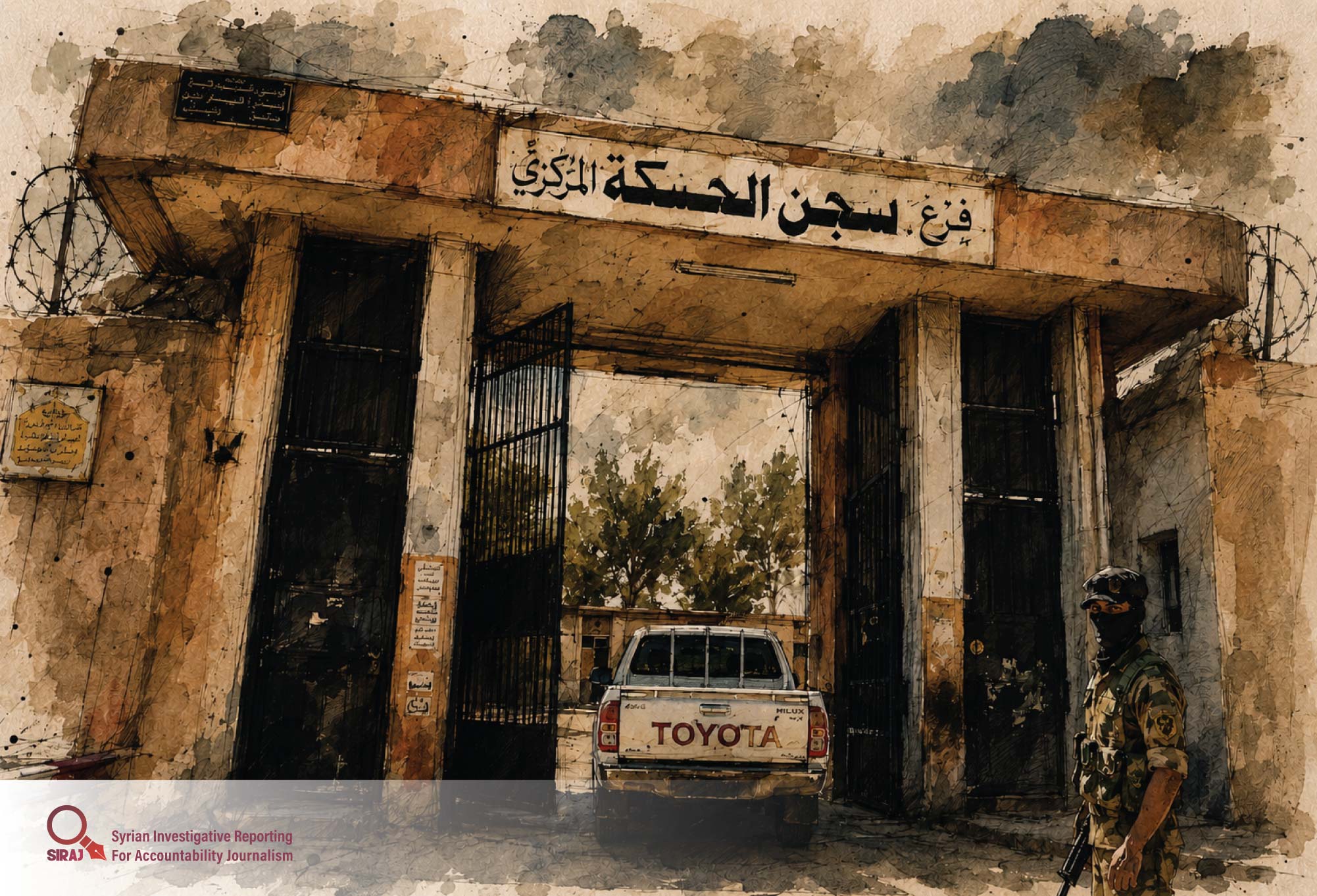
They emerged when SIRAJ compared where detainees had been held and how they had been treated within the SDF detention system. According to SIRAJ’s findings, people suspected of ISIS affiliation or held in terrorism-related cases were detained at al-Sina’a prison in Hasakah, where visits were tightly restricted and communication with families was prohibited.
Yet some names that later appeared on the lists of detainees transferred to Iraq had been held at Alaya prison. Official receipts obtained by SIRAJ show their families depositing money into their prison accounts, while other records document family visits, the appointment of lawyers and periodic case reviews.
Abdul Ghany, director of SNHR, said those transferred face serious risks, including torture during interrogation, enforced disappearance, prosecution under Iraq’s Anti-Terrorism Law on the basis of organizational affiliation, and the possibility of being sentenced to death.
Then came a document that prompted SIRAJ to reexamine everything that had come before.
It was not testimony from a family member. It was not a lawyer’s account.
It was an Iraqi court ruling
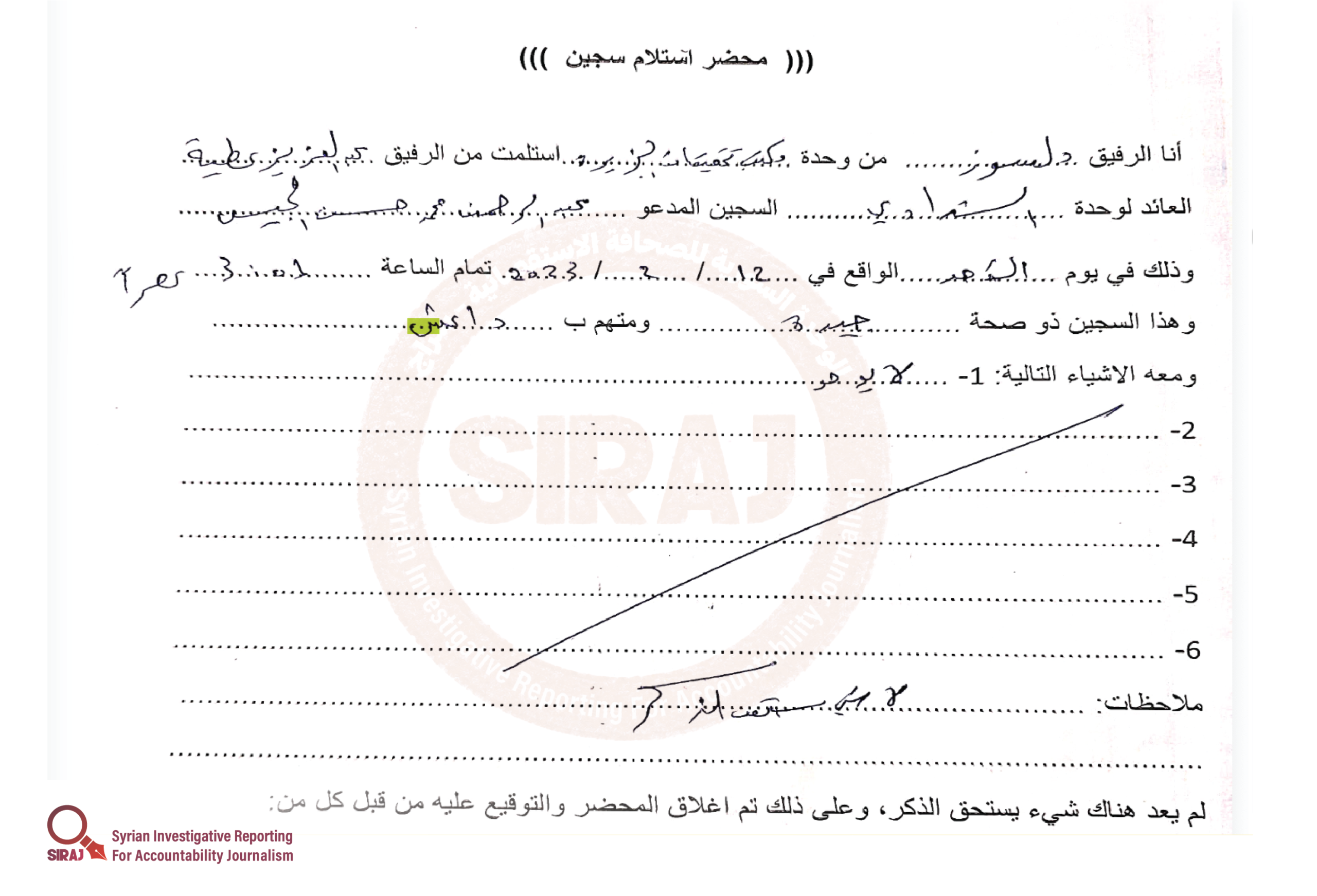
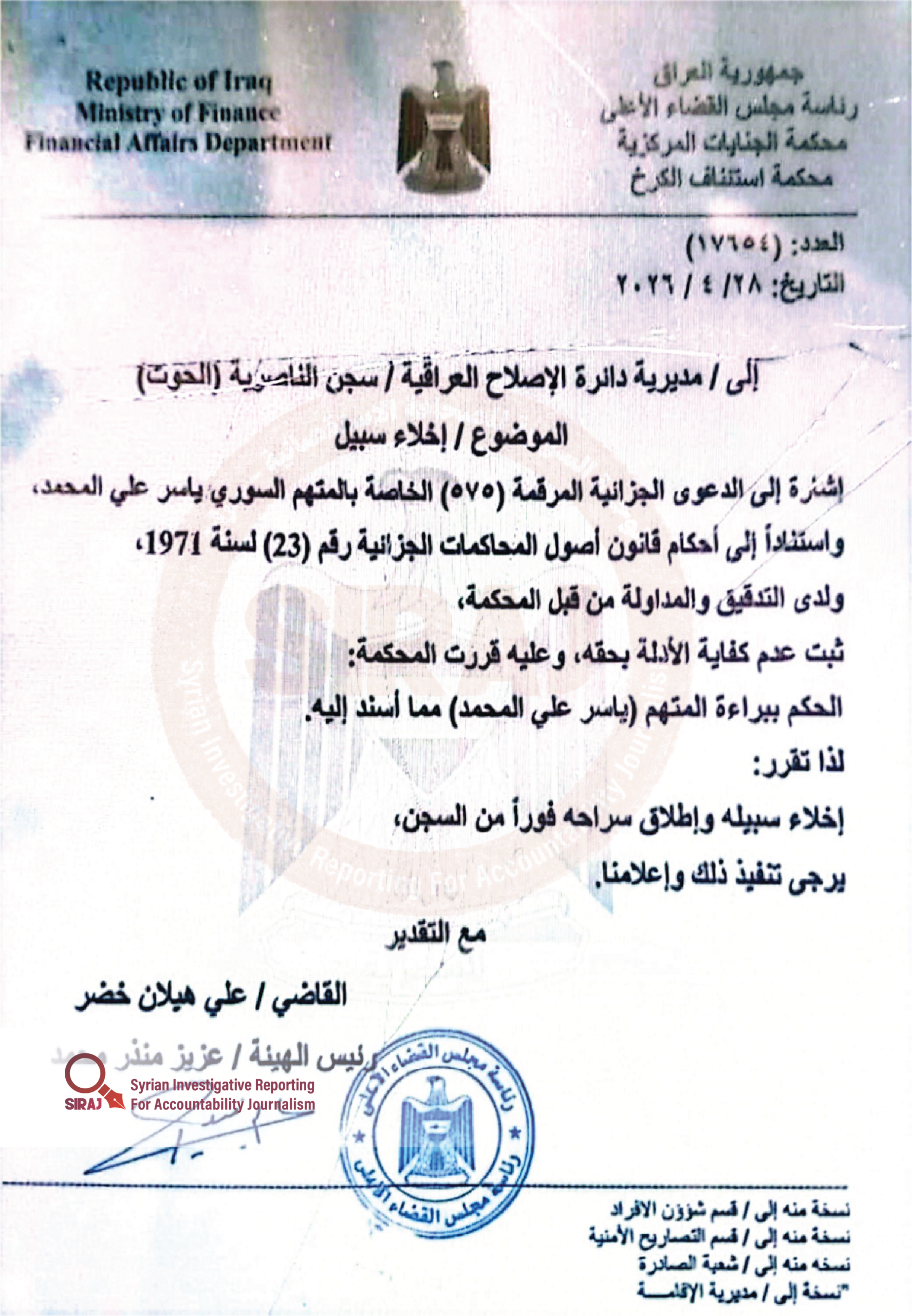
The decision was issued by the Central Criminal Court in Baghdad on April 28, 2026.
The ruling names Syrian detainee Yasser Ali Mohammad, one of those transferred from northeastern Syria to Iraq as part of the same operation. After reviewing the case, the court reached a single conclusion: the evidence was insufficient. It ordered his immediate release.
Trials That Could End in Death Sentences
Once they crossed the border, the cases of thousands of detainees were no longer handled within the detention system run by SDF. They became part of Iraq’s criminal justice system.
On February 8, 2026, Iraq’s Supreme Judicial Council announced that the suspects — nationals of 42 countries — would be prosecuted under Iraqi law and that none would be handed over to another country until investigations into their alleged crimes were completed.
For the thousands of Syrians transferred from northeastern Syria, this was more than an administrative shift. It meant entering an entirely different legal system, where terrorism cases are prosecuted under Iraq’s Anti-Terrorism Law No. 13 of 2005, rather than under any procedures that had governed their cases in Syria.
A review of at least 50 case files obtained by SIRAJ shows that the people now facing Iraqi courts did not all follow the same path. In one case, the father of Hussein, who was 16 when he was arrested, retains complaints and documents that he says show the case began with a family dispute. In another, the family of a young man holds official records showing that he spent more than a decade in Turkey before returning to Syria in late 2025. He was arrested shortly after entering SDF-controlled territory.
Despite those sharply different circumstances, both cases ultimately arrived at the same destination: the Iraqi judicial system.
A 2020 joint report by the United Nations Assistance Mission for Iraq, or UNAMI, and the Office of the U.N. High Commissioner for Human Rights documented concerns in Iraqi terrorism trials, including the speed of proceedings, difficulties accessing lawyers and, in some cases, reliance on confessions as a primary basis for conviction.
As the transferred cases entered Iraqi courts, another problem emerged — one involving not only the evidence itself, but where the alleged crimes took place. In cases involving acts alleged to have occurred entirely in Syria, Iraqi courts may be asked to adjudicate events whose witnesses, victims, evidence and crime scenes are all located in another country.
Lawyer al-Kilani said that even where a theoretical basis for jurisdiction exists, that alone does not resolve questions about the fairness of a trial. The defense, he said, must be able to examine original evidence, question witnesses, call witnesses on the defendant’s behalf and scrutinize events that took place in Syria.
“Theoretical jurisdiction is not enough; the court must actually be capable of establishing the truth,” al-Kilani said. “A trial without available witnesses, without access to the crime scene, and based on security files the defense cannot challenge risks becoming a trial of a classification rather than a trial of the alleged act.”
As these cases began moving through Iraq’s courts, Faiq Zidan, president of Iraq’s Supreme Judicial Council, traveled to Damascus in mid-August at the head of a judicial delegation for talks with Syrian officials on shared judicial and security matters.
The visit came as the cases of Syrians transferred to Iraq raised a question extending beyond where they are being held: Which country should prosecute them, and how can alleged crimes committed in Syria be effectively investigated when the defendants are now before Iraqi courts?
As of February 2026, Iraq had 30 prisons holding about 67,000 inmates, including roughly 1,600 foreign nationals, according to the Iraqi Ministry of Justice. Those figures did not include prisons in the Kurdistan Region or people held by security forces and various armed groups elsewhere in the country.
Iraq makes extensive use of the death penalty, particularly in counterterrorism cases. An estimated 8,000 prisoners are under death sentences. On February 10, Iraq executed six people, its first mass execution since executions were suspended following the passage of the General Amnesty Law in January 2025.
SIRAJ contacted three former officials who, while SDF controlled northeastern Syria and administered its detention facilities, held responsibilities related to prisons and detainees, security case files, and coordination with the U.S.-led coalition over detention centers. SIRAJ asked them about the criteria used to classify detainees, how the lists of people transferred to Iraq were compiled and reviewed, and which parties took part in the transfer operation. None responded by the time of publication.
The Point of No Return
Within hours of the first groups of detainees arriving from northeastern Syria, Iraqi authorities announced that they had been referred to the Karkh First Investigative Court, which specializes in terrorism cases. Investigations began with the detainees treated as suspects in cases involving alleged affiliation with ISIS.
For many families, this was more than a geographic transfer. It marked their entry into a legal system fundamentally different from the one in which they had been following their relatives’ cases in Syria. Under the Iraqi system, they were no longer detainees awaiting a review of their files, but suspects facing investigations under the country’s Anti-Terrorism Law.
Abdul Ghany, director of SNHR, said suspicion of ISIS affiliation, however serious the allegation, is not by itself sufficient to convict someone or transfer that person into another jurisdiction without an individualized review and full procedural safeguards.
“Some groups of those transferred included dozens of children and adolescents,” Abdul Ghany said. “These cases require the application of the Convention on the Rights of the Child. Children should not be treated on the basis of collective suspicion or family affiliation, and authorities must take into account the possibility that they were subjected to recruitment or coercion.”
Iraq is among the countries that make extensive use of the death penalty in terrorism cases. Anti-Terrorism Law No. 13 of 2005 allows for death sentences for a range of offenses involving membership in a terrorist organization or participation in its activities. In recent years, rights groups and U.N. bodies have documented hundreds of death sentences in terrorism-related cases.
SIRAJ sent questions to Iraq’s Supreme Judicial Council, Ministry of Justice and National Security Service seeking clarification on the legal basis for the transfers, how the detainees’ files were being handled, and the procedures used to review their legal status after their arrival in Iraq. All three declined to comment by the time of publication.
On August 23, 2026, Iraq’s Ministry of Justice announced that it had begun diplomatic and legal procedures to return about 6,000 foreign prisoners to their home countries to serve the remainder of their sentences. Murad al-Saadi, the ministry’s media director, said in press remarks that Baghdad was coordinating with diplomatic missions from 61 countries to activate agreements and negotiate memorandums of understanding that would allow the transfers. Syrians, he said, make up the largest nationality among those covered by the initiative.
But the new pathway does not apply to everyone. According to the ministry, prisoners sentenced to death are excluded.
The announcement carries particular significance for the thousands of Syrians transferred from the SDF-run prisons to Iraq in 2026. After being taken across the border for investigation and prosecution in Iraqi courts, some Syrian prisoners may now face a journey in the opposite direction — back to Syria to serve their sentences.
Those sentenced to death, however, remain outside that path.
Inside the Karkh Court
One of the detainees transferred to Iraq described the first investigative hearings in a phone call with his family. He said detainees’ names were called one by one before each was taken to an interrogation room to appear for the first time before an investigative judge at the Karkh First Investigative Court — the court that Iraq’s Supreme Judicial Council said had been assigned to handle the cases of detainees transferred from northeastern Syria.
Most detainees do not know what charges were entered into their case files after they arrived in Iraq, according to families interviewed by SIRAJ, or whether those charges are the same as those recorded against them in the SDF-run prisons. Families said they were not informed of hearing dates and were not given interrogation records or details of the proceedings involving their relatives after the transfer.
Thirteen families said they learned that their relatives had arrived in Iraq only through a brief phone call or from ICRC. What happened inside the interrogation rooms, they said, remained largely unknown. In most of the cases documented by SIRAJ, families knew little beyond the fact that their relatives were being held at Karkh prison. They had no information about who was representing them, what evidence prosecutors were relying on, or what material judges were reviewing.
The lack of information extends beyond the families. Iraqi authorities have not publicly explained how the case files received from northeastern Syria were classified, or whether Iraqi investigators built new cases based on independently gathered evidence or relied, in whole or in part, on files that accompanied the detainees across the border.
Iraq still lacks legislation criminalizing the core international crimes, including war crimes, crimes against humanity and genocide. Instead, alleged ISIS members are prosecuted under Iraq’s 2005 Anti-Terrorism Law, which provides for the death penalty for certain terrorism-related offenses, including membership in a terrorist organization.
From Prisons in Northeastern Syria to Iraq’s Terrorism Courts
The journey did not end at the doors of the Karkh court. Nor did it end at the gates of the prisons they had left behind in northeastern Syria.
In villages stretching across Deir ez-Zor, Hasakah and Raqqa, dozens of families remain caught in the uncertainty that began when their sons disappeared.
Little has changed in their daily lives. Mothers still keep photographs of their sons. Fathers hold on to documents collected in plastic folders. Brothers move between lawyers, government offices and humanitarian organizations, searching for any piece of information that might explain what happened.
During the reporting for this investigation, SIRAJ interviewed more than 23 families of detainees transferred from northeastern Syria to Iraq. Their accounts of the arrests differed, as did their relatives’ backgrounds and circumstances. But they shared one thing: none knew how the decision to transfer their relatives to Iraq had been made, or what evidence that decision was based on.
SIRAJ contacted U.S. Central Command (CENTCOM) to ask whether the detainees had been given access to lawyers, whether their cases had undergone judicial review before the transfers, and whether they had been given an opportunity to challenge their transfer to Iraq. CENTCOM declined to comment.
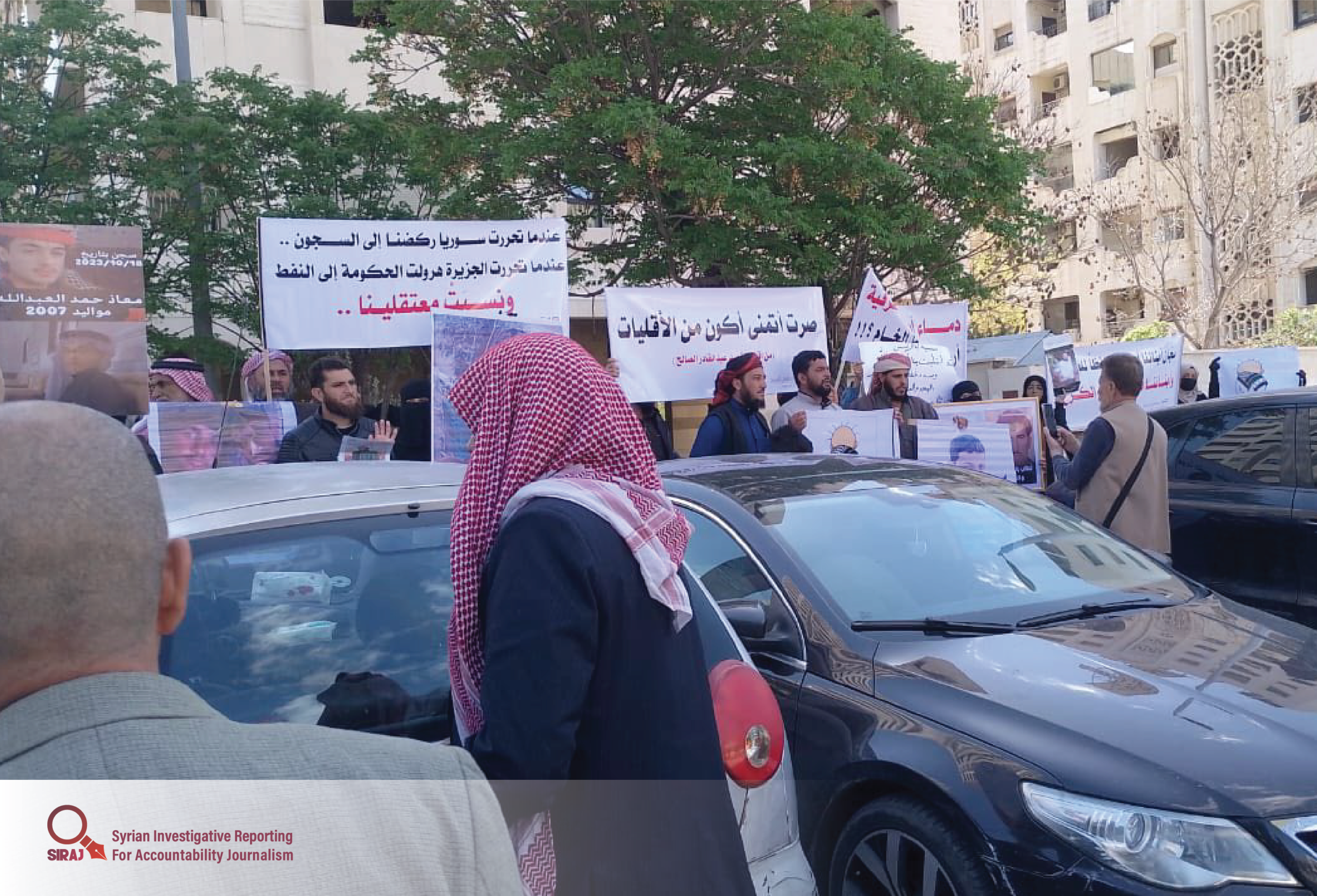
In Damascus, the issue has moved beyond the families’ homes and into public view. In April, dozens of detainees’ relatives gathered outside the Ministry of Foreign Affairs and Expatriates, calling on the Syrian government to intervene with Iraqi authorities, determine the whereabouts and status of those transferred, and work to bring them back to Syria.
The protesters carried photographs of their relatives and called for information about where they were being held, access to communication with their families, fair trials for those facing substantiated charges, and the return of those against whom there is insufficient evidence.
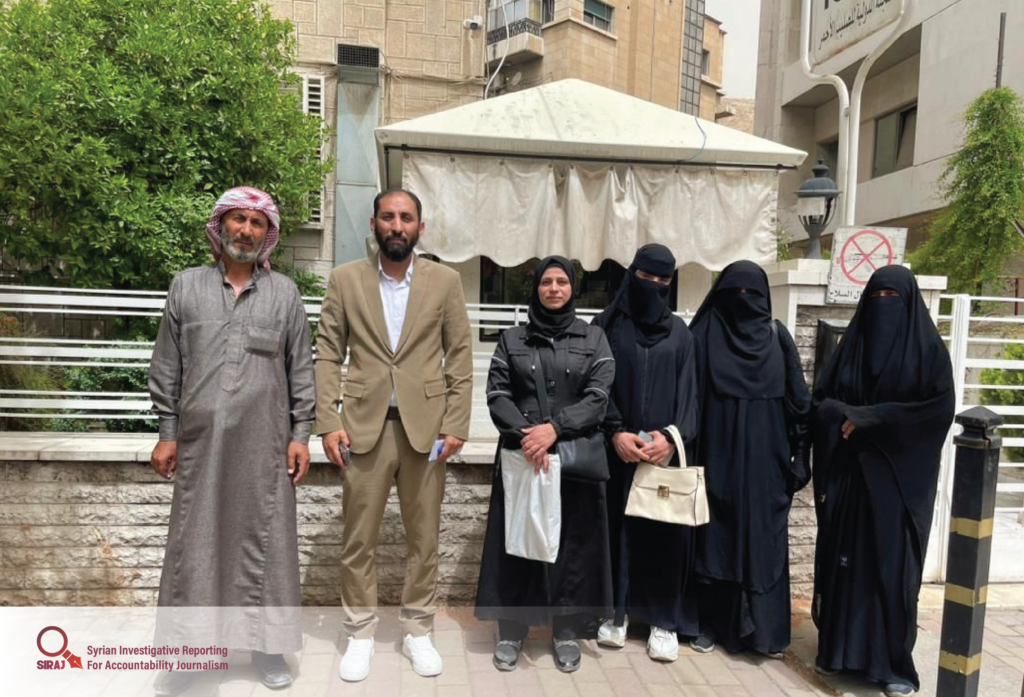
Days later, a delegation representing the families met with officials at Syria’s Foreign Ministry. The delegation included relatives of detainees, while ministry representatives and others following the issue also attended.
The families left the meeting without a timetable for what would happen next. But they left with one significant change: the fate of the detainees was now formally on the Syrian government’s agenda.
A Foreign Ministry representative said that, according to the outcome of the meeting, the Syrian government was following the case in coordination with the ministries of justice and interior and was in contact with Iraqi authorities. At the same time, he described the issue as “complex” and said it would require more time, declining to provide a timeline for resolving it.
For the families, that was not enough.
Hussein al-Rarat, one of the families’ representatives, said they are not calling for the wholesale release of all detainees. Rather, they want them returned to Syria, where they can appear before a court that their families can access and whose proceedings they can follow.
“We are not asking for the charges against anyone to be dropped,” al-Rarat said. “If someone committed a crime, they should be held accountable. But we are asking for a fair trial, and for detainees’ families to have the right to know what is happening.”
The same message runs through other families’ accounts.
Shaimaa al-Mohammad, the wife of one of the transferred detainees, said she had been waiting for her husband’s detention in an SDF-run prison to end when she suddenly learned that he had been transferred to Iraq.
“We were waiting for him to come home,” she said. “Then suddenly, we learned he was in Iraq. Since that day, we haven’t known what awaits us.”
- Creative direction and visual solutions: Radwan Awad.