

On the night of 8 December 2024, as Syrian opposition forces advanced toward Damascus, news of Bashar al-Assad’s flight, which, according to sources, even his brother Maher had not been informed of, served as the final alarm bell for the regime’s most powerful figures to flee before being captured by the advancing fighters entering the capital.
Accounts differ regarding the fate of senior military commanders and intelligence chiefs in Syria. Some are rumored to have fled to Russia, while other sources suggest that several are hiding in Iraq and Lebanon.
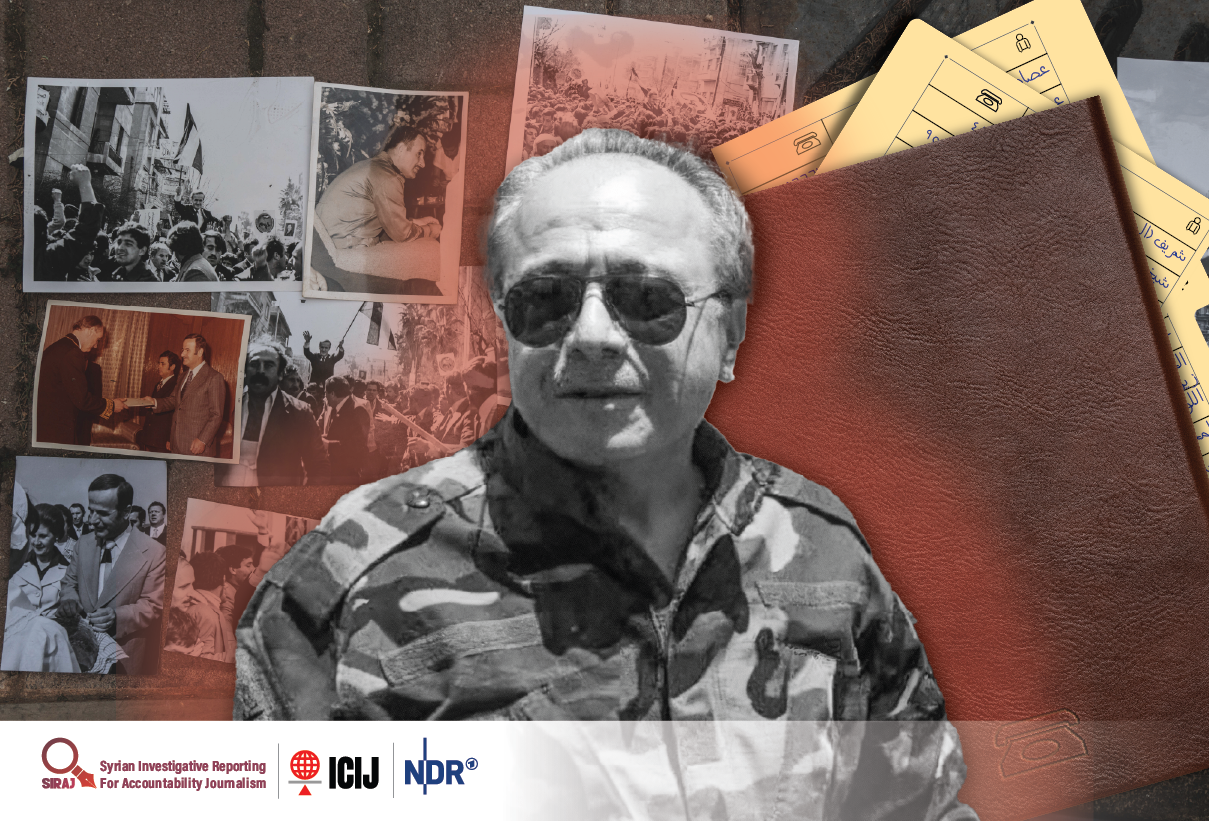
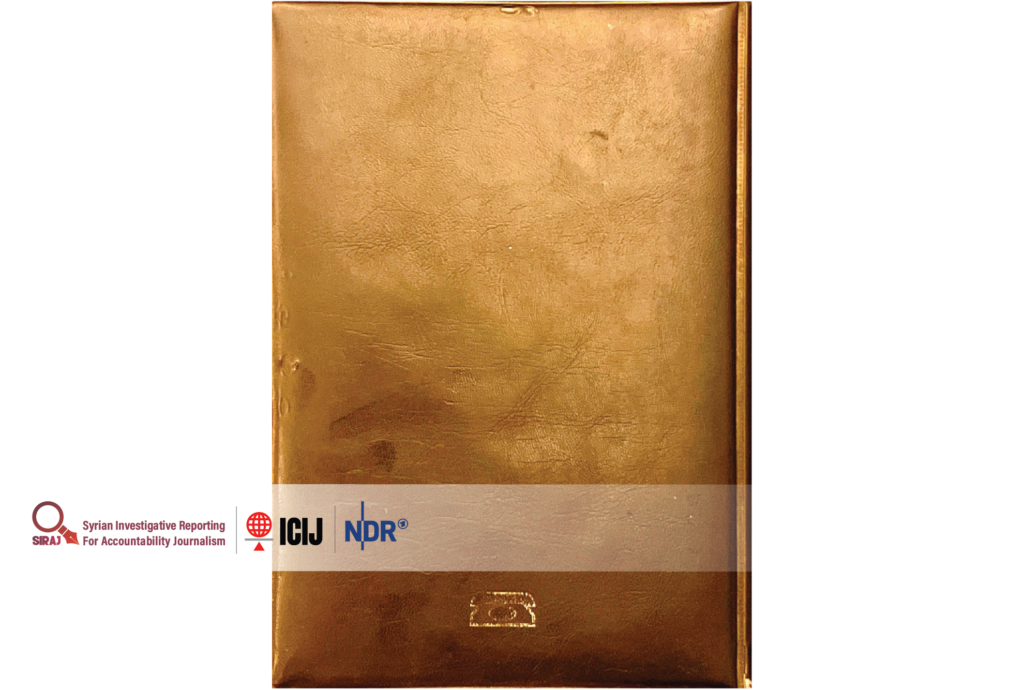
What all sources agree on, however, is the panic that swept through the regime’s hard core on the night it fell; a fear that drove one of Assad’s most senior figures, Major General Kifah Melhem, former head of Military Intelligence and Director of the National Security Bureau until the regime’s collapse (succeeding Ali Mamlouk), to abandon his office and flee, leaving behind numerous documents and papers. Among them was a particularly sensitive document: his personal phonebook.
This phonebook, one of the key documents reviewed by the investigative team at the Syrian Investigative Reporting for Accountability Journalism – SIRAJ, as part of the international investigative project “Damascus Dossier,” contains approximately 400 names.
The phonebook does not specify the nature of Melhem’s relationship with those whose numbers appear in his personal contacts. In this report, however, we attempt—solely through examining the phonebook and its contents—to understand the extent of Melhem’s power and centrality within the former Syrian regime, as reflected in the web of relationships recorded in his contact list.
“Damascus Dossier” is a collaborative investigative journalism project led by the International Consortium of Investigative Journalists (ICIJ) in partnership with Germany’s public broadcaster NDR, bringing together journalists from around the world to uncover new and horrifying details about one of the most brutal state-run killing systems of the 21st century: the regime of former Syrian president Bashar al-Assad.
ICIJ, NDR, and SIRAJ, together with 126 journalists from 26 partner media outlets across 20 countries, spent more than eight months organizing and analyzing the documents, consulting experts, and conducting interviews with Syrian families who are still searching for loved ones who disappeared under Assad’s rule.
The “Damascus Dossier” project exposes the internal structure of Assad’s security apparatus and its connections with foreign governments and international organizations. The leak consists of more than 134,000 files, mostly written in Arabic, equivalent to approximately 243 gigabytes of data.
These documents span more than three decades, from 1994 to December 2024, and originate from Syria’s Air Force Intelligence and the General Intelligence Directorate.
Both intelligence agencies have been subjected to extensive U.S. and European sanctions due to their brutal practices, including torture and sexual violence.
The materials include internal memoranda, reports, and correspondence that reveal the daily operational mechanisms of Assad’s surveillance and detention system, as well as its coordination with foreign allies such as Russia and Iran, and its communications with UN-affiliated agencies operating inside Syria.
The highly sensitive database also contains the names of numerous former Syrian intelligence officers and operatives.
…
According to an investigation published by The New York Times on 15 October 2025, Kifah Melhem is currently residing in Russia alongside several former senior military and intelligence officers. It goes without saying that Melhem’s relationships extend both vertically and horizontally across the sprawling arms of the Syrian regime. Yet the personal phonebook he left behind offered the SIRAJ team—who examined its yellowed pages—a rare opportunity to glimpse the hidden communications of one of the Syrian regime’s most senior war criminals.
Who Is Major General Kifah Melhem?
Major General Kifah Melhem hails from the village of Jneinet Raslan in the countryside of Tartous Governorate, where he was born in 1961. He began his military career in the Republican Guard before being transferred to the Military Intelligence in 1994. He steadily rose through the ranks until, on the eve of the Syrian uprising, he became head of the notorious Investigation Branch 248 in Kafr Sousa, Damascus, which falls under the command of Military Intelligence.
In 2012, as protests intensified during the Syrian revolution, Bashar al-Assad appointed Melhem head of the Military Intelligence branch in Aleppo, and later in Latakia, where he gained notoriety for his role in suppressing protests and torturing detainees, according to human rights reports, including those issued by Human Rights Watch. Other reports indicate that he worked alongside Hilal al-Assad—who was killed in 2014—to recruit and arm shabiha militias to suppress demonstrations in both governorates.
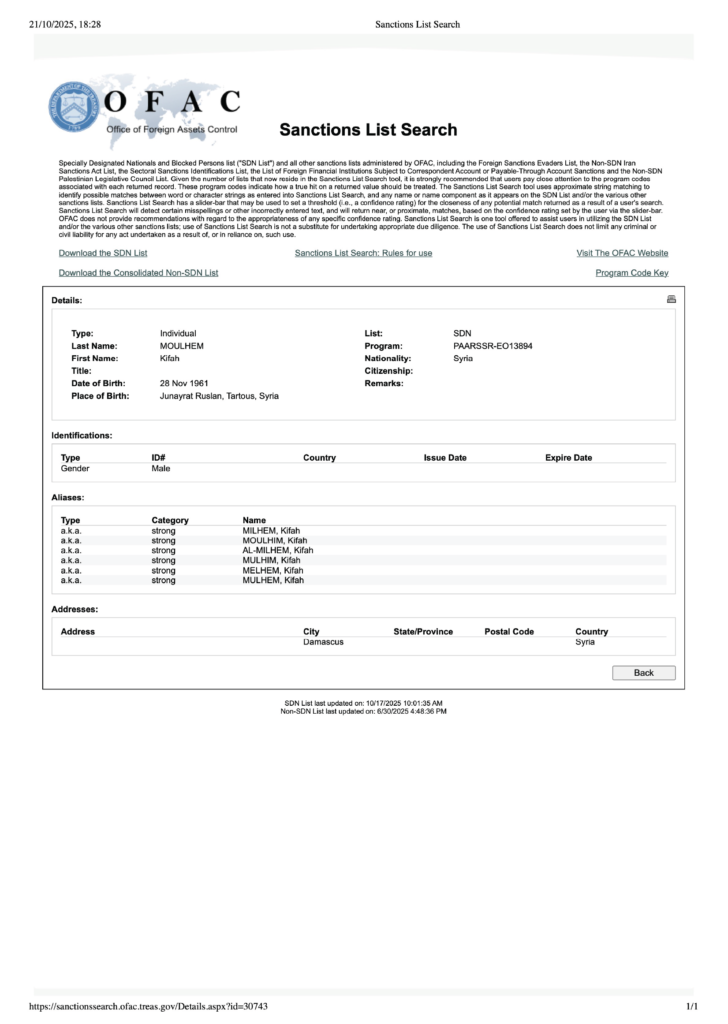
This absolute loyalty to the regime, combined with a long record of human rights violations, led to Melhem’s appointment as head of the Information Branch (Branch 294). He was later appointed by Bashar al-Assad as Director of Military Intelligence, a position he held from 2019 until early 2024. During this period, Melhem’s responsibilities expanded to overseeing torture, killings, and extrajudicial executions. He exercised significant oversight over the widespread crimes committed at Saydnaya Prison, prompting the United States, the European Union, and the United Kingdom to impose sanctions on him in 2020 for his role in war crimes and human rights abuses in Syria.
In early 2024, as part of what the Jusoor Center for Studies described as a “restructuring of the security apparatus,” Bashar al-Assad appointed Kifah Melhem Director of the National Security Bureau, following the dismissal of Major General Ali Mamlouk.
Assad also issued a secret directive linking all security branches directly to the National Security Bureau—a move interpreted by analysts as an attempt to curtail the power of security branch chiefs after Assad’s control over them had weakened in favor of Russian and Iranian influence. This was achieved by appointing younger, more loyal figures, foremost among them Kifah Melhem.
Syrian researcher and writer Hussam Jazmati noted that Melhem’s appointment was “the cumulative result of repeatedly proving his loyalty and devotion to the regime and to assigned tasks.” Jazmati linked the decision to a period of regime “confidence and relief” in early 2024, coinciding with renewed Arab and international engagement with Bashar al-Assad. This environment, Jazmati argued, led Assad to believe he no longer needed a strong and influential National Security chief, but rather a disciplined figure resembling a ‘secretary’ more than a power broker.
A Pyramid of Phones and Ranks
Naturally, Melhem relied heavily on military and security personnel for coordination and communication. Yet his connections to economic elites, business figures, civil authorities, and opposition figures remain more opaque—particularly given the reputation of officials like Melhem, who were known for extortion and intimidation to keep individuals aligned with the Assad regime’s interests.
It is unclear when exactly Melhem began recording phone numbers in his personal phonebook, or when he stopped before fleeing. Between the entries and the ranks preceding many numbers, the book includes figures who have since died, others who were promoted and later fled with the regime’s collapse—like Melhem himself—or who remain out of public view.
Examining Melhem’s personal phonebook is, in effect, an attempt to map the hierarchical structure of Syria’s intelligence apparatus—its agency heads, branch chiefs, regional commands, and functional specializations.
Melhem followed a highly consistent system in recording contacts: he would list the rank first, followed by the name, and then the security branch or military formation to which the individual belonged, whether it was part of the Syrian regime forces or of other “friendly forces,” as the regime used to describe its Russian and Iranian allies.
The system used in Melhem’s phonebook is precise, classified, and strictly rank-based, granting its owner, then Director of the National Security Bureau, rapid access to the personal and office numbers of Syria’s most senior security officials.
Jazmati attributes this meticulous organization to Melhem’s background in engineering and his earlier close working relationship with Bassel al-Assad, his former classmate at Lycée Laïque and the Faculty of Engineering. Melhem reportedly served as Bassel’s liaison to the Prime Ministry and senior state officials, making fast access to people, phone numbers, and addresses an operational necessity.
Senior Figures in the Phonebook
Melhem’s phonebook is filled with top-ranking figures from Assad’s intelligence services, foremost among them Military Intelligence, which Melhem himself headed before his appointment to the National Security Bureau.
Among the names is Brigadier General Kamal Hassan, who was later promoted to Major General and succeeded Melhem as head of Military Intelligence after Melhem’s promotion, before fleeing to Russia during Assad’s escape.
Today, Major General Hassan is considered one of the key figures behind armed defiance against Syria’s transitional government. Reports, including a Reuters investigation published on 6 December, indicate that Hassan—as well as Assad-linked businessman Rami Makhlouf—has been spending millions of dollars to fund thousands of fighters along the Syrian coast in an attempt to ignite a military rebellion.
The phonebook also includes the names of eight Major Generals from the army and intelligence services, including:
- Mohammad Rahmoun, former head of Air Force Intelligence in the southern region
- Wajih Abdullah, former director of the Military Office at the Presidential Palace
- Adib Salameh, deputy director of Air Force Intelligence
- Badi’ Maalla, commander of the Unified Coastal Command in Baniyas, which was responsible for overseeing aerial operations along the coast
Maalla is known for originating the use of “naval mines” to bombard civilians in Syria and was also responsible for Hmeimim Airbase, home to Russia’s largest military base in the country.
Other figures include:
- Hassan Al-Kurdi, former head of the Military Vehicles Administration
- Mufeed Khaddour, former head of Military Intelligence Branch 291
- Adnan Ismail, commander of the Third Division of the Syrian Army
- Jamal Younes, later promoted to Major General and head of the Security and Military Committee in the eastern region
In one departure from his usual detailed entries, Melhem recorded a number labeled only as “Major General, Director of the Political Administration,” without a name. This likely refers either to Abdul Karim Suleiman, who held the post from 2004 to 2018, or to his successor Hassan Hassan.
Colonels, Brigadiers, and Branch Chiefs
Below the rank of Major General, Melhem’s phonebook lists numerous Brigadiers and Colonels across various military and security formations. Among them:
- Brigadier Tawfiq Haidar, Director of the National Security Office, which replaced the National Security Bureau under Ali Mamlouk in 2012, following the bombing of the National Security Office in Damascus
- Brigadier Ghassan Ismail, Deputy Director of Air Force Intelligence
- Brigadier Shafiq Sarem, an officer in the Syrian Army
- Brigadier Taha Haj Taha, former head of the Political Security branch in Latakia
- Brigadier Imad Mohammad, affiliated with the Air Force and Air Force Intelligence, who died in 2019
Notably, the phonebook includes many branch chiefs of Military Intelligence and Military Police across Syria, all of whom served under Melhem during his tenure as Director of Military Intelligence until early 2024. Among them:
- Brigadier Samir Nizam, head of the Military Police branch in Damascus
- Brigadier Tamer Al-Dakhil, head of the Military Intelligence branch in Aleppo
- Brigadier Wafiq Nasser, head of Branch 256 (Military Intelligence)
- Colonel Osama (surname not listed), head of Branch 217 of Military Intelligence in Suwayda
Once again deviating from his usual clarity, Melhem recorded several numbers without names, including:
- Head of Branch 248
- Head of Branch 235, known as Palestine Branch (likely Mohammad Khalouf or Yassin Dahhi)
- Head of Branch 237, known as the Wireless Communications Branch
All of these branches fall under the authority of Military Intelligence.
The Less Fortunate Ranks
While Major General Kifah Melhem and many senior figures of the former regime, including Bashar al-Assad himself, are reportedly enjoying a comfortable life in Moscow today, and while many of the names listed in Melhem’s phonebook have gone into hiding out of fear of accountability, some of the individuals recorded in his contacts were far less fortunate.
For these figures, their names now amount to little more than ranks on paper, having failed to escape as Melhem and his peers did.
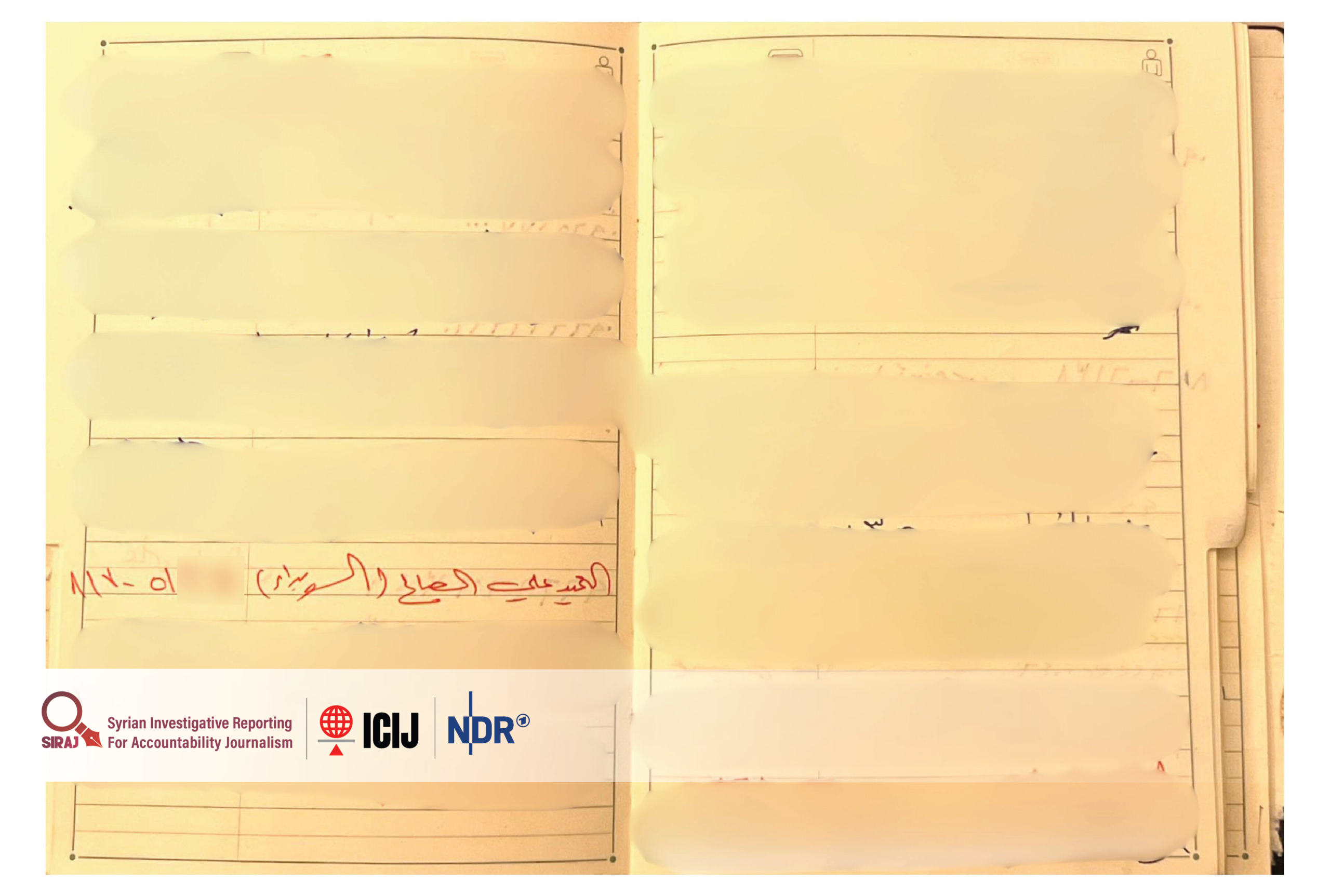
On page five of Melhem’s phonebook appears the name of Brigadier Ali Al-Saleh, who was unable to flee like Melhem and others and ultimately fell into the hands of the security forces of Syria’s new transitional government, according to a January 2025 report by Al Arabiya TV Channel.
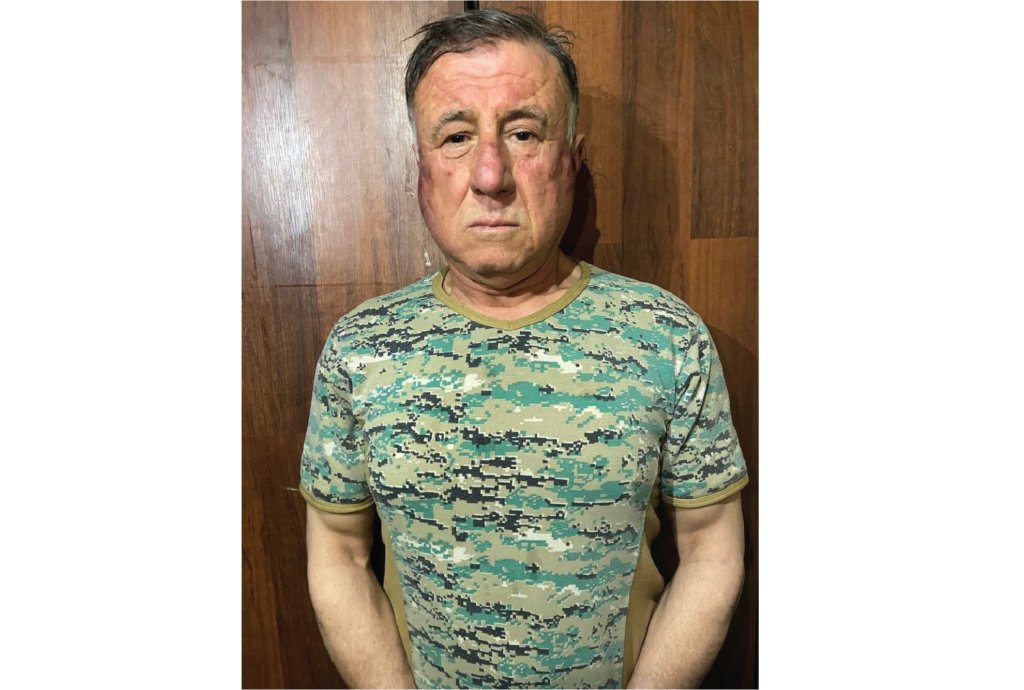
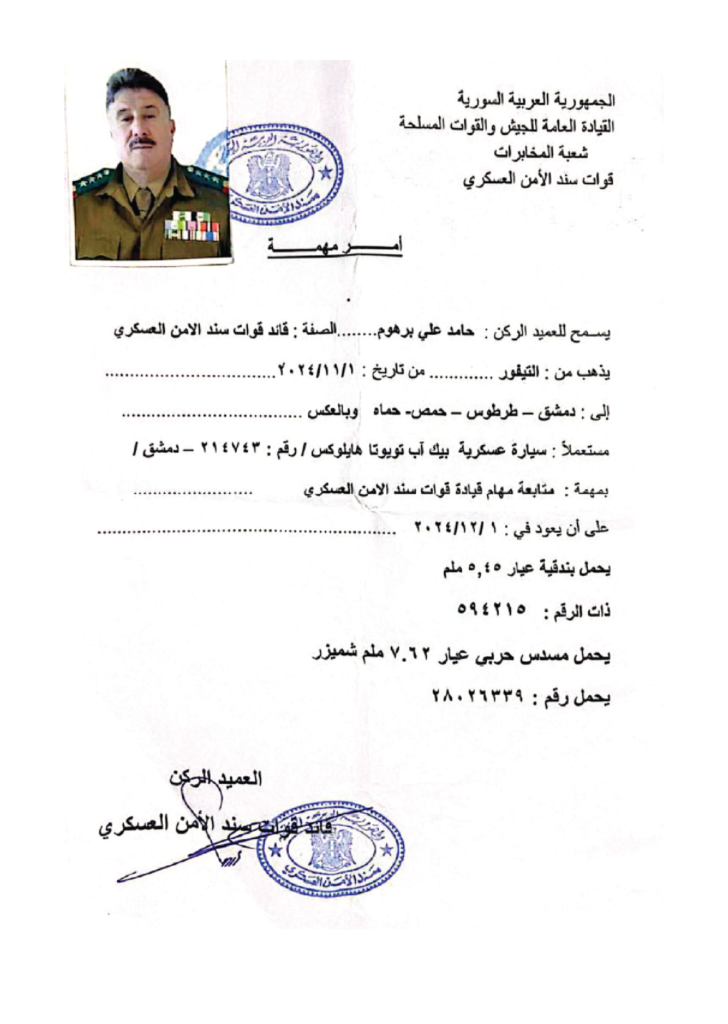
In April, Syria’s transitional government security forces also announced the arrest of Brigadier Hamed Barhoum, whose name likewise appears in Melhem’s phonebook.
Syrian security forces published photos of Barhoum following his arrest. He was detained along with other members of the fallen regime and was found in possession of a Kalashnikov rifle.
Meanwhile, Brigadier Habib Safiya, who served as head of the Military Police in Aleppo, was killed in a car accident on the Damascus highway in 2019, amid speculation that the incident was a staged assassination linked to internal power struggles within the regime’s security apparatus.
Friends of Many Nationalities
Since the beginning of foreign intervention in its favor to counter the Syrian revolution’s growing momentum, the Assad regime frequently used the term “friends” to refer to its military allies, particularly during the Russian intervention, which shifted the balance of the war in the regime’s favor before its eventual collapse.
These “friends” were at times Russian, at other times Iranian, and later included countries such as China, as well as entities like Abkhazia. Among the regime’s most fervent loyalists, they were even referred to as “brothers.”
Russian and Iranian “friends” feature prominently in Kifah Melhem’s phonebook. Scattered throughout its pages are the names of Russian and Iranian translators, as well as military officers such as “Major Yuri,” who appears elsewhere as “Colonel Yuri,” and a Russian lieutenant colonel named Edgar. Melhem also recorded the number of a Russian Major General named “Bilal,” who appears to have been operating in Qamishli.
The presence of Iranian “friends” or “brothers” is even more striking. The phonebook includes the number of Hajj Amer Al-Haidari, described by Melhem as the “Commander of the Zayn al-Abidin Brigade,” a militia formed in Deir Ezzor with support from Iran and Hezbollah. It also lists Mohammad Al-Saeed, commander of the Jerusalem Brigade (Liwa al-Quds), a Palestinian-Syrian militia founded in Aleppo in 2013, which multiple sources say received financial and logistical support from Iran’s Islamic Revolutionary Guard Corps (IRGC).
Beyond militia commanders of varying allegiances, the phonebook also contains the name and number of Major General Jamil Al-Sayyed, widely described as “the (former) Syrian regime’s man in Lebanon,” where he served as Director of General Security. He was previously arrested in connection with the investigation into the assassination of former Lebanese Prime Minister Rafik Hariri, before being released years later.
Melhem also mentions his Syrian friends and fellow citizens. For example, Raji Falhout’s name is included. Falhout founded the “Dawn Militia” in Suwaida, which was supported by the Military Intelligence branch that Melhem led for many years. Falhout’s fate remains unknown after battles with other military formations in the province in July 2022, which resulted in the elimination of his militia and the loss of contact with him.
The Octopus General
The hundreds of names and phone numbers handwritten by Major General Melhem reveal the breadth of his influence and power—not only within Syria’s military and intelligence circles, but extending across civilian institutions, the medical and media sectors, financial elites, and even figures described as part of the “opposition.”
At the top of Melhem’s contact list appear the names of Syria’s most powerful economic figures under the Assad regime. These include Rami Makhlouf, Bashar al-Assad’s cousin and owner of the country’s largest financial empire—later curtailed after he was sidelined in favor of Asma al-Assad; Abu Salim Daaboul, former head of the Presidential Office under both Hafez and Bashar al-Assad and one of Syria’s wealthiest businessmen; and Hussam Qaterji, one of the regime’s most prominent economic fixers, who is subject to international sanctions for his illicit business activities.
Non-military government institutions are also represented in Melhem’s phonebook. It includes numbers for several ministries and ministers, most notably Mansour Azzam, Minister of Presidential Affairs, who press reports say was aboard the private aircraft that transported Bashar al-Assad to Moscow. The phonebook also contains a number labeled simply “Prime Minister,” without a name, corresponding to an internal contact line.
For a figure of Melhem’s rank, the identity of the prime minister appears less important than the office itself. The same pattern applies to the entry for the Grand Mufti of the Republic, recorded without a name. However, the last person to hold that post before it was abolished in 2021 was Sheikh Badr al-Din Hassoun, who was arrested following the fall of the Assad regime and later appeared in a video released by the Syrian Ministry of Justice before a prosecutor.

Melhem’s reach extended even to figures long described as part of the “internal opposition,” or what the regime preferred to call “opposition under the roof of the homeland.”
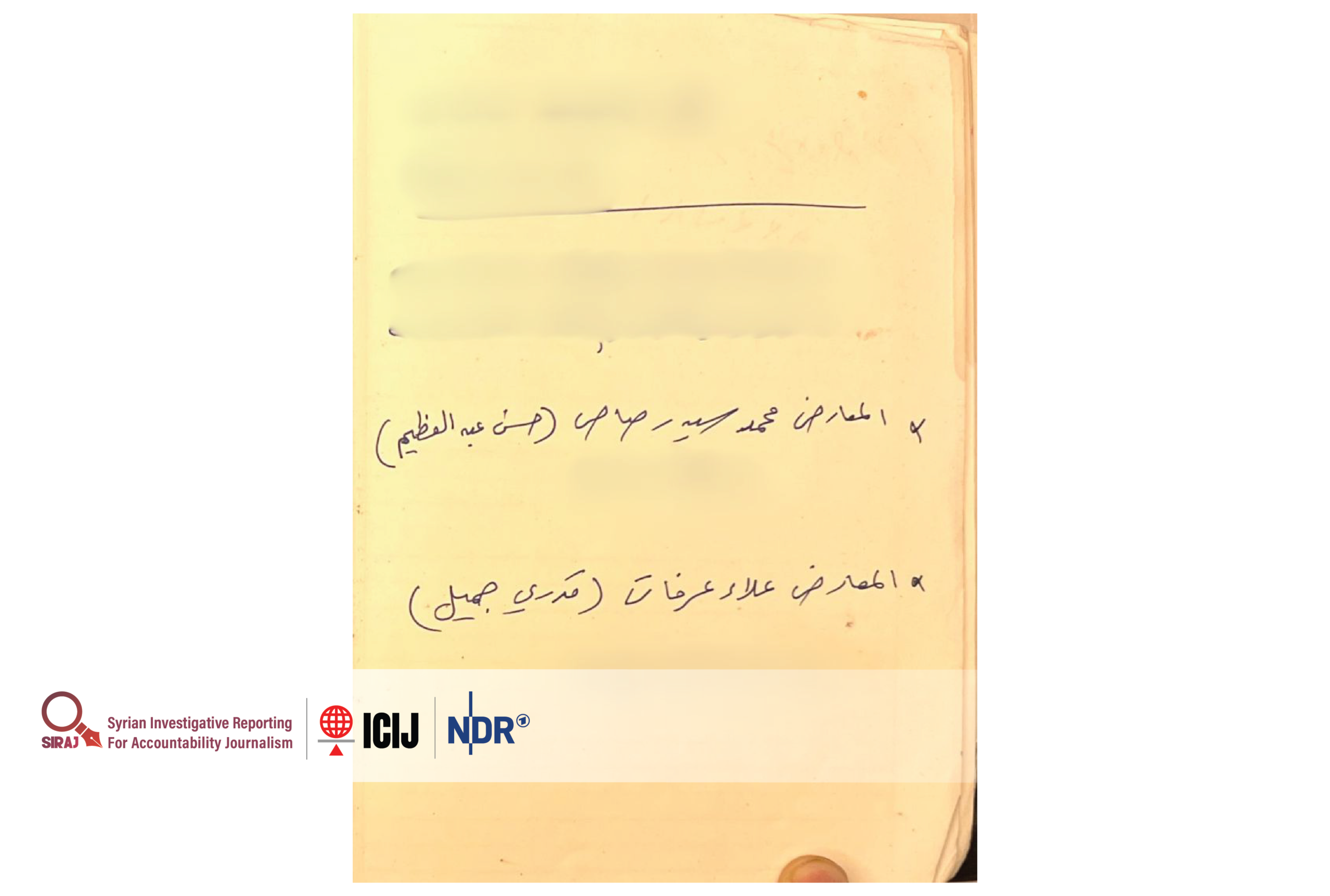
The phonebook includes a contact for opposition figure Alaa Arafat, who was a member of the Syrian Negotiations Commission and the Moscow Platform. Melhem appears to have considered him a representative of opposition figure Qadri Jamil, whose name is written in parentheses next to Arafat’s.
On the same page, Melhem recorded the number of opposition figure Mohammad Said Rassas, seemingly as a representative of Hassan Abdul Azim. Both men are members of the Communist Party and the National Coordination Committee for Democratic Change, raising questions about Melhem’s dealings with Syria’s internal opposition.
In response to questions from SIRAJ, Rassas stated that he was unaware of why his number appeared in Melhem’s phonebook, stressing that there had been no prior communication whatsoever. He also said he has been subject to a travel ban since 2008, issued by the National Security Office—the same body later headed by Melhem after it was restructured into the National Security Bureau.
Rassas also spent 15 years in prison between 1980 and 1995 after being tried before the State Security Court for his membership in the Communist Party.
Amid the dense web of military, intelligence, and political contacts, the phonebook also contains numbers for ordinary professionals—people essential even to the daily life of a general accused of war crimes. These include contacts labeled “health worker” and “barber,” as well as a number for “Abu Shaker – Immigration and Passports,” the civil registry office where Syrians often waited for hours to obtain travel documents. For an official of Melhem’s stature, having such contacts meant fast-tracking procedures for himself and those close to him.
Here, we present readers with a digital version mirroring the original phonebook left behind by Kifah Melhem, the former Director of the National Security Bureau under the ousted Assad regime. All phone numbers have been redacted to protect privacy and to respect ongoing and potential accountability processes related to violations committed during the former regime.
Creative direction and visual design: Radwan Awad
Editing and supervision: Manar Rachwani