
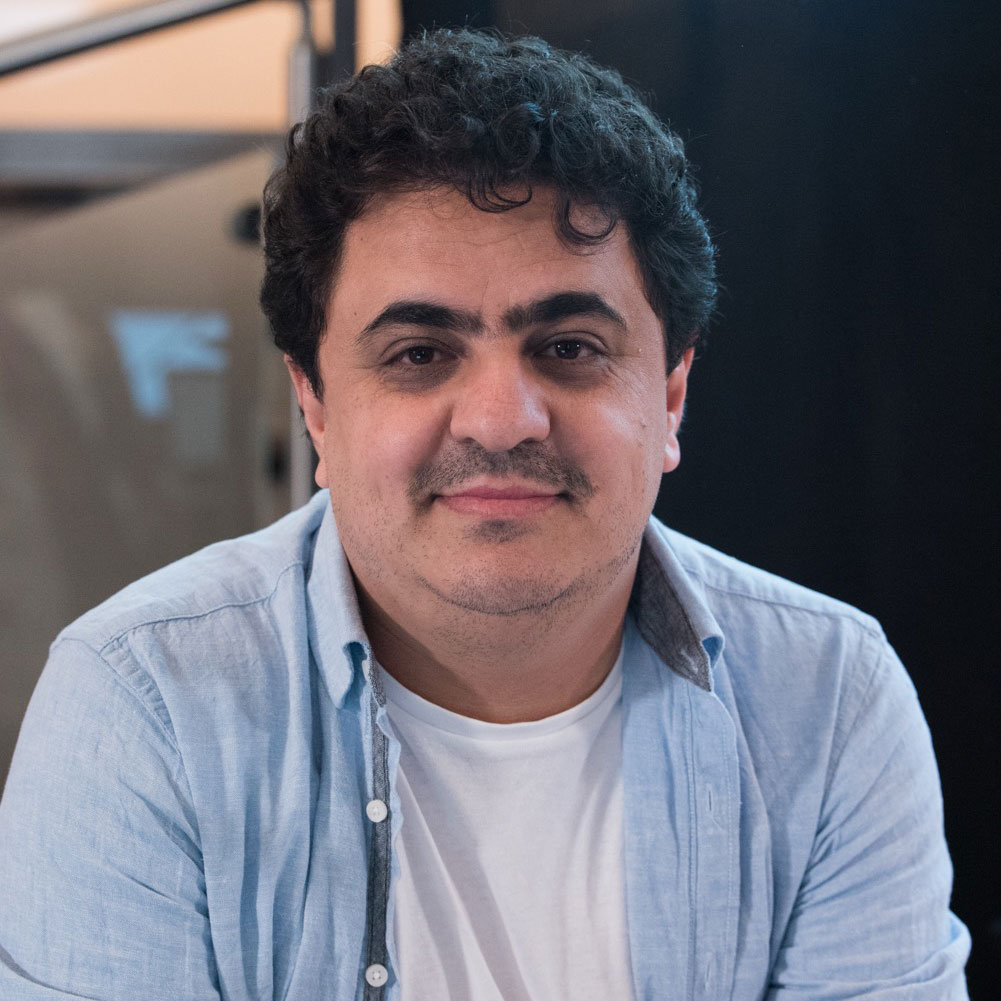
Q&A: Mohammad Bassiki: Investigating war crimes, corruption and accountability in Syria
In this in-depth conversation, Bassiki shares insights into the role of investigative journalism in Syria today, the challenges of reporting under a repressive regime, and the ways in which thorough, evidence-based reporting can support transitional justice, influence international policy, and empower the Syrian public.
The following Q&A explores SIRAJ’s most impactful investigations, the methodologies behind them, and the ongoing importance of independent journalism in conflict and post-conflict settings.
Investigative reports produced by SIRAJ have contributed to raising awareness among the Syrian public, both inside and outside Syria, about the importance of serious and in-depth journalism in creating an environment of accountability. Such journalism serves as a tool to improve people’s lives and combat corruption in a country that has suffered under dictatorship for half a decade.
Our investigations have also played a role in exposing corruption, reducing the waste of public funds, and pursuing criminals and human rights violators by relying on the outcomes of published investigations in courtrooms and in local and international human rights reports.
Our work has established an indispensable foundation for transitional justice processes, based on documents, photographs, contracts, court records, and other evidence. This helps decision-makers, policymakers, and civil society organizations in any future transitional justice efforts.
In addition to producing investigations, SIRAJ has, over ten years since its founding, developed methodologies and principles related to uncovering corruption through investigative journalism, promoting public-interest journalism, and fighting impunity. One notable example is the investigation “The Bloody Phosphate Trade Between Syria and Europe,” which contributed to the imposition of sanctions on individuals, militia members, and security companies in Syria that profit from a bloody trade by exporting phosphate by sea to European farmers. This trade enriches a class of wealthy warlords in Syria who circumvent European sanctions imposed on the now-ousted Assad regime.
Other investigations, such as tracking European truck supply chains to Syria—which were used by the former regime’s army in repression and in transporting weapons—helped draw the attention of European authorities, particularly in Sweden, and prompted calls to tighten sanctions on the regime and address legal loopholes exploited by traders and those dealing with brutal authorities.
Of course, this work came at a high cost for us as journalists. After the fall of the regime in December last year, we discovered that the secret intelligence service had, in November 2025—just one month before the regime’s collapse—ordered spies to track the SIRAJ team both inside and outside Syria. At the same time, a unit of the secret police raided my family’s home in Damascus, asked about me personally, and searched my father’s phone for any information that could reveal my whereabouts.
One of the investigations highlights the continued danger of landmines across former frontlines in Syria. What did your team discover?
The investigation, using open-source tools, interviews with local residents and victims, and field visits, found that local populations continue to suffer from the danger of Russian/Soviet landmines in the direct contact zones between the former Syrian regime forces and armed opposition groups. As a result, civilians are paying a heavy human, economic, and environmental price due to these mines and their impact on the present and future return of displaced Syrians to these areas.
We documented dozens of cases of deaths and injuries in the area using open-source data and databases from independent organizations. We also identified approximate geographic locations and tracked patterns of these incidents. The investigation concludes that agricultural areas were among the primary targets of mining operations along the contact lines, as part of a deliberate strategy to cause long-term, large-scale human, material, and environmental damage.
Our investigation estimates that approximately 13,700 hectares of agricultural and civilian land are at risk from landmines, based on the observed patterns of mine deployment in certain contact-line areas.
How did open-source intelligence help you investigate the landmine crisis?
OSINT was a great help for us while working on the investigation on landmines in Syria. Using available information and publicly published cases of casualties by humanitarian organizations, local media outlets, and local councils we were able to gather a lot of data that can serve as a sample to analyse the bigger picture. Then by using satellite imagery and other data bases it allowed us to clearly analyse and point-out the pattern of landmines in that area which was to target agricultural areas and communities in the former front-line between the Assad regime and opposition forces.
Another major investigation looked at the Harasta Military Hospital and the treatment of political detainees. What did the reporting uncover?
This investigation is the result of a collective effort and collaboration among journalists from several media organizations working with Siraj across Germany and Syria. The investigation was published in print and online, and a televised report was broadcast. After seven months of inquiry, tracking, and examining evidence, documents, and images, we revealed how dozens of doctors—including some who are still practicing medicine in Germany—contributed to the torture of detainees at Harasta Military Hospital and to falsifying the causes of their deaths in Assad’s prisons and medical facilities.
Through documents and testimonies from survivors and witnesses who previously worked at Harasta Military Hospital, and by using open-source investigative techniques, we obtained evidence indicating that Syrian doctors who once worked at the formerly “notorious” military hospital are now residing in Germany, with some holding senior positions in its hospitals. They fled Syria at different times and currently live in Germany.
Among them is a doctor who is alleged to have treated one of the detainees interviewed by the investigation team without anesthesia.
That investigation tracked several doctors now practicing in Germany. How did your team identify and locate them?
SIRAJ alongside ICIJ and Süddeutsche Zeitung worked on this investigation which started from photos of documents found in the hospitals some of these doctors worked on. The documents were signed by multiple names. We started searching for every bit of information available on these names on social media, news websites and any open sources. That deep search allowed us to find some faces available on the web and social media accounts. We then ran facial recognition systems to add more verification and fact checking on these names and social media accounts before moving to the final stage of interviewing some of these doctors.
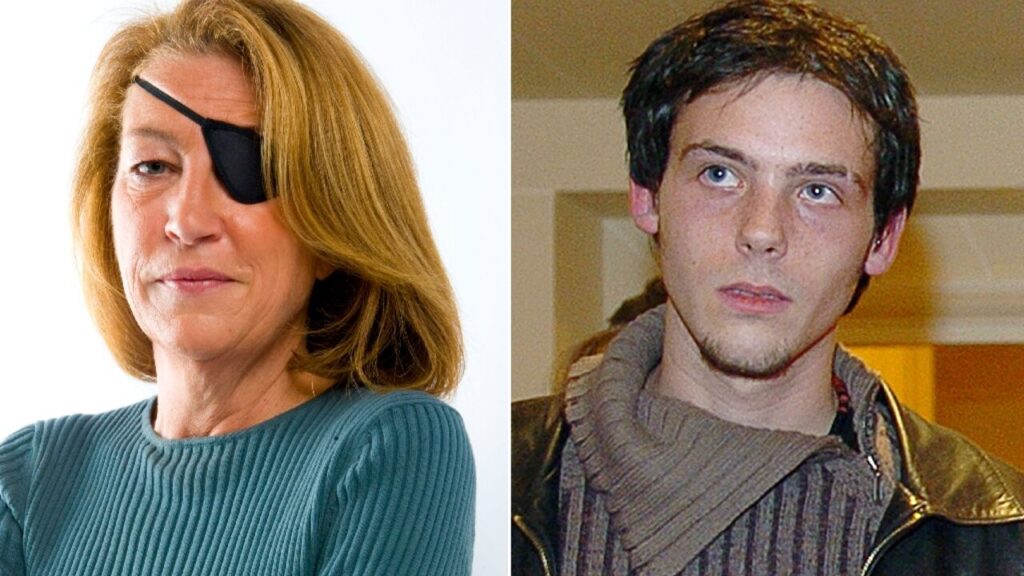
Your team also participated in an investigation into the killing of journalists Marie Colvin and Rémi Ochlik. What role did visual analysis play in that investigation?
At the outset, a video posted on YouTube by a fighter in the Syrian army documenting shelling from Regiment 64 on 22 February 2012 was reviewed, along with another video published on the same day from within the media center documenting that it was also under attack.
By analyzing these videos and determining the geographic location using satellite imagery, we were able to confirm the authenticity of the footage from within the regiment and the presence of artillery. We also identified the trajectory of the shell and its direction by examining light reflections on the building adjacent to the media center.
When the videos were presented to experts, they confirmed that the damage sustained by the media center was caused by a Soviet-made M46 artillery shell of 130 mm caliber.
The video footage was then cross-referenced with satellite imagery, which confirmed the presence of six artillery pieces of the same type stationed at Regiment 64, positioned for firing toward the Baba Amr neighborhood in Homs.
Finally, additional videos of the shelling of Baba Amr on the same day were reviewed, and when analyzed by experts and defected officers, they confirmed that the sound matched that of the same artillery type. In particular, the time difference between the firing sound and the impact was 10.95 seconds. Based on the specifications of this artillery, the shelling occurred from a distance of approximately 12 kilometers. Returning to satellite imagery, only one military site within this range was found to host artillery of the same type, located 12.6 kilometers south of Baba Amr: Regiment 64.
What challenges did you face while investigating events that took place years ago?
We believe that the passage of time should never lead to the statute of limitations on violations. There are families still waiting for justice for their sons and loved ones. Our role is to uncover the truth, highlight abuses, and promote accountability, but this is a difficult and long process.
One of the main challenges is the scarcity of financial support and the lack of grants to cover the expenses of investigative journalists, newsrooms, and in-depth reporting. A significant amount of our time is spent searching for funding, which is unfortunately increasingly limited, and with it, the values of accountability and justice are lost while perpetrators escape.
On the journalistic and research level, many visual pieces of evidence that could have helped reveal the truth have been erased or removed from social media platforms. As a result, collecting evidence has become more difficult than before. This is where the importance of open-source intelligence comes in, as it allows us to search through all available online archives to reconstruct the scene of the crime and simulate it.
In addition, all visual evidence found in previous cases requires complex verification processes before it can be reused, which demands significant effort and both free and paid technological tools, as well as extensive human work that adds essential value and layers of verification to each piece of evidence before it can be used in a story.
After the fall of the regime, people became free and began speaking about atrocities they previously could not mention openly. The values of investigative journalism grow stronger over time in environments of freedom of expression.
Every day, we receive new evidence and testimonies about past violations and crimes, and we do everything we can to keep up with this reporting and document it.
At the same time, the impunity enjoyed by the Assad regime and its figures—who committed most of the atrocities of the past—and the absence of genuine transitional justice have made some sources less willing to cooperate, based on the perception that perpetrators have escaped punishment in Moscow.
The “Damascus Dossier” project involved collaboration with international investigative networks. How important are cross-border collaborations for your work?
Cross-border collaboration between journalistic teams represents an important pathway for creating impact and maximizing the reach of investigative reporting across borders, especially when the team includes newsrooms from different backgrounds and languages. This gives the story significant momentum and allows it to reach a wider audience beyond regional and national boundaries.
Cross-border investigative journalism serves as a bridge through which the Syrian story can be brought into the international news agenda and into the newsrooms of major media organizations. It is undoubtedly a competitive process, and you must have a compelling, well-substantiated story that convinces international editors to take it on, develop it, and publish it.
In the years preceding the fall of the Syrian regime, cross-border investigative journalism played a major role in exposing the practices and violations committed by the former regime and its army against civilians, as well as the widespread use of chemical weapons, and the deaths of migrants in the Mediterranean Sea while attempting to cross into Europe.
One investigation examined the personal phonebook of a senior Syrian security official. What can such documents reveal?
While it is known how much power such personalities can hold within the Syrian regime, documents like this can still show how complicated and extensive their power and “alliances” can reach to circles outside of the military-security sphere. The document you mentioned showed that this official had contacts that extend in all forms of public life such as civil governance, foreign representation, services, telecommunication, opposition and even art. While one document can’t reveal any details on how deep these connections are, it is still very interesting to have a glimpse at it through the phonebook.
Another investigation explored how the Syrian regime enforced restrictions on the use of foreign currency. What did that reveal about governance under the regime?
The investigation reveals that the Assad regime mobilized a network of informants and a set of laws to monopolize the possession of foreign currencies, particularly the US dollar and the euro, by tracking and arresting anyone who dealt in US dollars or other foreign currencies following Decree No. 3 of 2020, which criminalized any transactions in currencies other than the Syrian pound.
This contributed to tightening the security grip on those who possessed any amounts of foreign currency, placing them in a position where they were either forced to share it with the Assad authorities or face security prosecution.
Many Syrians were subjected to extortion, imprisonment, killing, and arrest due to their possession of foreign currencies, which the former regime had banned from circulation. This caused additional suffering for many Syrians who were already under the pressure of the secret police and informants who were secretly pursuing them in order to entrap them.
This has been documented in leaked records and documents from Air Force Intelligence, Military Intelligence, and the secret police branches, which our journalistic team has reviewed.
Many of your investigations rely on digital evidence and OSINT. How has this changed investigative journalism in conflict zones?
OSINT has been a vital lifeline for a lot of investigations in conflict zones not only for SIRAJ but for so many journalists and outlets. When military powers or security situations don’t allow journalists to be on the ground, satellite images allow them to watch from above. And when media blackouts are enforced, local activists, social media and citizen journalists and their content become the eyes to monitor and analyse the situation. Platforms that track flights and ships allow journalists to track even the most silent types of illegal, shadow and corrupt activities.
Even in Syria today, which may not be a “conflict zone” in the traditional sense anymore, OSINT still allows us to track, watch and analyse information independently and provide evidence-based investigation to all our readers.
Finally, what impact do you hope these investigations will have for Syrians and for the international community?
We believe that the current stage Syria is going through is a historic one, and it will largely shape the future of press freedom in Syria for decades to come. Therefore, we hope that these investigations will help raise public awareness of the importance of journalism as an effective tool in confronting authority when it seeks to monopolize decision-making and avoid any democratic process.
We also hope that these investigations will lay the foundation for any future transitional justice process. Most of the investigations we have worked on have exposed influential individuals who committed atrocities against Syrians and then escaped accountability. As a result, courts and the judiciary need this documentation as a basis for any fair future prosecution.
Investigative journalism strengthens the overall climate of media freedom and creates an environment of accountability. This was the starting point of Siraj’s vision for a new Syria, where accountability becomes a tool for improving society. This vision is implemented through the mission of producing reports and investigative work that serve the public interest.